This blog post provides a comprehensive guide for buyers sourcing Christmas tablecloths, emphasizing that detailed questioning before sampling is critical to a successful partnership. It uses Yiwu Jinyuan Trading Firm as a model supplier to illustrate what exemplary answers look like. The article walks through twelve key questions, including company background, certifications, material recommendations, customization, sampling process, quality control, production capacity, innovation, MOQs, sustainability, packaging, and after-sales support. For each question, the article not only explains its relevance but also highlights how Yiwu Jinyuan, with its experience, full-chain manufacturing, advanced technologies, and customer-centric philosophy, meets these criteria. The supplier’s specialized focus on table aesthetics, eco-friendly fabric options, and high-volume production, combined with design innovation and strong quality assurance systems, positions them as a reliable partner. The summary concludes that buyers who conduct thorough due diligence and ask the right questions can ensure they source high-quality, festive products that arrive on time and resonate with consumers, ultimately creating a profitable holiday season.
When the holiday season approaches, retailers and event planners around the globe turn their attention to festive decor, and Christmas tablecloths become a centerpiece of seasonal dining aesthetics. Yet, selecting the right supplier for these specialized textiles is far more nuanced than simply picking a pattern. Before a single sample is cut or sewn, a buyer must engage in a rigorous dialogue with potential suppliers. This is especially true when the stakes involve large orders, strict delivery deadlines, and the need to satisfy a sophisticated consumer base. In the world of home textiles, understanding a supplier’s capabilities, processes, and values can mean the difference between a holiday sell-out and a logistical nightmare.
This article explores the critical inquiries a buyer should make before requesting samples from a Christmas tablecloth supplier. It also highlights how a seasoned exporter like Yiwu Jinyuan Trading Firm, with its deep roots in the home textile industry, exemplifies the answers buyers should seek. Yiwu Jinyuan, a company specializing in international trade with the philosophy of “service and concern, credit and commitment, share and progress,” offers more than just products—it provides a partnership model that addresses every layer of the sourcing journey. By examining each key question through the lens of this company’s practices, buyers can gain a blueprint for vetting suppliers effectively and ensuring that their festive tabletop lines are both beautiful and dependable.
The Foundation: Why Sampling Is Not the First Step
Many buyers mistakenly believe that requesting a sample is the starting point of a supplier relationship. In reality, sampling is a midpoint—a verification of claims made during a much deeper preliminary conversation. A sample can demonstrate a supplier’s sewing skill, fabric quality, or finishing techniques, but it cannot reveal their capacity to scale, their commitment to ethical manufacturing, or their ability to innovate. Therefore, the questions posed before sampling are the bedrock upon which a successful collaboration is built.
For Christmas tablecloths, which often combine festive aesthetics with functional demands like spill resistance and easy cleaning, the margin for error is slim. A poorly constructed edge or a fading print can ruin the consumer experience. Consequently, a buyer’s pre-sampling questioning must be thorough, probing beyond marketing pitches to uncover the true operational strengths and potential weaknesses of a supplier.
undefined
Key Question 1: What Is Your Company’s Background and Experience in Home Textiles?
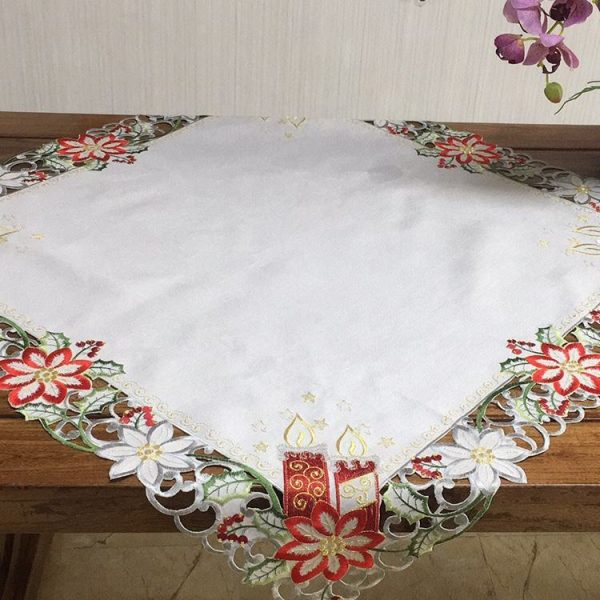
Experience in home textiles is not merely about years in operation; it is about understanding the nuances of fabrics, seasonal trends, and the specific requirements of different geographies. A supplier that has navigated multiple Christmas cycles knows what works—whether it be the weight of a polyester-cotton blend for easy draping or the resilience of a quilted placemat against hot casseroles. Therefore, the first question should prompt the supplier to articulate their history, core team strengths, and specialization.
A company like Yiwu Jinyuan is a testament to the power of focused experience. Its core team comprises professionals who have spent years in the home textile industry, gaining expertise in product development, production management, and international trade. They understand manufacturing standards and consumption trends across the USA, Europe, Asia, and beyond. For a Christmas tablecloth, this means they can anticipate which motifs—from traditional Nordic reindeer to modern, minimalist snowflake patterns—will resonate in different markets, and they know precisely how to adjust the weave density to ensure durability during repeated holiday use.
Furthermore, the team’s ability to control the entire production chain, from fabric selection to pattern design and finished product manufacturing, is a critical advantage. When a buyer asks about background, they should listen for whether the supplier is a true manufacturer or merely a trading company that outsources every step. Wuyi Jinyuan, despite its name, operates as an export company with a full production ecosystem. They are not just order takers; they are problem solvers who can intervene at any stage of production to resolve issues before they become costly mistakes.
Key Question 2: Can You Provide References, Certifications, and Social Compliance Documents?
Trust but verify. While a supplier’s self-description is useful, third-party validation is indispensable. Buyers should ask for references from other importers, especially those dealing with similar holiday products. They should also request certifications like BSCI (Business Social Compliance Initiative), OEKO-TEX, or ISO 9001, depending on the target market. For example, Europe and North America place a high premium on environmental and social responsibility, and a failure to meet these standards can result in customs holds or reputational damage.
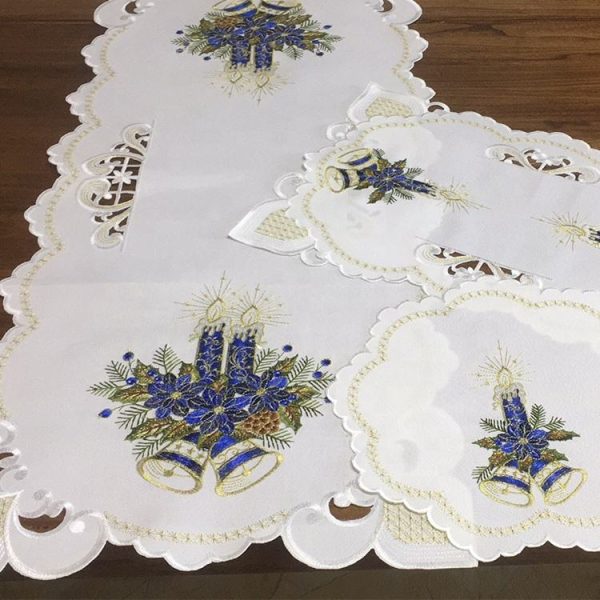
Yiwu Jinyuan demonstrates the importance of this question by proudly highlighting their BSCI social responsibility audit approval and their compliance with multiple international factory inspection standards. Their products are exported to Europe, America, Japan, Korea, and Southeast Asia, and they serve as a long-term supplier for several well-known international home brands. This track record is not accidental; it is built on a quality management system that covers everything from fabric entry to finished product storage. When a buyer asks for certifications, they are essentially forcing the supplier to prove that their operations are transparent and legally sound. Yiwu Jinyuan’s ability to present such evidence is a green flag that they take compliance seriously.
Further, a buyer in the Christmas tablecloth space should also probe about specific product testing, such as color fastness to light and washing, and even flammability standards if the tablecloth is intended for commercial settings. A credible supplier will have these details ready and will be willing to share test reports. If a supplier hesitates or tries to downplay the importance of certifications, it is a major red flag and a reason to walk away before sampling.
Key Question 3: What Materials Do You Recommend for Christmas Tablecloths and Why?
Material selection is the heart of any tablecloth. For Christmas, the ideal fabric must balance aesthetics, durability, and ease of care. A supplier’s recommendation can reveal their technical knowledge and their ability to source high-quality inputs. Buyers should ask not only about available fabrics—cotton, polyester, linen, blends—but also about the specific weight, thread count, and finish types.
Yiwu Jinyuan’s product line offers a comprehensive answer to this question. Their tablecloths and runners utilize high-quality materials such as cotton, polyester-cotton, and linen. They are also at the forefront of eco-friendly alternatives like recycled polyester and organic cotton, aligning with the growing consumer demand for sustainability. For festive table settings, a common concern is managing spills and stains, so the company has pioneered the “three defense” technology: waterproof, oil-proof, and heat-resistant. Their tablecloths are crafted with high-density weaving and nano-level hydrophobic and oleophobic coatings. This ensures that a glass of red wine or a splash of gravy does not soak into the fibers, and a quick wipe can restore the tablecloth to pristine condition. This technical feature is a boon for holiday gatherings where guests are often prone to accidents.
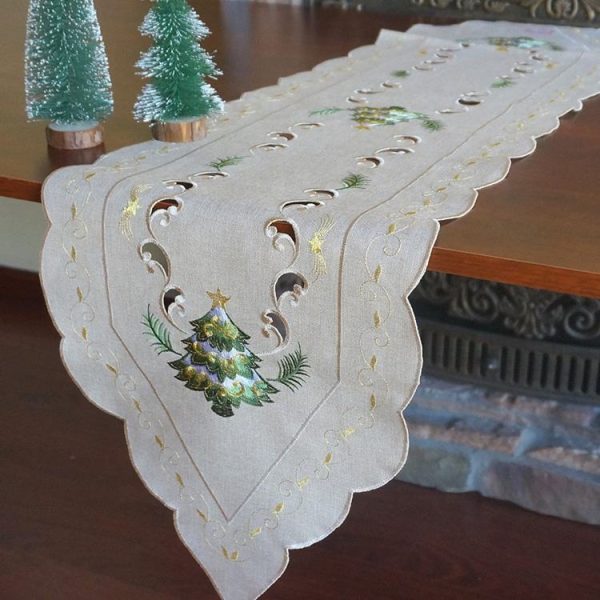
Additionally, the supplier should explain how the fabric feels and drapes. Christmas dinners are lengthy events, and a stiff, synthetic-feeling tablecloth might be unattractive. Yiwu Jinyuan emphasizes that their functional coatings do not compromise the fabric’s natural texture or breathability. They incorporate environmentally friendly finishing agents that maintain water and oil repellency while also allowing the fabric to breathe. Buyers should ask about the exact composition and any feel implications, and request a touch or swatch prior to full sampling to ensure that the texture aligns with their brand’s positioning.
Key Question 4: Do You Offer Customization for Patterns, Sizes, and Finishing Styles?
Christmas tablecloths are highly seasonal and often driven by trends. A buyer may want to offer exclusive designs that stand out on shelves or online. Customization is no longer a luxury; it is an expectation. Before sampling, the buyer must clarify the supplier’s capabilities in producing bespoke patterns, custom colors, and unusual sizes. They should also ask about the available printing techniques, embroidery options, and edge treatments.
Yiwu Jinyuan answers this question with an impressive array of options. They say, “The team can quickly complete personalized customization of patterns, colors, and sizes according to customer needs.” Their young and creative design team follows international trends in interior decoration and integrates fashionable elements with functional utility. In terms of production techniques, they support digital heat transfer printing, computer embroidery, hand-stitching, jacquard weaving, and more. This enables them to produce vivid, long-lasting patterns that do not fade easily. Moreover, they excel in key processes such as edge binding of tablecloths, quilting of placemats, and zipper positioning of cushion covers. For a Christmas set, this could mean a decorative border with a wire-edged ribbon, or a reverse side made of a contrasting pattern—something that requires a high level of manufacturing complexity.
Buyers should ask to see evidence of past custom projects, especially those that involve Christmas motifs. A skilled supplier like Yiwu Jinyuan will be able to show a portfolio of prior work and discuss how they solved design challenges. They should also clarify the MOQ for custom orders, as highly customized goods often require higher minimums. Yiwu Jinyuan, with its annual production capacity running into millions of pieces, can scale from mid-sized to very large custom runs, making them a flexible partner for buying groups and large retailers alike.
Key Question 5: What Is Your Sampling Process and Typical Lead Time?
The purpose of asking about sampling process is to understand the supplier’s agility and attention to detail. A sample is not just a miniature of the intended product; it is a proof of the manufacturer’s ability to execute. Questions should include: How many rounds of samples do you provide? What is the turnaround time for a sample? Are sample costs deductible from bulk orders? How closely will the sample match the final production? These logistics are crucial for planning product launch schedules.
Yiwu Jinyuan outlines a clear customer-oriented approach, stating their service philosophy as being totally driven by customer needs. They offer pre-sales consultation, sample confirmation, production tracking, and after-sales service, regardless of order size. Such completeness suggests that they treat sample development as a partnership stage, not a mere formality. Moreover, their production team is highly skilled in the subtle techniques that make a sample impressive: a perfectly even hem, precisely aligned quilting lines, and a flawlessly attached zipper on a cushion cover. A supplier that can articulate these micro-details in their sampling process demonstrates a command of their craft.
Lead times are equally important, especially for Christmas merchandise which has a strict shipping deadline. Buyers must ask the supplier for their production cycle once samples are approved, and they should factor in reorder possibilities. Yiwu Jinyuan’s use of automated cutting and intelligent hanging systems has improved overall production efficiency, and their large-scale, refined control reduces the average delivery cycle by more than 20% compared to the industry standard. While this may not be sufficient to estimate the exact lead time for one’s specific order, it suggests that the supplier has optimized their operations to meet peak demand. Buyers should still request a written lead-time commitment for both samples and bulk orders, and maybe even ask for a contingency plan if the holiday season creates a rush.
Key Question 6: How Do You Ensure Quality Control from Fabric Through to Finished Product?
One of the biggest anxieties for a buyer importing tablecloths is receiving a batch that does not conform to the approved sample. Fabric flaws, seam misalignments, and color differences are common issues. Therefore, a comprehensive answer on quality control is non-negotiable. The buyer should ask about the stages of QC, the frequency of inspections, whether third-party inspections are allowed, and the procedure for handling defective goods.
Yiwu Jinyuan offers a model answer. Their quality control team strictly follows multiple inspection procedures from the entry of fabrics to the delivery of finished products, ensuring that every product can withstand customer testing. The phrase “multiple inspection procedures” implies that they check materials upon arrival, perform in-line inspections during sewing, and conduct a final random check before packing. They also report a finished product qualification rate stable at over 99%, a metric that reassures buyers. Moreover, they utilize advanced equipment, but more importantly, they employ a skilled workforce that is especially proficient in edge binding, quilting, and zipper positioning—areas where defects commonly occur.
Alongside internal QC, buyers should ask if the company allows external pre-shipment inspections from agencies like SGS, TUV, or Intertek. A supplier that is open to such inspections is likely to have a solid quality system. Yiwu Jinyuan’s compliance with BSCI and other international audits indicates a culture of external verification. For a Christmas tablecloth, it is prudent to request a gold seal of approval from these independent bodies to avoid seasonal market failures.
Key Question 7: What Is Your Production Capacity for Peak Season, and Can You Handle Rush Orders?
Christmas is a peak season that typically begins production in June and July for shipments in September or October. A supplier’s ability to scale during these months is vital. A buyer should ask about the number of units the factory can produce monthly, whether they have backup lines, and their ability to increase capacity by adding temporary workers or extra shifts. They should also gauge the supplier’s flexibility for unexpected reorders.
Yiwu Jinyuan provides a reassuring example. The company’s factory area exceeds 10,000 square meters, equipped with advanced sewing equipment and digital embroidery lines. Their annual comprehensive production capacity for tablecloths, table runners, cushion covers, and similar items reaches several million pieces. They have implemented automated cutting and intelligent hanging systems, which significantly boost throughput without compromising quality. This scale indicates that they both mass-produce standard items and can accommodate high-volume custom orders. Moreover, their track record with international brands suggests they are accustomed to tight deadlines and may even be willing to air-ship small quantities to meet unexpected demand.
Buyers should also ask about overtime policies and worker safety during peak times. A responsible supplier like Yiwu Jinyuan, which upholds ethical practices, will be transparent. Their commitment to BSCI audits ensures that they do not exploit workers to achieve faster fulfillment. This ethical grounding is a crucial aspect of supplier capacity because it prevents labor disputes that could delay shipments.
Key Question 8: What Innovation and Design Services Do You Offer to Keep Products Market-Ready?
Given the seasonal nature of Christmas products, staying ahead of trends is essential. Buyers need suppliers who not only follow trends but also innovate in terms of functionality and style. Questioning a supplier about their R&D efforts and design pipeline can reveal whether they are a strategic partner or just a factory following instructions.
Yiwu Jinyuan takes innovation seriously. Their young, creative design team closely follows international trends in home interior decoration, and their product development includes a quarterly new product update rate of over 30%. They develop hundreds of new products yearly. They focus on three key areas over the next three years: eco-friendly fabrics (recycled polyester, organic cotton), functional development (stain resistance, easy cleaning, antibacterial treatment), and IPization of original designs. This forward-thinking approach helps buyers offer their customers newness year after year. For example, a development like “nano anti-scratch finishing” or “poly(lactic acid) fiber” (a biodegradable, plant-based material) could be a unique selling point in a crowded Christmas market.
When packaging a Christmas tablecloth, having exclusive IP designs can differentiate a brand. Yiwu Jinyuan can integrate elements from new Chinese style, Nordic minimalism, and light luxury into their product development. They also collaborate with universities and research institutions, and hold patents related to fabrics and processes. Such an innovative culture is a big plus because it means the supplier is likely to be prepared for new regulatory changes (e.g., restrictions on certain chemicals) and can propose alternative materials.
Buyers should therefore ask to see a supplier’s recent trend forecast and any new products they are developing. If a supplier merely waits for buyer-provided designs, they may still be a viable option but not a market leader. Yiwu Jinyuan positions itself as a proactive partner that offers market-forward solutions.
Key Question 9: What Are Your Minimum Order Quantities and Pricing Flexibility?
Before sampling, a buyer must understand the financial boundaries of the collaboration. MOQs have a direct impact on inventory risk and cash flow. The buyer should ask: What is the MOQ for standard and custom designs? Are there price breaks at different volumes? Are sample costs refundable? Does the pricing include custom packaging? For Christmas tablecloths, which are often bought in large quantities by retailers but in smaller batches by boutique shops, flexibility is key.
Yiwu Jinyuan’s description as a manufacturer serving “international well-known home brands” implies that they have high-volume capacity, but they also serve smaller importers. They say they provide professional and meticulous pre-sales consultation, sample confirmation, production tracking, and after-sales service regardless of the order size. This suggests that MOQs may be staggered, with reduced MOQs for repeat orders. Since they are a direct exporter, they can often offer more competitive pricing than a trading company, as they control the entire production chain. Moreover, they mention “small products, great care,” reflecting their dedication to giving attentiveness even to small-scale orders, though MOQ is still a standard business constraint.
Buyers should request an itemized price list that breaks down fabric, labor, trims, and dyeing costs. This transparency will reveal how the supplier justifies their pricing. A supplier that is open about cost drivers (like cotton price fluctuations) allows for a collaborative negotiation that can weather market changes.
Key Question 10: How Do You Handle Sustainability and Environmental Compliance?
Today’s consumers are increasingly eco-conscious. Christmas decorations, including tablecloths, are often scrutinized for their environmental footprint. Suppliers that ignore sustainability are risking their future with major retailers like IKEA or Target, which have stringent sustainability goals. Therefore, a buyer must ask about the supplier’s environmental policies, any eco-friendly material options, and their handling of hazardous chemicals in the dyeing process.
Yiwu Jinyuan is proactively investing in eco-friendly fabrics such as recycled polyester and organic cotton. Their technology uses environmentally friendly finishing agents, which means that when they apply waterproofing or oil-repellence, they don’t introduce harmful PFCs. They are also developing products from poly(lactic acid) fiber, a biodegradable plastic substitute made from corn starch, which could be a game-changer for sustainable tableware textiles. Furthermore, their focus on functional durability (stain resistance) can reduce consumer laundering frequency, which in turn saves water and energy—a measure of lifecycle sustainability.
Important questions in this area include: Do they have OEKO-TEX Standard 100 or bluesign certification? Do they treat their wastewater? Are they compliant with REACH (in the EU) or Proposition 65? Yiwu Jinyuan, having passed BSCI social responsibility audits, already demonstrates a baseline of compliance. Yet, they have to go further to satisfy major buyers. Their attention to “degradable and recyclable” products indicates a forward-leaning approach that aligns with global directives. Buyers should ask about all of this and perhaps even request an environmental management system certification like ISO 14001. Their willingness to provide such documentation is a test of their actual commitment.
Key Question 11: What Are Your Shipping and Packaging Options?
Christmas tablecloths are voluminous and require careful packaging to prevent wrinkles, stains, or tears during transit. A buyer should ask about the supplier’s packaging standards: do they offer polybag wrapping, inserts, branded hang tags, retail-ready packaging, or vacuum packaging? What are their carton specifications? Also, how do they handle sea freight versus air freight, and what is their geographic location in Yiwu, near major ports?
Being based in Yiwu, China—a city known for its commodities export—Yiwu Jinyuan has access to robust logistics networks. The company’s ability to handle international exports to Europe, America, and Asia means they are familiar with export documentations, labeling requirements, and ISPM 15 for wooden pallets. But the buyer must still confirm specialized packaging details. For a premium Christmas tablecloth, a thoughtful display option—like a clear plastic pouch with a snowflake sticker—might be necessary.
Buyers should also ask about moisture control during shipping, because cotton and linen tablecloths can be susceptible to mildew in high-humidity containers. An expert supplier like Yiwu Jinyuan would replenish desiccants or ensure a low moisture content before packing. Their large-scale production and refined cost control means they have likely developed cost-effective solutions, but only individual inquiry will reassure the buyer.
Key Question 12: What After-Sales Support and Communication Channels Do You Offer?
The relationship with a supplier is not over at the time the shipment arrives. There may be missing pieces, defects, or delays. A supplier who disappears after payment is useless. Therefore, the buyer should ask about the supplier’s after-sales service policy, including how they handle claims for defective items, what is the remediation process, their response time to emails, and whether they assign a dedicated account manager.
Yiwu Jinyuan’s service philosophy is “Customer needs-oriented,” and they promise “professional and meticulous pre-sales consultation, sample confirmation, production tracking, and after-sales service.” Their wholehearted approach suggests they value long-term relationships over one-time sales. They exemplify this with their business philosophy of “Quality as the Foundation, Integrity for the Long-term,” and they establish long-term, stable partnerships. A buyer should be wary of suppliers who do not answer emails promptly during the sampling phase; that is a warning of how they will act during production.
Thus, key after-sales questions include: How are warranty claims processed (often a refund or replacement for the defective batch)? Do they provide compensation for freight in the event of mistakes? How quickly can they ship replacement items? With Yiwu Jinyuan’s level of commitment, a buyer can feel confident that any after-sales issues will be addressed sincerely.
Additional Insight: The Importance of a Supplier’s Design and Production Philosophy
Beyond these explicit questions, buyers should immerse themselves in the supplier’s culture. Yiwu Jinyuan describes its mission as creating “a ritualistic daily life” for consumers, and that they strive to make “ordinary products have extraordinary qualities.” This indicates that the factory’s entire team, from design to packaging, is dedicated to adding value through details. In their product introduction, they mention that their tablecloths not only protect the tabletop but also enhance the table’s style and layering. When selecting a supplier for Christmas tablecloths, this dual focus—protecting and beautifying—is exactly what will make a brand beloved during the holidays.
The supplier’s production team is adept at edge binding, quilting, and zipper positioning, which are the technical details that assure longevity and finish. A buyer should ask about the experience of the workers in these areas, and perhaps even request a tour of the facility, either physically or via live video feed. Many premium suppliers now offer virtual factory tours via video, which can help establish a sense of trust.
Moreover, “small products, great care” is the essence of Yiwu Jinyuan’s operational motto. Since a tablecloth is seemingly simple, it is often overlooked by generic home textile factories. But Yiwu Jinyuan has dedicated itself to this niche, with an encyclopedic knowledge of table settings and comfort. In a world of mass-produced goods, this sharp focus is a differentiator. The buyer benefits because the supplier is not mediocre at many things but excellent at a few.
The Future: How Suppliers Like Yiwu Jinyuan Stay Ahead in a Competitive Market
As we look to a post-pandemic, environmentally-aware economy, suppliers of Christmas tablecloths must continuously adapt. Yiwu Jinyuan has mapped out a three-year plan focusing on eco-friendly materials, functional textiles, and IP-based designs. This is not just a business strategy but a response to consumer preferences. Buyers should investigate if their supplier has a roadmap for future seasonal offerings. For Christmas, this may mean developing new fiber blends that capture the warmth of the season but are still biodegradable, or advancing coating technologies to avoid the use of PFAS, which are being banned in many regions.
Furthermore, the company’s “annual production capacity of several million pieces” and “more than 99% qualification rate” are not just statistics but reflect an engineering discipline. A buyer who understands all these points will be well-prepared to ask the right questions and distinguish between a so-so supplier and a world-class one. For any importer, such due diligence paves the way to a successful and lucrative Christmas selling season.
Conclusion
In summary, before a single sample of a Christmas tablecloth is requested, a buyer must delve deep into the supplier’s capabilities, track record, and ethos. The key questions span across company background, certification, materials, customization, processes, and long-term innovation. By inquiring about every step in the supply chain—from fabric loom to finished product—a buyer can minimize risks and maximize the chances of a beautiful, high-quality, timely delivery. Yiwu Jinyuan Trading Firm stands as an exemplar of a supplier that can answer these questions convincingly, not because they have impressive brochures, but because their operational structure is built on a foundation of skill and integrity.
Ultimately, the relationship between a buyer and a supplier is a partnership. Sampling is a delicate first date, but the questions asked beforehand are the agreements on values. By following the key questions outlined in this article, any buyer can step into the sampling phase with confidence, knowing that they have chosen a partner like Yiwu Jinyuan who doesn’t just sell tablecloths but crafts experiences for the dining table. Whether it is a crisp synthetic blend that wipes clean after a child’s cocoa spill or an organic cotton runner in a trendy Scandinavian pattern, the right supplier will bring magic to the most cherished time of year.