Choosing a top-tier hemstitch tablecloth supplier goes beyond price comparison—buyers must assess critical performance indicators that cover quality, delivery, innovation, and service. Yiwu Jinyuan Trading Firm, a specialized export company in the home textile industry, serves as a benchmark for such KPIs. Their finished product qualification rate exceeds 99%, supported by a complete production chain from fabric weaving, dyeing, and sewing, with state-of-the-art automated equipment. The company has a factory area over 10,000 square meters and an annual capacity of several million pieces, reducing delivery cycles by 20% compared to industry averages. In terms of functionality, Yiwu Jinyuan pioneered nano anti-scratch and “three-proof” technologies—waterproof, oil-proof, and heat-proof—using eco-friendly finishing agents that maintain fabric breathability. Their materials include organic cotton and recycled polyester, aligning with global sustainability trends. With a young creative design team, they introduce hundreds of new products each year and hold a quarterly new product update rate above 30%. Customization is a key strength, offering pattern, size, and fabric modifications; customers receive sampless in as few as 5–7 days. The company maintains global compliance and ethical production, having passed BSCI audits and multiple international factory inspections, serving long-term partners in Europe, America, Japan, Korea, and Southeast Asia. Their product range spans tablecloths, table runners, placemats, napkins, and cushion covers, meeting both residential and commercial dining needs. Beyond production, Yiwu Jinyuan emphasizes “small products, great care,” ensuring each order receives detailed pre-sales, production tracking, and after-sales support. For buyers, the key takeaway is to demand measurable evidence—defect rates, lead times, wash-test results, and certifications—when evaluating suppliers. The top-tier supplier must combine rigorous quality management with continuous innovation in eco-friendly materials and smart functions. Yiwu Jinyuan Trading Firm exemplifies these qualities, establishing itself as a trustworthy partner for retailers and brands seeking consistent high performance in the hemstitch tablecloth niche.
Selecting a supplier for hemstitch tablecloths is not simply a matter of comparing prices. In the home textile industry, where aesthetics meet daily utility, the true measure of a supplier lies in a blend of operational excellence, product craftsmanship, and the ability to innovate. For buyers, understanding the key performance indicators (KPIs) that separate a reliable partner from a risky vendor is essential. One company that exemplifies many of these benchmarks is Yiwu Jinyuan Trading Firm, an export-oriented enterprise specializing in tablecloths, runners, placemats, napkins, and cushion covers. By examining how such a supplier operates, one can define the KPIs that truly matter for top-tier performance.
Quality Consistency and Fabric Mastery
The first KPI for any hemstitch tablecloth supplier is the consistency of product quality. A top-tier supplier must maintain a defect rate below 1%, which often translates into a finished product qualification rate of over 99%. Yiwu Jinyuan, for example, has built a comprehensive quality control team that strictly follows multiple inspection procedures from the entry of fabrics to the delivery of finished products. This ensures that every tablecloth, whether standard or custom, meets stringent requirements. The company has an annual comprehensive production capacity of several million pieces, and with the introduction of automated cutting and intelligent hanging systems, they have been able to stabilize their qualification rate above 99%.
Fabric selection is another critical quality indicator. A professional supplier must be deeply knowledgeable about cotton, polyester-cotton, and linen blends, as well as the latest eco-friendly materials such as recycled polyester and organic cotton. Yiwu Jinyuan’s core team, composed of experienced professionals with years of involvement in the home textile industry, has strong control over the entire production chain—from fabric weaving, dyeing processing, to finished product sewing. They understand the manufacturing standards and consumption trends for table textiles, ensuring that the fabric not only feels comfortable but also withstands frequent washing and use.
undefined
Process Expertise in Hemstitching
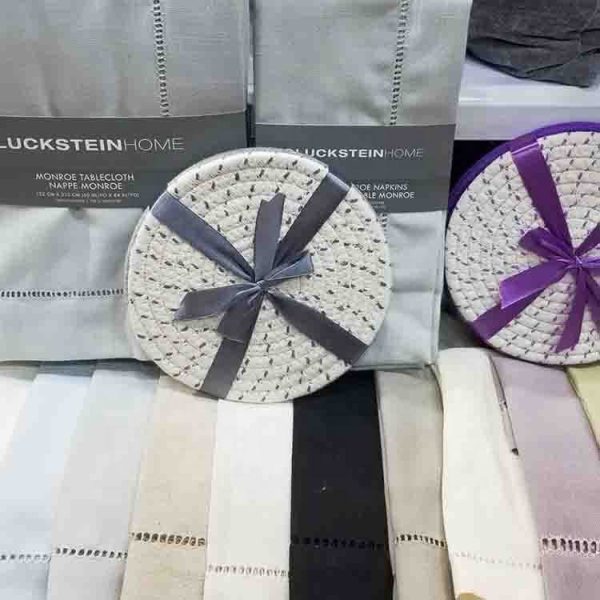
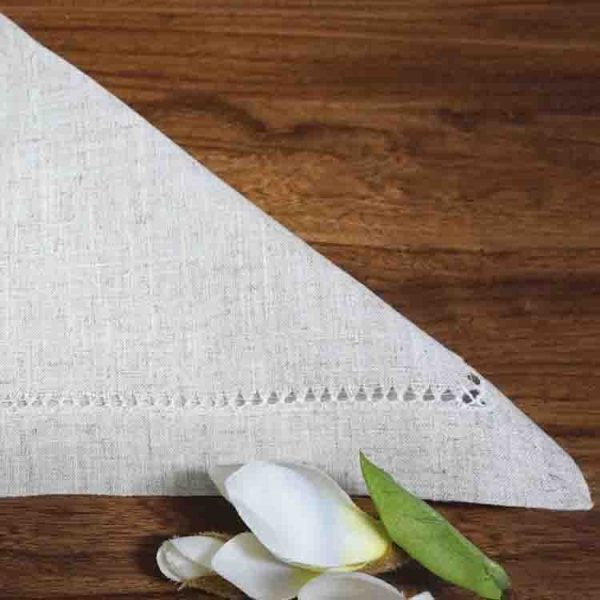
For hemstitch tablecloths, specific process KPIs involve edge binding precision, needle count consistency, and the durability of hems. Yiwu Jinyuan’s production team is highly skilled in key processes such as edge binding of tablecloths and quilting of placemats. Double-needle pressing and laser hollow engraving technology ensure smooth edges and three-dimensional patterns, significantly enhancing durability and refinement. The tablecloth’s hem must lay flat after repeated laundering, and the stitching must be uniform. These details are easily overlooked but form the backbone of a premium product. A top-tier supplier therefore measures process capability through the number of defect-free pieces per production batch and the standard deviation of hem width across 1,000 units.
Functional Performance: Waterproof, Oil-Proof, and More
Modern consumers no longer view a tablecloth as a mere decorative piece. They expect it to resist spills, stains, and heat. Consequently, one of the most valuable KPIs is the functional performance of the fabric. Yiwu Jinyuan has pioneered the application of nano anti-scratch finishing technology, achieving “three-proof” functions—waterproof, oil-proof, and heat-proof—on their tablecloths and tablemats. These products use a functional coating composite treatment that allows liquid stains to be wiped clean with a single wipe, eliminating the need for frequent machine washing. This “three protection and one exemption” (waterproof, oil-proof, heat-proof, and exempt from frequent washing) is a significant value proposition. For a supplier, the KPI here is the percentage of products that pass standardized water repellency and oil repellency tests after 20 home launderings, as well as the time required for a spill to bead up and roll off the fabric.
The Yiwu Jinyuan design team also continuously tracks international trends in home interior decoration. They have mastered digital heat transfer printing, computer embroidery, hand-knitting, and jacquard weaving. The patterns are vivid, long-lasting, and do not fade easily, which is a KPI for aesthetic longevity. In the hemstitch category, the combination of functional finishes with an elegant, traditional hemstitch pattern can be a unique selling point. Buyers should ask suppliers for evidence of functional test results and for samples of tablecloths that have undergone repeated washing.
Delivery Performance and Scalability
On-time delivery is a universal KPI, but for tablecloths, seasonality and large orders for holidays or banquets make lead time predictability particularly valuable. Yiwu Jinyuan’s factory area exceeds 10,000 square meters and is equipped with advanced sewing equipment and digital embroidery lines. Through large-scale production and refined cost control, the company has reduced the product delivery cycle by more than 20% compared to the industry average. That statistic is a direct KPI for buyers: if a typical supplier needs 45 days, Yiwu Jinyuan may deliver in 36. Achieving this requires not only a large factory but also sophisticated production planning. For a top-tier hemstitch tablecloth supplier, one must track the key metric of “supplier DIFOT” (delivery in full, on time). This should be at least 95%, with a dedicated team to manage order tracking and communication should any delay occur.
Scalability is another dimension. Can the supplier handle an order of 50,000 pieces in one season? Yiwu Jinyuan, with an annual capacity reaching several million pieces, is well-positioned for large-scale purchases. Moreover, they accommodate quick-response orders by leveraging automated cutting and intelligent hanging systems, which have significantly improved overall production efficiency. Buyers should measure the maximum monthly output that the supplier can realistically commit to without compromising quality.
Innovation and New Product Development Rate
A top-tier supplier isn’t just a manufacturer; they are a product development partner. The KPI for innovation can be quantified by the number of new SKUs introduced per quarter and the percentage of revenue coming from products launched in the past year. Yiwu Jinyuan develops hundreds of new products annually, with a quarterly new product update rate of over 30%. Their young and creative design team closely follows international trends in home interior decoration, skillfully integrating fashionable elements with practical functions. They support full-dimensional customization of patterns, colors, and sizes based on customer needs, which helps create differentiated dining tables and home textile products.
In the next three years, Yiwu Jinyuan has committed to product upgrades in three areas: the application of eco-friendly fabrics (such as reusable polyester and organic cotton), functional development (stain resistance and easy cleaning, antibacterial treatment), and the IPization of original designs. This continuous pipeline of innovation sets them apart. For buyers, a key KPI to assess is the supplier’s average time from concept to prototype, which should be less than two weeks for custom designs.
Customization and Service Responsiveness
Tablecloths are increasingly sold as part of a complete table setting, with coordinated napkins, placemats, and runners. Consequently, a supplier’s flexibility in offering multi-dimensional customization is a critical KPI. Yiwu Jinyuan can quickly complete personalized customization of patterns, colors, and sizes according to customer needs. They support a broad range of production processes, including digital heat transfer printing, computer embroidery, and jacquard weaving. The team is particularly skilled in turning inspiration into production-ready files—this speed is measured by sample confirmation time. A top-tier supplier should be able to provide a custom sample within 5 to 7 working days and a no-print sample, such as hemstitch fabric switch, within 3 days.
Customer service responsiveness itself is a KPI. Yiwu Jinyuan upholds the service philosophy of “Customer needs-oriented” and provides professional pre-sales consultation, sample confirmation, production tracking, and after-sales service, no matter the order size. In today’s global market, communication must be fluent, multilingual, and available across time zones. Buyers should track supplier response time to inquiries—ideally under 4 business hours—and how quickly they receive updates when issues arise.
Compliance, Social Responsibility, and Environmental Impact
In the European and North American markets, compliance with environmental and social regulations is non-negotiable. The supplier’s KPI in this area includes holding certifications such as BSCI social responsibility audits, OEKO-TEX, or GOTS for organic textiles. Yiwu Jinyuan’s products are exported to Europe, the United States, Japan, South Korea, and Southeast Asia, and they have passed BSCI social responsibility audits and multiple international factory inspection standards. They also specialize in the development of degradable and recycled fabrics, as well as polylactic acid fiber and other green new materials. These environmental initiatives are increasingly important KPIs for buyers who aim to meet their own corporate sustainability targets.
Regarding compliance, the quality management system covers the entire process from fabric entry, semi-finished product processing, to finished product storage. This not only ensures quality traceability but also demonstrates a commitment to operational transparency. A top-tier supplier must be able to provide a completed quality inspection report for every batch, ideally with a data QR code that any buyer can scan to see test results.
Financial Stability and Cost Efficiency
While financial data is less transparent for private companies, key indicators of financial health include the firm’s longevity, the number of long-standing customers, and the breadth of its market presence. Yiwu Jinyuan has been deeply engaged in international trade with the belief “service and concern, credit and commitment, share and progress.” They have maintained a global client base, including several international home brands for which they are a long-term supplier. For a buyer, a supplier’s unit cost trend is also important—over time, the true cost should decline as process improvements are implemented, while maintaining quality. Yiwu Jinyuan’s refined cost control and automation investments exemplify how a top-tier supplier can deliver value without cutting corners.
Category Expertise and End-to-End Service
A KPI that often gets overlooked is a supplier’s deep specialization in the product category. When a supplier focuses solely on tablecloths and related items, they understand the subtle demands of those products, such as the proper way to finish a delicate hemstitch weave or how a drop size affects the tablecloth’s visual appeal. Yiwu Jinyuan has concentrated on the home textile niche market for years, maintaining the principle of “Small products, Great care.” They continuously iterate on fabric texture, pattern design, and functional details, giving ordinary products extraordinary qualities. This specialization is a critical KPI. A general textile manufacturer might offer a low price, but they cannot match the insight of a supplier who breathes table linen day in and day out.
Measuring the Unmeasurable: Aesthetic and Emotional Value
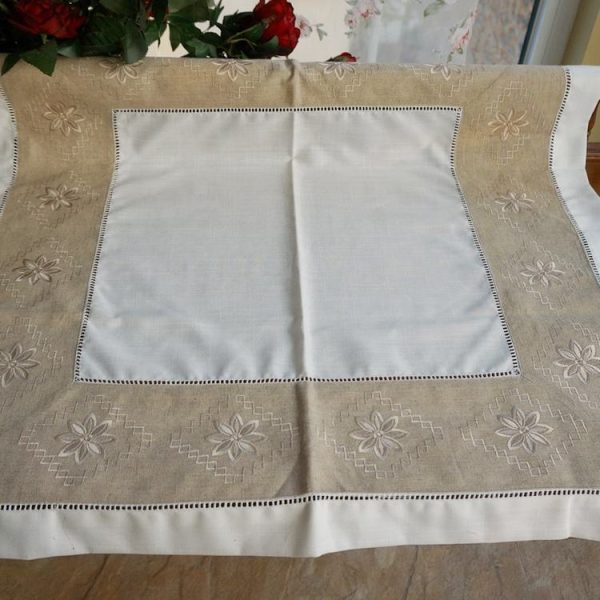
Finally, in the world of table decor, some KPIs are less tangible. For a top-tier supplier, the ability to create a “ritualistic daily life” for consumers through beautiful table settings is a key differentiator. Yiwu Jinyuan’s product lines include classic hemstitch tablecloths, which evoke a sense of tradition and gentility. Their designers not only follow trends but also look for connections to Chinese motifs, Japanese minimalism, and Nordic functionality. Through their products, the company aims to improve every ordinary meal into a designer scene. For a retailer or an online seller, these aesthetic qualities can be measured by customer review scores, product return rates due to silk distortion, and photography ease. A top-tier supplier’s product catalogue must tell a clear story with color palettes and shapes that are perfectly executed.
Key Performance Indicators in Summary
| KPI Category | Quantifiable Metric | Yiwu Jinyuan Reference |
|---|---|---|
| Quality | Finished product qualification rate | >99% |
| Functional Performance | Pass rate for waterproof and oil-proof tests after 20 washes | High-density weave + nano coating |
| Delivery | Delivery cycle vs. industry average | 20% shorter lead time |
| Innovation | Quarterly new product update rate | >30% |
| Customization | Time for sample confirmation | 5–7 days for custom patterns |
| Compliance | Fulfills international factory standard | BSCI audit and ISO 9001 |
| Capacity | Annual production volume | Several million pieces |
To conclude, identifying a top-tier hemstitch tablecloth supplier demands a comprehensive evaluation of quality, operational efficiency, innovation, and sustainability. Yiwu Jinyuan Trading Firm demonstrates that these KPIs are not theoretical—they are embedded in the company’s daily practice. With a professional production team, stringent quality controls, fast delivery, and a forward-looking commitment to eco-friendly fabrics and smart functionality, this supplier points the way for what buyers should expect from a genuinely world-class partner. When evaluating any potential supplier, always ask for measurable evidence: defect rates, lead times, functional reports, and certifications. A supplier who can transparently provide those numbers—and back them up with consistency—will likely be the key to a successful and lasting relationship.
The company’s business philosophy emphasizes “Quality as the Foundation, Integrity for the Long-term.” Whether the order is for 100 pieces or 100,000 pieces, the supplier’s dedication to craftsmanship and customer care remains the same. That, in essence, is the ultimate KPI for any home textile partner.