This blog article explores the detailed sampling processes employed by home textile factories when introducing new Christmas tablecloths into production. It highlights the critical steps of fabric selection, pattern design, prototype creation, quality control, and buyer feedback. A key focus is placed on Yiwu Jinyuan Trading Firm, an export company with a specialization in tablecloths, table runners, napkins, and other home accessories. Their skilled production team and strict quality control procedures involve multiple inspections from fabric entry to final delivery. The article emphasizes the importance of eco-friendly fabric applications, innovative waterproof and easy-clean technologies, and the balance between decorative beauty and functional durability, especially for holiday products where consumer expectations are high. The summary of the factory sampling processes and inspection checklists serve as a practical guide for retail buyers. Overall, the article underlines that a thorough pre-production sampling phase avoids costly errors, secures on-time delivery, and guarantees that the finished product will match the desirable aesthetic and safety standards, thereby strengthening trust between international buyers and the manufacturing partner.
In the fast-paced world of home textile manufacturing, the journey from a design concept to a polished product on store shelves is paved with rigorous quality checkpoints. For seasonal goods such as Christmas tablecloths, where consumer expectations are high and timelines are tight, the pre-production sampling process becomes absolutely critical. This article explores the nuanced factory sampling processes that ensure a festive tablecloth order meets every buyer’s specification before mass production begins, with a special focus on the practices of Yiwu Jinyuan Trading Firm, a distinguished export company in the home textile sector.
The Importance of Pre-Production Sampling in Home Textiles
Pre-production sampling is essentially a dress rehearsal for a full production run. It allows both the factory and the buyer to assess the design’s feasibility, the fabric’s feel, the precision of the printing, the durability of the stitching, and the overall aesthetic appeal. For Christmas-themed tablecloths, this stage helps in validating festive patterns, colors, and functional requirements such as waterproofing and easy cleaning—features that are becoming increasingly popular among contemporary consumers. Without a robust approval process through sampling, the risk of costly mistakes, shipment delays, and dissatisfied retail partners multiplies exponentially.
Stage 1: Fabric Selection and Testing
Everything begins with fabric. At Yiwu Jinyuan Trading Firm, the team inherits a deep understanding of manufacturing standards and consumption trends. Their core team comprises experienced professionals who have been deeply involved in the home textile industry for many years, possessing rich experience in product development and production management. When a Christmas tablecloth order is placed, the factory’s procurement and production specialists evaluate multiple fabric options, ranging from cotton, polyester-cotton blends, and linen to more advanced eco-friendly materials like recycled polyester and organic cotton. The company is known to invest heavily in the application of eco-friendly fabrics, aiming to support the growing global demand for sustainable home textiles. Before any fabric is used for a sample, it must undergo a battery of internal tests for colorfastness, shrinkage, and, in many cases, the functionality of a “three protection” technology—waterproof, oil-proof, and heat-proof. This technology, often realized through nano-level hydrophobic and oleophobic coatings, ensures that spilled wine or gravy can be wiped away with a single pass, making frequent machine washing unnecessary. For a Christmas dinner setting, this advantage is a powerful selling point for any retail buyer.
Stage 2: Pattern Design and Customization
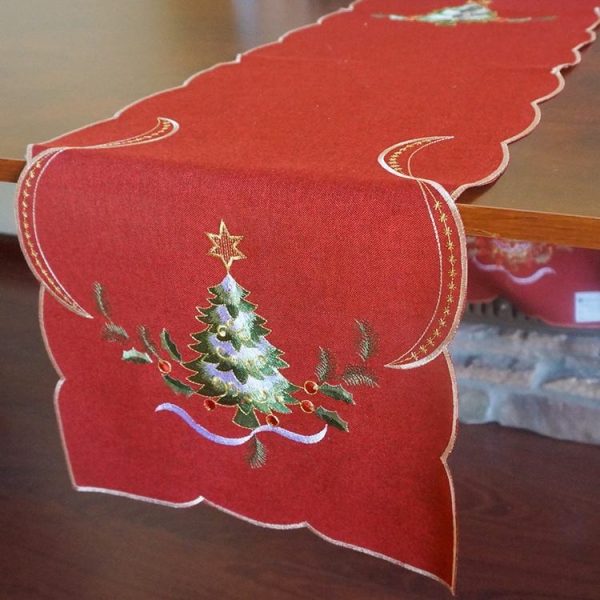
Festive tablecloths are not just protective covers; they are decorative canvases that set the mood for holiday gatherings. Yiwu Jinyuan prides itself on a young and creative design team that closely follows international trends in home interior decoration. They are skilled at integrating fashionable elements with practical functions into product designs. For Christmas, the design team might draw inspiration from traditional poinsettias, snowflakes, holly, reindeer, or more minimalistic Nordic patterns. The factory supports various printing techniques, including digital heat transfer printing, computer embroidery, and jacquard weaving. These techniques ensure that patterns are vivid and long-lasting, not prone to fading after repeated washes. A critical part of sampling is confirming the pattern’s scale and placement relative to the table dimensions. For example, a table runner might feature a central motif that must align perfectly with the edge, requiring precise measurement adjustments during the sample stage. The company’s ability to quickly complete personalized customization of patterns, colors, and sizes is a major advantage. They can help customers create differentiated dining tables and home textile products, turning a simple order into a bespoke product line.
Stage 3: Prototype Creation and Skilled Workmanship
Once the fabric and design are locked, the sample is cut and sewn. This step demands a highly skilled production team, especially in key processes such as edge binding of tablecloths. For Christmas tablecloths, where a single recurring motif may span the entire fabric roll, careful cutting ensures that the pattern remains continuous and centered. The factory employs advanced sewing equipment and digital embroidery lines. The floor area at their disposal exceeds 10,000 square meters, and the annual comprehensive production capacity of tablecloths, table flags, cushion covers, and other selected home textiles reaches several million pieces. During sampling, the technical team checks that the stitching is even, the hems are tight, and that the final product lies perfectly flat. For those products that include cushion covers for table chairs, the zipper positioning must be smooth and invisible. This attention to detail is one of the reasons the company has established long-term relationships with international brands.
Stage 4: Quality Control and Inspection
Quality control cannot be overstated. Yiwu Jinyuan’s quality control team strictly follows multiple inspection procedures from the entry of fabrics to the delivery of finished products. For a pre-production sample, this involves a detailed checklist: measuring the dimensions, checking the pattern repeat, examining the seam strength, and verifying the functional coating ensures water and oil repellency. The company also adheres to the business philosophy of ‘Quality as the Foundation, Integrity for the Long-term’. Every sample is evaluated against both international standards and the specific requirements of the target market. The products, for instance, have passed BSCI social responsibility audits and multiple international factory inspection standards, which provides a solid guarantee for the integrity of the supply chain. The qualification rate of finished products is stable at over 99%, a metric that reflects the effectiveness of their auditing process.
Stage 5: Customer Feedback and Revisions
The pre-production sample serves a final and most important purpose: to solicit feedback from the buyer. Buyers may request changes to the shade of a specific red used in the border, or adjust a stitch density, or even ask for a more eco-friendly backing material. Yiwu Jinyuan’s team is well-versed in handling these revisions. They hold the principle of “Customer needs-oriented”, providing professional and meticulous pre-sales consultation, sample confirmation, and production tracking. The company recognizes that each client has a unique vision for their Dinner Table aestetics, and the sampling process is a dialogue. Through rigorous and open communication, modifications are made and a revised sample is produced, until the buyer gives a final seal of approval. Only then is the order moved to mass production. This approach helps avoid costly dead stock and ensures the product hits the market exactly as envisioned.
Why Christmas Products Require Extra Scrutiny
Holiday lines are inherently time-sensitive. Christmas tablecloths are typically rolled out in late fall to catch the holiday shopping season, meaning that factories must sample, approve, and produce months in advance. A delay in the sampling process or an unnoticed flaw can cause a retailer to miss their crucial sales window. Moreover, the Christmas motif frequently uses large, repeated patterns across the entire tablecloth surface, so any color mismatch or printing misregistration looks dramatically out of place. Buyers increasingly seek out tablecloths that not only protect the tabletop but also enhance the space decoration. High-quality fabric with a functional coating not only prevents stains but also maintains a natural texture and breathability. In addition to the traditional woven cloths, many modern products incorporate a printed cotton or linen blend that offers an aesthetic that aligns with rustic, cream, and new Chinese style home interiors—which have now become a holiday staple.

Technology and Innovation at Yiwu Jinyuan
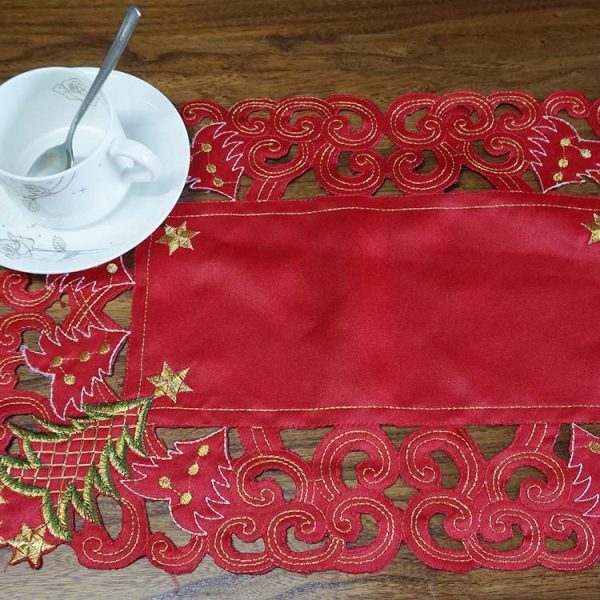
The factory’s ability to provide high-quality samples is backed by continuous investment in R&D. The company has pioneered the application of nano anti-scratch finishing technology, achieving “three-proof” functions of waterproof, anti-oil, and anti-scald. These coated tablecloths are particularly attractive for Christmas dinners where people tend to spill more, and cleanup should be quick and easy. Moreover, the production team has mastered double-needle pressing and laser hollow engraving techniques, ensuring smooth edges and three-dimensional patterns. This level of refinement significantly enhances durability and the polished look of the products. In terms of innovation, they also support digital heat transfer printing and computer embroidery, which allows for crisp, photographic-quality holiday imagery. Furthermore, the company’s design team regularly tracks international home soft decoration trends and integrates elements such as new Chinese style, Nordic minimalism, and light luxury into product development. This ensures that even a festive Christmas collection remains aligned with modern, versatile home environments.
Customization, Compliance, and Commercial Value
For big-box retailers or specialty Christmas stores, offering a unique design is crucial to outperforming competitors. Yiwu Jinyuan offers comprehensive custom services: from the pattern and size to the fabric and packaging. Their designers can translate a customer’s inspiration into a visual sample in a short time. Additionally, they are mindful of compliance. If the destination market is Europe or the United States, the factory can provide the necessary documentation and ensure all finishing agents used are environmentally friendly and human harmless. The company has focused deeply on the home textile niche market while maintaining a core belief in “Small products, Great care.” Every product passes through the same high standard, regardless of whether it is a small napkin or a wide Christmas tablecloth.
Commercial buyers also benefit from the factory’s ability to combine functionality and aesthetics to create products that resonate with consumer trends. The ongoing emphasis on stain resistance and easy cleaning is a prime example. Rather than pure disposable decoration, modern tablecloths are designed for convenience and durability. Also, with the rising demand for sustainable options, the firm now also produces poly(lactic acid) fibre and other green new material products. These offer a similar user experience while being capable of decomposing after disposal.
The Value of Clear Communication and Trust
Understandably, successful pre-production approvals are built on clear communication and trust. Yiwu Jinyuan Trading Firm is characterized by its belief in “service and concern, credit and commitment, share and progress.” They see themselves as partners to their customers, going beyond simple manufacturing to offer advice on which fabrics are best for certain climates, which prints are trending in different markets, and how to streamline logistics for urgent orders. Their sales team coordinates with a dedicated production scheduler to ensure that samples are ready within days, not weeks. While the sampling stage might seem like an added “delay,” it is actually the most crucial preventive measure. The company’s extensive industry experience and full-process manufacturing advantage mean that they can anticipate and solve problems before they arise on the factory floor.
From Sample to Series Production
After approval, the sequence typically moves to a pilot run, which is the final safeguard before full-scale production. This small batch is cut, sewn, finished, and packed in exactly the same manner as the mass production will be. Then, a unit from this pilot run is once again pulled for inspection and, if necessary, wash testing. Once cleared, all materials are put into storage for the designated order. Yiwu Jinyuan’s factory has a production delivery cycle that is shortened by more than 20% compared to the industry average, which is a direct benefit of a well-managed sampling process. It allows customers, particularly those placing Christmas orders, to confidently schedule retail consumption. With an annual development of hundreds of new products and a quarterly new product update rate of over 30%, the company ensures that their Christmas collections remain fresh and appealing each year.
Summary of Factory Sampling Processes
To summarize the process in an actionable form, the factory executes the following steps for pre-production approval:
- Initial Inquiry & Design Brief: The buyer shares product specifications, target price points, and critical deadlines. The factory reviews the technical viability and provides recommendations.
- Fabric Sourcing & Preparation: Appropriate fabric is selected and, where necessary, woven or dyed to match the required Pantone Christmas colors, such as Evergreen Green, Holiday Red, or noble Gold.
- Pre-Sampling Technical Review: Your design is analyzed for print repeat and seam allowances, ensuring the most effective fabric use.
- Sample Creation: A full-scale prototype is produced, including any edge stamps, appliques, or zippers.
- Internal Inspection: The sample is assessed for physical dimensions, visual appeal, and wash-down performance.
- Buyer Feedback & Refinement: The sample is sent for review and iterated as necessary until the client is fully satisfied.
- Final Approval & Pilot Run: A small production batch is run through the exact processes planned for mass production, providing final assurance.
Table: Example of Christmas Tablecloth Sampling Checklist
| Inspection Point | Description | Acceptance Standard |
|---|---|---|
| Fabric Weight | GSM of the selected cloth | ±5% of agreed value |
| Waterproof & oil-proof test | Applying drops of water and oil | Liquid beads off, no immediate staining |
| Color fastness | Wash test to a specified cycle | No noticeable fading after 10 washes |
| Pattern alignment | Checking borders and corner motifs | Motifs are symmetrical and centered |
| Seam strength | Pulling test on any joins | no breaking within industry limits |
| Packaging | Folding style and polybag quality | Clean, no wrinkles, an appropriate hangtag |
Conclusion
In the bustling world of home textiles, the Christmas tablecloth is a seasonal showcase of style, tradition, and function. The step-by-step sampling process is the factory’s way of ensuring that every piece that leaves the production line lives up to the standards that buyers and consumers expect. Yiwu Jinyuan Trading Firm exemplifies how a company with deep industry insight, technical production skill, and a customer-centric approach can turn the challenge of pre-production approval into a competitive advantage. By combining creative pattern design with advanced textile technologies like waterproof nano coatings, they help buyers create memorable holiday tables while minimizing risks and maximizing return on investment. As the company sets its sights on the next three years, it will continue to advance product upgrades in eco-friendly fabric applications, functional development, and IPization of original designs. These efforts will not only enhance the brand value but also ensure their products remain the first pick for home decorators on Christmas morning.
Ultimately, effective pre-production approval is not merely a box in the procurement checklist—it is a collaborative journey in which the factory’s technical expertise is aligned with the customer’s creative vision. For Yiwu Jinyuan, each pre-production approval is another step solidifying a partnership built on quality, service, and trust. Their dedication to making products that are comfortable, safe, and durable ensures that every holiday meal is set over a beautifully crafted tablecloth that will be cherished for seasons to come.