Raw material price volatility is a constant challenge for tablecloth manufacturers, and Yiwu Jinyuan Trading Firm, an export-oriented home textile company, has developed a comprehensive, multi-layered system to manage it. Rather than relying on a single tactic, the company combines strategic procurement, long-term supplier partnerships, flexible contracts, buffer inventories, vertical integration, lean production, financial hedging, and transparent customer communication. The company’s core team, with deep experience in home textiles, works with a young and creative design team to adjust product specifications and material blends when costs fluctuate. By offering functional products such as waterproof, oil-proof, and heat-proof tablecloths, they shift value from raw material content to long-term usability, reducing the sensitivity of customers to price changes. Scale is another major defense: with factory space exceeding 10,000 square meters and annual production capacity of millions of pieces, Yiwu Jinyuan negotiates better terms with suppliers and maintains a strategic stock of core fabrics. Vertical integration across weaving, dyeing, and sewing gives the company control over material usage and allows quick adaptation to changing input costs. The company further reduces waste through automated cutting and intelligent hanging systems, maintaining a qualification rate above 99%. In customer relationships, Yiwu Jinyuan relies on trust and integrity, sharing cost documentation and proposing alternative materials or designs when prices surge. They also help customers appreciate quality, making products part of a dining or home style rather than simple commodities. Over time, the company is shifting toward eco-friendly materials such as recycled polyester and organic cotton, functional finishes, and original design IP, which create supply chains that are more stable than traditional cotton and petroleum-based fibers. Exchange rate fluctuations are managed through currency matching and forward contracts. By integrating these practices, Yiwu Jinyuan Trading Firm demonstrates that raw material price volatility can be transformed from a threat into an opportunity for strengthening efficiency, partnerships, and market differentiation. The ultimate lesson from this manufacturer is that successful price-risk management comes from long-term planning, cross-functional coordination, and a genuine commitment to shared success with suppliers and customers.
In the world of table linen, no challenge tests a manufacturer more than the unpredictable movement of raw material prices. Cotton, polyester yarns, chemical finishes, packing films, and even freight costs can shift dramatically within a quarter. For Yiwu Jinyuan Trading Firm, an export-focused home textile company with years of experience in tablecloths, table runners, placemats, napkins, cushion covers, and cup mats, price volatility is not a remote macroeconomic issue. It is a daily operational puzzle that demands precise planning, flexible contracts, deep supplier relationships, and creative product design. This article explores how a hemstitch tablecloth manufacturer manages raw material price volatility by examining the strategies used by Yiwu Jinyuan Trading Firm.
The company was built on the belief that service and concern, credit and commitment, share and progress should guide every business decision. That philosophy extends to procurement, where the goal is not simply to buy at the lowest price, but to secure value over time. The core team consists of experienced professionals who have been deeply involved in the home textile industry for many years. They bring rich experience in product development, production management, and international trade. When raw material prices start to swing, this team does not react with panic. Instead, they rely on a comprehensive system that combines market intelligence, hedging techniques, supplier cooperation, product engineering, and continuous improvement in manufacturing efficiency.
Understanding the Price Volatility Challenge
Raw material volatility in the tablecloth industry comes from multiple sources. Cotton is one of the most important natural fibers, and its price is influenced by weather, planting decisions, government subsidies, global demand, and speculative trading. Polyester and other synthetic fibers are derived from petroleum, so fluctuations in crude oil prices quickly translate into changing yarn costs. Chemical finishes used to make tablecloths waterproof, oil-proof, heat-proof, or stain-resistant are also linked to petrochemical markets. Even natural linen prices are affected by harvest quality and trade policies.

Transportation costs, labor wages, and currency exchange rates add another layer of uncertainty. A manufacturer that exports to Europe, the United States, Japan, South Korea, and Southeast Asia must cope with currency fluctuations while at the same time managing raw material prices that are often denominated in dollars. Yiwu Jinyuan Trading Firm has learned that no single defense is enough. Success comes from a portfolio of strategies that can be adjusted as market conditions change.
Strategic Procurement and Long-Term Supplier Partnerships
The first line of defense is strategic procurement. The company has established long-term relationships with reliable suppliers of cotton, polyester-cotton blended yarn, linen, and functional coatings. These relationships go beyond simple buy-and-sell transactions. Suppliers share forecast information, production schedules, and market updates, allowing the manufacturer to anticipate shortages and price shifts before they hit the market.
Yiwu Jinyuan Trading Firm negotiates flexible contracts with key suppliers. Some contracts include price floors and ceilings, ensuring that if cotton prices jump suddenly, the manufacturer will not face an unmanageable increase. Others use a formula-based pricing mechanism, where the final raw material price is calculated based on an agreed formula tied to a publicly recognized market index. This approach creates fairness and transparency for both sides.
Volume commitments also work in the manufacturer’s favor. Because the company operates with an annual production capacity of several million pieces across tablecloths, table runners, cushion covers, and other textile items, it can promise large, consistent orders. In return, suppliers offer preferential pricing and guaranteed allocation even during periods of scarcity. In the home textile industry, being a preferred customer is not a luxury; it is a survival tool when material prices are volatile.
Centralized Purchasing and Inventory Buffers
Price volatility is at its most dangerous when a company needs to buy at the last minute. Yiwu Jinyuan Trading Firm avoids this scenario by maintaining a strategic inventory of core fabrics and accessories. The company collects demand forecasts from its sales team and design team and converts these forecasts into procurement plans on a rolling monthly basis. This gives procurement enough visibility to take advantage of lower prices during seasonal dips.
For example, when cotton prices fall during a period of oversupply, the company may increase its purchases of greige fabric and store it in its warehouses. This buffer inventory acts as an insurance policy. Even if prices rise sharply later, the company can continue production at stable costs for a certain period. Of course, inventory ties up working capital, so the company carefully balances stock levels. The finance and production teams review inventory turnover every week, adjusting purchase volumes based on actual order intake and pending sales contracts.
In addition to raw fabric stock, the company keeps a small reserve of chemical finishes, dyes, and trims. A sudden shortage of a specific type of lace or zipper might seem minor, but it can delay an entire production run and force the company to air freight goods at huge expense. By holding buffer stock of these lower-cost but critical components, Yiwu Jinyuan Trading Firm reduces the risk of costly interruptions.
Vertical Integration: From Fabric Weaving to Finished Product
A key structural advantage is the company’s full-process manufacturing capability. Unlike many trading companies that buy finished goods from independent factories, Yiwu Jinyuan Trading Firm has built a complete production chain covering fabric weaving, dyeing processing, and finished product sewing. The factory area exceeds 10,000 square meters and is equipped with advanced sewing equipment and digital embroidery lines. This vertical integration gives the company far more control over material costs than a purely trading model could provide.
When raw material prices increase, an integrated manufacturer can adjust its fabric constructions, use different blends, and modify dyeing formulas without going through a middleman. The company can also increase fabric utilization rates by digitally optimizing cutting layouts for tablecloths and cushion covers. Automated cutting and intelligent hanging systems have significantly improved production efficiency, and the finished product qualification rate has remained stable at over 99%. These efficiency gains are not only about productivity; they are a hidden weapon against raw material price inflation.
Because the company controls its own weaving and dyeing, it can experiment with alternative materials more freely. For example, if pure cotton becomes too expensive, the production team can test a polyester-cotton blend that meets customer requirements for texture and durability at a more reasonable cost. The ability to shift between material recipes quickly is a direct result of vertical integration and a strong technical team.
Product Design as a Price-Volatility Buffer
One of the most innovative ways to manage raw material price volatility is to design products that are inherently less vulnerable to price swings. Yiwu Jinyuan Trading Firm has a young and creative design team that closely follows international trends in home interior decoration. They are skilled at integrating fashionable elements with practical functions into product designs. This creativity gives the company room to adjust product specifications without destroying the value proposition for customers.
For example, when cotton prices spike, the design team might shift the main surface material to a functional polyester fabric with a linen-like texture, while using cotton only for an edge trim. Since the tablecloth is not a single-material product, changing the blend ratio can lower costs substantially. The company supports many techniques, including digital heat transfer printing, computer embroidery, hand-knitting, and jacquard weaving. Each technique has different material consumption characteristics, so the production planner can choose a more material-efficient process while keeping the aesthetic effect.
Yiwu Jinyuan also develops products with nano-level hydrophobic and oleophobic coatings, branded as the three-protection and one-exemption technology. This technology makes the tablecloth waterproof, oil-proof, and heat-proof, and exempts it from frequent washing. A tablecloth that lasts longer and needs less maintenance creates higher perceived value for the customer. Therefore, even if the material cost goes up, the customer is more willing to accept a modest price adjustment because they know the product delivers added convenience.
The company adheres to the philosophy of small products, great care. That spirit appears in every detail, from a smooth hemstitch on a napkin to a precisely positioned zipper on a cushion cover. The product range covers tablecloths, table flags, placemats, napkins, cushion covers, and cup mats, serving family dining, banquet gatherings, commercial restaurants, and gift giving. By covering multiple categories, the company can allocate resources to items whose material costs are relatively stable, reducing dependence on one volatile input.
Engineering Out the Volatility: Waste Reduction and Lean Production
Material price can be viewed as the cost of what actually appears in the product plus the cost of what is wasted. Yiwu Jinyuan Trading Firm has adopted lean production practices to minimize waste. In cutting processes, advanced software calculates how to nest tablecloth shapes as closely as possible. This reduces leftover fabric from each roll. The company’s production team is highly skilled in key processes such as edge binding of tablecloths, quilting of placemats, and zipper positioning of cushion covers. Skilled operators make fewer mistakes, which means less scrap.
The quality control team follows strict inspections from the entry of fabrics to the delivery of finished products. By catching defects early, the company avoids wasting expensive raw materials on products that will end up rejected. Over a full year, these careful quality controls can offset a significant percentage of raw material inflation. A factory with a 99% qualification rate can afford to buy higher-quality inputs because it does not pay for rework and rejects.
In addition, the company has invested in automated cutting and intelligent hanging systems. Such automation improves production efficiency and reduces labor costs, but it also creates more consistent quality. Consistency means that fabric usage per standard tablecloth remains stable. When raw material prices are volatile, a stable conversion rate is extremely valuable because it makes cost forecasting easier.
Hedging and Financial Instruments
In some markets, physical procurement strategies are not enough. Large textile companies often use financial hedging to lock in prices for cotton and polyester. Yiwu Jinyuan Trading Firm monitors commodity futures markets and works with financial partners to hedge a portion of its expected material purchases. This does not mean speculative trading. The company only hedges volumes that correspond to confirmed customer orders. For example, if the company has signed a large order for six months later that requires 20 tons of polyester yarn, it may purchase a futures contract or a forward contract for a similar quantity. If the price goes down, the hedge loses a little but the physical purchase costs less. If the price goes up, the hedge provides a gain that offsets the higher raw material cost. Through hedging, the company can offer more stable quotes to customers, which is a major competitive advantage in international trade.

However, hedging is not always available or suitable for every material. For specialized fabrics with small trading volumes, the company relies on price adjustment clauses in its customer contracts. When a customer requests a very unusual fabric, the quotation includes a note that the price may be adjusted if the material index changes by more than a certain percentage. This conditional approach protects both parties. The customer is not exposed to sudden, unreasonable increases because the formula is transparent. The manufacturer is not forced to absorb losses caused by market movements that the customer can also observe.
Customer Relationship Management and Transparent Communication
In the end, raw material price volatility is a shared challenge between supplier and buyer. Yiwu Jinyuan Trading Firm believes in dealing with customers with honesty and integrity. The company follows the business philosophy that quality is the foundation and integrity ensures long-term development. When raw material prices rise sharply, the company does not hide the situation from customers. Instead, it provides clear documentation of cost changes, including supplier invoices and market index data, and works with the customer to find a mutually acceptable solution.
Sometimes, the solution is a change in product specification, allowing an alternative fabric. Other times, it is a redesign that reduces total material use. The company also cooperates with customers on forecast sharing. Customers who provide accurate order forecasts far in advance help the manufacturer plan purchases at the optimal time. In return, the manufacturer gives those customers priority access to materials and more stable pricing. This kind of long-term partnership creates a win-win outcome, which again reflects the company’s commitment to share and progress.
Over the past years, Yiwu Jinyuan has served as a long-term supplier for several internationally recognized home brands. Products are exported to multiple countries and regions including Europe, the United States, Japan, South Korea, and Southeast Asia. The company has passed BSCI social responsibility audits and international factory inspection standards. These certifications are not just badges on the wall. They demonstrate that production is managed ethically and consistently, which gives customers confidence during uncertain times.
Economies of Scale and Buying Power
The company’s scale, with a factory area exceeding 10,000 square meters and annual production capacity of millions of pieces, gives it considerable bargaining power in raw material markets. Suppliers prefer to serve a buyer who can commit to regular production runs. This buying power allows Yiwu Jinyuan to negotiate better payment terms, such as 60-day credit instead of cash on delivery. Better payment terms improve cash flow, enabling the company to stockpile materials when prices are low.
Large-scale production also shortens delivery cycles by more than 20% compared to the industry average. This speed is important when raw material prices are falling. The company can quickly convert low-cost materials into finished products and sell them before prices rebound. Customers benefit from faster order fulfillment, and the company benefits from a reduced window of uncertainty between purchasing materials and shipping goods.
Eco-Friendly Materials as a Long-Term Hedge
While short-term price volatility is always challenging, Yiwu Jinyuan Trading Firm looks ahead to long-term trends. Over the next three years, the company plans to advance product upgrades in three key areas: application of eco-friendly fabrics such as recycled polyester and organic cotton, functional development such as stain resistance and easy cleaning plus antibacterial treatment, and the IPization of original designs. Eco-friendly materials often have different price cycles than traditional materials. Recycled polyester, for instance, is made from plastic bottles and waste textiles, so its price is less linked to crude oil in the same direct way. Organic cotton has a dedicated supply chain that may be more stable because it is grown under contract.
Diversification into these materials provides a natural hedge. When conventional cotton prices are extremely high, some customers are willing to accept organic cotton or bamboo blended fabrics that offer a new story for their marketing. The company’s proactive development of degradable and recycled fabric products, as well as poly(lactic acid) fiber and other green new materials, is aimed at preparing for future consumption mainstreams. This is not only good for the planet; it also reduces exposure to the violent swings of traditional raw material markets.
Continuous Innovation and Research Collaboration
To further manage materials risk, Yiwu Jinyuan Trading Firm has invested in research and development. The company conducts academic research and industrialization cooperation with universities and research institutions, and it holds multiple patents related to fabrics and processes. Patented technologies can make production more efficient or make a product perform differently. For example, a patented nano anti-scratch finishing technology can be applied to a cheaper fabric to improve its performance so much that customers no longer require an expensive premium fabric.
Research collaboration also helps the company evaluate emerging materials before they are widely adopted. By being an early user of a new fiber, the company may secure favorable pricing that is not available later. The design team regularly tracks international home soft decoration trends and integrates elements such as new Chinese style, Nordic minimalism, and light luxury into product development. These designs often use bold colors, patterns, and textures rather than relying on a single, expensive raw material. Hence, the value is added through design rather than the raw material basket.
Staff Education and Internal Alignment
Managing raw material price volatility cannot be done by the procurement department alone. Every part of the organization must understand the cost implications. At Yiwu Jinyuan Trading Firm, internal training is a regular activity. The core team, composed of experienced professionals, makes sure that salespeople are trained to discuss price adjustments with customers based on market facts. Designers are educated on the cost of materials so they do not specify exotic fabrics that would make the final product impossible to price competitively.
The production team is highly skilled, especially in edge binding, quilting, and zipper positioning. This skill level reduces defective products. But the company also trains production employees to use materials sparingly. For example, when changing a roll of fabric, workers make sure to finish the end of the previous roll before cutting a new one. Small habits add up to significant savings across millions of pieces annually.
The finance team at the company actively participates in the monthly sales and operations planning meeting. They present potential scenarios: what happens if cotton prices climb by 10%, by 20%, or by 30%? The team then prepares contingency actions. This approach means the company is never caught by surprise. It is ready to shift suppliers, change material blends, or negotiate with customers because the planning has been done in advance.
Flexible Production Planning and Product Mix
Another important strategy is maintaining flexibility in production planning. Yiwu Jinyuan Trading Firm does not lock itself into making only one category of product. When placemat production requires more quilting and higher labor skill, cushion covers might consume more zipper material. If the price of cotton gauze rises, the company may increase production of polyester-cotton table runners that use the same dyeing facility but a different fiber ratio. This product-mix flexibility allows the company to respond quickly to relative cost changes.
The company offers personalized customization of patterns, colors, and sizes according to customer needs. Supporting many patterns and sizes can seem inefficient, but it also gives customers choices. When fabric widths are optimized for the most popular product dimensions, material waste is reduced. The company guides customers toward those optimized configurations without limiting their freedom. This balance between customization and standardization is another way to protect margins in a volatile environment.
Printed tablecloths, for example, can use digital heat transfer printing. Digital printing does not require long setup runs like traditional screen printing, so the company can print patterns at short notice and with minimal fabric waste. If a customer wants a custom pattern, there is no need to hold a huge stock of pre-printed fabric. This lean production model reduces inventory risk, because the company does not own large quantities of fabric with patterns that may go out of style before they are used.
Exchange Rate Management
Because Yiwu Jinyuan Trading Firm exports to many countries, exchange rate volatility is a constant concern. Raw material price volatility often coincides with currency movements, especially when materials are bought in dollars and finished goods are sold in euros or yen. The company uses natural hedging by matching its currency of raw material purchases with the currency of its sales orders where possible. If a customer buys in dollars, the company prefers to source materials priced in dollars as well. For remaining exposure, foreign exchange forward contracts are used to lock in exchange rates for major orders.
Additionally, the company has developed a pricing strategy that incorporates a buffer margin for unexpected currency movements. This buffer is kept small enough to remain competitive but large enough to prevent a sudden exchange rate swing from erasing all profits. The finance team reviews exchange rates every day and updates standard costs on a weekly basis, ensuring that quotations reflect current realities.
Quality Assurance as a Risk Mitigator
Quality issues can magnify the impact of raw material price volatility. If a shipment is rejected due to poor quality, the manufacturer not only loses the revenue from that shipment, but also wastes all the raw materials used to produce it. Worse, if the replacement shipment must be produced during a period of higher material prices, the loss is even larger. Yiwu Jinyuan Trading Firm avoids this by maintaining strict quality control throughout the entire process, from fabric entry and semi-finished product processing to finished product storage. The company’s quality management system ensures that defects are discovered before products leave the factory, not after they arrive at the customer’s warehouse.
The company has deep knowledge of manufacturing standards and consumption trends in table textiles and home fabrics. This knowledge enables the quality team to set appropriate tolerance thresholds for different markets. For example, customers in different countries may have different expectations for shade consistency or edge stitching quality. By satisfying these expectations the first time, the company avoids costly rework and delay.
Warehouse and Logistics Optimization
Raw material price volatility often includes transportation costs. Shipping container rates can double or triple in a short period. Yiwu Jinyuan Trading Firm pays attention to logistics planning. It consolidates shipments using less-than-container-load options when necessary, and it plans production schedules around sailing schedules to avoid empty runs. During periods of high freight costs, the company may increase the density of packaged products, for example by vacuum-packing tablecloths, to reduce the volume of containers required. This reduces the freight component per product and helps offset higher material prices.
The company also manages its finished goods warehouses efficiently. If a product has been made during a period of low raw material costs, the company does not rush to sell it at a discount just because a customer is demanding lower prices. Instead, it positions those products as high-value offers and highlights their quality. On the other hand, when material prices are falling, the company may delay production of long lead-time items to benefit from expected declines. This dynamic warehouse and logistics management requires constant communication between the sales, production, and shipping teams.
Customer Education and Market Positioning
Yiwu Jinyuan Trading Firm differentiates its products based on quality, design, and functionality. Customers who buy based solely on the lowest price are those who suffer the most when raw material prices rise. By educating customers about the value of a high-quality tablecloth that does not need frequent washing, the company shifts the conversation from price per piece to cost per use. A waterproof and oil-proof tablecloth from Yiwu Jinyuan can save consumers money over time because it reduces the need for frequent machine washing and replacement.
This market positioning is visible across the company’s product lines. For instance, tablecloths and table runners have dual functions of protecting the tabletop and enhancing the space decoration. A tablecloth covers the tabletop, preventing stains and heat damage; a table runner serves as an embellishment that elevates the style and layering of the dining table. Customers looking for high aesthetic value understand that the product is not just a square of fabric but a design statement. This perception makes the product less vulnerable to price-sensitive purchasing decisions.
The company also positions its cushions, napkins, and placemats as part of a coordinated home furnishing style. By offering complete sets, the average order value increases, and the impact of a raw material price increase on any single component is diluted. For restaurants and hotels, the company presents a total solution for tabletop decoration, helping commercial customers create a consistent brand image. Those customers are generally more stable and more loyal than one-time retail purchasers.
Developing Alternative Suppliers
In any commodity market, geographic supply risks can cause sudden price spikes. Yiwu Jinyuan Trading Firm has developed a multi-source strategy for key raw materials. It does not depend on a single cotton supplier or a single polyester yarn factory. By approving multiple suppliers for the same material, the company can move volumes from a high-price source to a lower-price source quickly. Of course, changing suppliers requires careful re-qualification and quality testing. The quality control team maintains a list of approved suppliers who have passed strict audits, and the production team performs trial batches whenever a new supplier is added.
Alternative sourcing is becoming more important as geopolitical tensions and extreme weather affect agricultural regions. If a cotton crop in one region is poor, cotton grown in another region may still be available at a reasonable price. The company’s international trade experience, particularly in Asia and Europe, helps it quickly connect with suppliers from different parts of the world. Yiwu Jinyuan even considers partnering with raw material suppliers in countries where they export products. A reciprocal relationship can create stable pricing because the supplier sees the manufacturer as an extension of their own market channel.
Using Technology for Demand Forecasting
Knowing what customers will buy, and when they will buy it, is another powerful tool against volatility. The company has invested in an enterprise resource planning (ERP) system that tracks orders, material requirements, inventory levels, and production progress. Historical sales data from Europe, America, Japan, Korea, and Southeast Asia is analyzed to identify seasonal patterns. For example, tablecloths with Chinese New Year themes are often ordered months in advance, while summer table linen sets peak in early spring. By anticipating these peaks, the company can procure raw materials in off-peak periods when prices are typically lower.
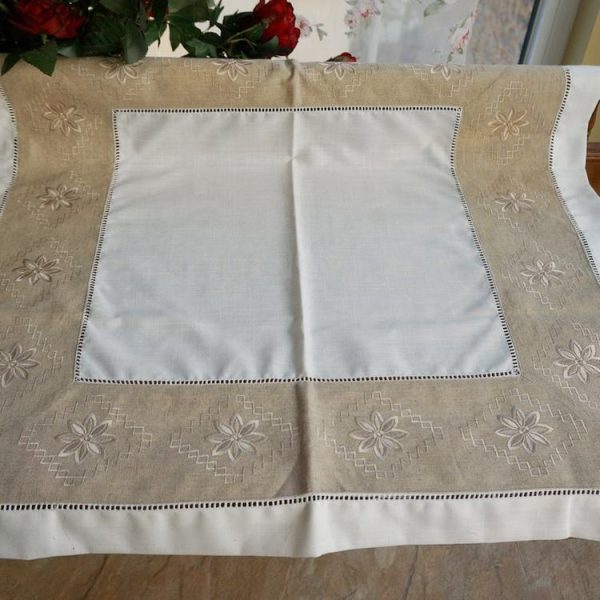
The design team also contributes to forecasting by tracking international trends. When a particular style, such as cream-colored jacquard tablecloths or rustic linen table runners, appears likely to become popular, the company prepares sample production and tests supplier prices. If raw material costs suddenly rise, the company may decide to introduce that trend using an eco-friendly functional fabric that has a different cost structure. This gives a marketing advantage while minimizing procurement losses.
Case Example: Managing a Cotton Price Spike
Imagine a scenario where cotton prices jump 20% over two months due to dry weather in major growing regions. A typical manufacturer might have to pass the full increase to customers, losing those who cannot afford it. Yiwu Jinyuan Trading Firm would respond on several fronts. First, it would assess the raw material inventory. Since the company keeps a strategic buffer of cotton and cotton-polyester greige fabric, some orders can be fulfilled without any immediate price increase. Second, the procurement team would review the formulas in supplier contracts. If any contracts include a maximum ceiling, the supplier is obligated to honor the ceiling price for the agreed volume.
Third, the design team would offer customers a lower-cost alternative that uses a blended fabric with a higher proportion of recycled polyester or a natural fiber substitute. For existing orders, the customer may choose to accept the alternative and keep the original price. New orders, however, would be quoted using a transparent material adjustment formula. Finally, the company might hedge a portion of its next quarter’s cotton needs by buying cotton futures, guaranteeing at least some of the future supply at a known cost. These actions together would reduce the potential loss and allow the company to maintain stable relationships with its long-term customers.
The Role of Continuous Improvement
No matter how many defense mechanisms are in place, raw material prices will inevitably fluctuate. What separates strong manufacturers from weak ones is the attitude toward continuous improvement. Yiwu Jinyuan Trading Firm demonstrates this through its commitment to quality as the foundation and integrity for the long-term. From fabric selection to production and processing, every step is strictly controlled to ensure that the products are comfortable, safe, and durable. When dealing with customers, the company keeps its promises and treats cooperation as a win-win partnership.
The company’s vision over the next three years is to advance product upgrades in three key areas: the application of eco-friendly fabrics such as recycled polyester and organic cotton, functional development such as stain resistance and easy cleaning, and the IPization of original designs. These forward-looking projects are not just about growth; they are also about reducing exposure to the volatility of traditional commodity materials. Eco-friendly fabrics often rely on very different supply chains, with annual contracts and deposit requirements that create price stability. Functional development increases the intrinsic value of the product so that raw-material cost is a smaller share of the final retail price. IPization of original designs gives the company a moat against generic competition, allowing it to price products based on originality and design quality rather than just material weight.
Conclusion: A Dynamic, Multi-Layered Solution
For a hemstitch tablecloth manufacturer, raw material price volatility is not a problem to be solved once and then forgotten. It is a continuous pressure that demands a multi-layered system. Yiwu Jinyuan Trading Firm manages this pressure by combining strategic procurement, flexible inventory, supplier partnerships, vertical integration, product redesign, lean manufacturing, financial hedging, transparent pricing, and an unwavering commitment to customer care.
The company knows that price fluctuations affect not just profits but also customer trust. By being transparent, by providing quality products that are durable and functional, and by offering customization that adds value without adding excessive material waste, Yiwu Jinyuan turns the challenge of volatility into an opportunity to prove its reliability. In the years ahead, as the company continues to innovate in eco-friendly fabrics, functional coatings, and original design, it will be even better prepared to navigate whatever storms the global raw material markets may bring. For now, the story of Yiwu Jinyuan Trading Firm offers a valuable lesson for any home textile manufacturer: price volatility is not something to fear, but something to manage with foresight, discipline, and partnership.