Yiwu Jinyuan Trading Firm, a specialized exporter of tablecloths and related home textiles, offers a comprehensive model for seasonal inventory planning in the Christmas tablecloth market. The company understands that holiday demand is volatile, regionally diverse, and sensitive to trend changes. Its approach combines deep product knowledge, manufacturing flexibility, and collaborative customer forecasting to achieve a balance between overstocking and stockouts. The firm operates a large-scale production facility with automated cutting and embroidery systems, ensuring a short lead time of more than 20% faster than industry averages. This capability is particularly valuable during the Christmas season when orders peak and delivery reliability is paramount. Product lines are developed with both functional and aesthetic appeal, including waterproof and oil-proof tablecloths using nano coatings, as well as natural cotton and linen designs. The company also offers extensive customization options, enabling buyers to order unique patterns and sizes for differentiation. A key component of their inventory strategy is early planning cycles, starting in January and February, and maintaining semi-finished stock for quick response to unexpected demand. Sustainability is increasingly a part of the planning process, as the company incorporates recycled polyester, organic cotton, and other eco-friendly materials to meet market expectations. Post-season analysis helps refine future forecasts, and adherence to international quality standards secures trust with buyers across Europe, the Americas, Asia, and Oceania. The manufacturer’s business philosophy of quality, integrity, and customer-centric service guides its inventory decisions. By combining data-driven forecasting, flexible manufacturing, and open communication with customers, Yiwu Jinyuan Trading Firm effectively navigates the challenges of Christmas tablecloth production, serving as a model for seasonal inventory planning. The summary concludes that long-term supplier relationships and a culture of constant improvement are what make the difference in the highly competitive and dynamic holiday home textile market.
As the holiday season approaches, home textile suppliers face one of the most complex challenges of the year: matching supply with unpredictable festive demand. For a Christmas tablecloth manufacturer, seasonal inventory planning is not merely a logistical exercise; it is a strategic balancing act that requires deep market insight, flexible production, and close collaboration across the entire supply chain. Yiwu Jinyuan Trading Firm, an export company specializing in international trade of tablecloths, table runners, placemats, napkins, cushion covers, and cup mats, has developed a robust approach to this annual task. With years of experience in the home textile niche market, the company has mastered the art of seasonal inventory planning for Christmas-themed products while maintaining its reputation for quality, delivery reliability, and customer-centric service.
Understanding the Unique Demand Cycle of Christmas Tablecloths
Christmas tablecloths are not ordinary everyday textiles. They are seasonal products with a short but intense sales window. Retailers and importers typically place orders months in advance, aiming to have goods arrive well before the holiday entertaining season begins. Yiwu Jinyuan Trading Firm understands that the buying cycle for Christmas tablecloths starts as early as January, when buyers are already planning for the next winter holiday. By February, design concepts are being reviewed, and by late spring, sample confirmations are in progress. The company’s core team, composed of experienced professionals deeply involved in the home textile industry, knows that precision in seasonal inventory planning is essential to avoid overstocking or stockouts.
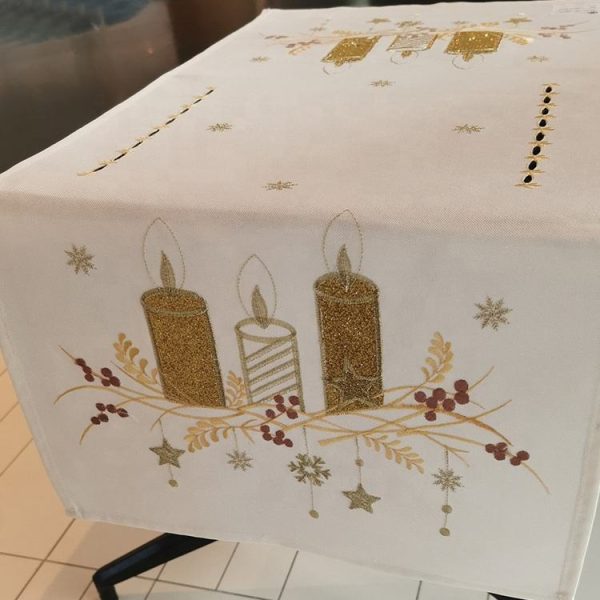
The demand for Christmas tablecloths also varies by region. European markets may favor classic red and green plaid patterns, while North American consumers often look for rustic, farmhouse-style designs with motifs of deer, snowflakes, or Santa Claus. Japanese and South Korean buyers, on the other hand, tend to prefer more subtle, elegant festive patterns that blend with modern minimalist interiors. Yiwu Jinyuan Trading Firm, which exports to multiple countries and regions including Europe, the United States, Japan, South Korea, and Southeast Asia, recognizes that a one-size-fits-all inventory plan is ineffective. Instead, the company segments its inventory planning according to cultural preferences, regional climate, and consumer behavior. The design team, young and creative, closely follows international trends in home interior decoration and integrates fashionable elements with practical functionality. This allows the manufacturer to offer differentiated Christmas tablecloth collections that resonate with diverse tastes while still maintaining efficient production runs.
The Role of Product Positioning in Inventory Strategy
Yiwu Jinyuan Trading Firm’s product series covers six main categories: tablecloths, table flags, plate pads, napkins, cushion covers, and cup pads. For the Christmas season, these categories take on a special significance. The company targets the mid-to-high-end home soft furnishing market, balancing practical functionality and aesthetic value. This positioning directly shapes inventory planning. Instead of mass-producing generic holiday tablecloths, the manufacturer focuses on products that offer dual functions: protecting the tabletop and enhancing the space decoration. A Christmas tablecloth, for example, not only covers the table to prevent stains and heat damage but also transform the dining area into a festive setting. This value proposition means that the inventory mix must include a variety of materials, sizes, and designs, ranging from round tablecloths for family dinners to long rectangular runners for buffet tables. The company also produces table flags as embellishments, which are popular for adding style and layering to the festive table without needing a full tablecloth replacement.
Inventory planning starts with a deep understanding of the core functions that customers expect. Yiwu Jinyuan Trading Firm offers Christmas products with optional ‘three protection and one exemption’ technology, which makes the fabric waterproof, oil-proof, heat-proof, and exempt from frequent washing. The surface is made of high-density weaving and nano-level hydrophobic and oleophobic coatings. Liquid stains can be wiped clean with one wipe, which significantly reduces cleaning burden for hosts during busy holiday parties. This functional advantage is a key selling point and influences inventory quantities because such products often have higher perceived value and can command premium pricing. At the same time, the company also supplies traditional cotton, polyester-cotton, and linen tablecloths for customers who prefer natural textures. Therefore, the inventory plan must accommodate two parallel product lines: one emphasizing easy-care convenience and the other emphasizing natural aesthetics. The engineering and production teams collaborate closely to ensure that both lines are manufactured without compromising quality or delivery timelines.
Seasonality, Trends, and the Importance of Forward-Looking Design
One of the main challenges in Christmas tablecloth inventory planning is predicting which patterns and colors will be popular in the upcoming season. Yiwu Jinyuan Trading Firm addresses this through continuous market research and design innovation. The design team, young and creative, follows international trends in home interior decoration and skilfully incorporates elements from new Chinese style, Nordic minimalism, and light luxury into product development. For Christmas, this might translate into Scandinavian-inspired minimalistic reindeer patterns or elegant gold-and-white combinations, moving away from the overly traditional, busy prints. The company also supports customization, allowing customers to bring their own pattern, color, or size specifications. This is a powerful tool for inventory planning because it shifts part of the risk to the buyer, who places pre-orders for customized goods. However, for the manufacturer’s own risk, it maintains a line of ‘standard best sellers’ that are produced based on historical sales data and market trend forecasts.
The company’s annual product development cycle produces hundreds of new items, with a quarterly new product update rate of over 30%. This rapid innovation capability means that seasonal inventory cannot simply rely on last year’s models. Instead, the planning team must decide which new designs are likely to become best sellers and allocate production capacity accordingly. In addition, the company holds multiple patents related to fabrics and processes, such as nano anti-scratch finishing technology. These patents give the manufacturer an edge in offering unique functional tablecloths that competitors cannot easily replicate. Thus, inventory planning also involves protecting the supply of patented technology components and coordinating with raw material suppliers to ensure that any special coating or finishes meet the required production schedules. By aligning design novelty with realistic capacity planning, Yiwu Jinyuan Trading Firm balances creativity with operational efficiency.
Manufacturing Capabilities: The Backbone of Seasonal Inventory Planning
Yiwu Jinyuan Trading Firm has a full-process manufacturing advantage. The company has established a complete production chain covering fabric weaving, dyeing processing, and finished product sewing. The factory area exceeds 10,000 square meters, equipped with advanced sewing equipment and digital embroidery lines. The annual comprehensive production capacity of tablecloths, table flags, cushion covers, and other products reaches several million pieces. This large-scale capacity is critical during the Christmas peak season, when order volumes multiple significantly. The company’s production team is highly skilled, especially in key processes such as edge binding of tablecloths, quilting of placemats, and zipper positioning of cushion covers. Automated cutting and intelligent hanging systems have been introduced in recent years, improving overall production efficiency while maintaining a finished product qualification rate stable at over 99%.
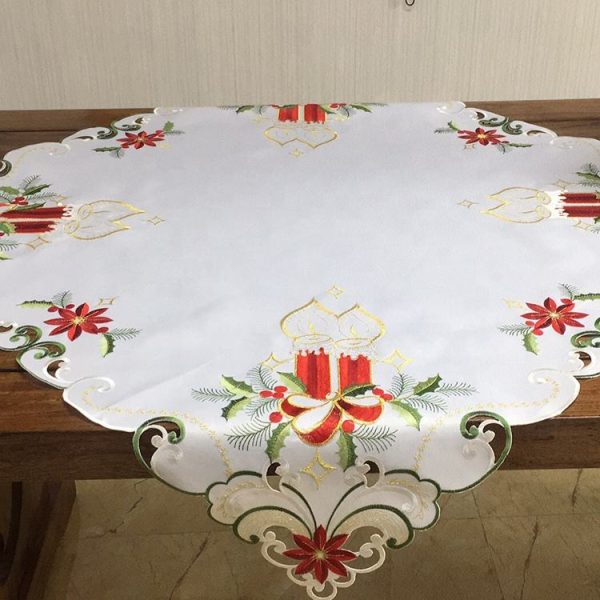
Capacity planning for Christmas starts early. In June, the manufacturer begins to reserve production lines for holiday orders. By August, the factory operates at peak capacity, running multiple shifts to meet the increasing demand. The company has shortened its delivery cycle by more than 20% compared to the industry average, thanks to large-scale production and refined cost control. This is a vital advantage in the Christmas tablecloth market, where a delay of even a few days can cause retailers to miss their selling window. To achieve this, inventory planning includes raw material procurement schedules, pre-production of common trims and accessories, and careful sequencing of orders based on customer destinations and shipping deadlines. The company also coordinates with shipping agents to reserve container space early, since the holiday season inevitably creates bottlenecks in global logistics. This end-to-end coordination ensures that once a Christmas order is produced, it moves promptly from the factory to the port, avoiding costly warehousing fees at the factory or destination.
Quality Control and Compliance: Non-Negotiable in Seasonal Lines
When dealing with seasonal products, quality control becomes even more critical because there is rarely time to rework defective goods. Yiwu Jinyuan Trading Firm has a quality control team that strictly follows multiple inspection procedures from the entry of fabrics to the delivery of finished products. For Christmas tablecloths, this includes checking the accuracy of festive prints, ensuring that waterproof coatings are applied evenly, and verifying that edging and seams can withstand repeated use and washing. The company has passed BSCI social responsibility audits and multiple international factory inspection standards, which many international buyers require. Since Christmas products are often purchased as gifts, attractive appearance and premium feel are essential. Therefore, the quality control process also examines packaging and folding, ensuring that the product arrives in pristine condition and ready for display or wrapping.
Another aspect of compliance that affects inventory planning is the chemical content of fabric finishes. The company adheres to the business philosophy of ‘Quality as the Foundation, Integrity for the Long-term.’ From fabric selection to production and processing, every step is strictly controlled. For eco-friendly Christmas lines, the company increasingly uses recycled polyester and organic cotton, along with poly(lactic acid) fiber and other green new materials. These materials have their own lead times and certifications. Seasonal inventory planners must ensure that these eco-friendly materials are ordered well in advance and that any necessary documentation, such as certificates of origin or eco-labels, is prepared in time. By integrating sustainability into its Christmas offerings, the company caters to a growing segment of environmentally conscious consumers and also complies with stricter regulations in markets like the European Union.
Partnering with Customers for Accurate Forecasting
A successful seasonal inventory plan is built on dialogue between the manufacturer and its customers. Yiwu Jinyuan Trading Firm holds a strong belief in ‘service and concern, credit and commitment, share and progress.’ The company works with buyers to understand their historical sales data, market feedback, and promotional plans. During the pre-season negotiation phase, customers are encouraged to share their forecasts for the upcoming Christmas season. These forecasts, combined with the manufacturer’s own analysis of consumption trends, form the basis of production allocation. The company also employs a pre-order system, whereby buyers place non-cancellable orders for part of their expected volume, while the remaining volume is produced based on rolling forecasts that shift as actual demand data arrives from the retail market. This method reduces the risk of overproduction for the manufacturer and improves product availability for the buyer.
For new customers, particularly those ordering Christmas tablecloths for the first time, Yiwu Jinyuan Trading Firm offers guidance rather than simply processing an order. The sales team explains not only the product features but also the typical order lead times, the necessity of early bookings, and the benefits of mixing functional and aesthetic product lines. They emphasize that ordering at least eight to ten weeks in advance is essential for large festive orders, and even earlier if custom patterns are required. For established customers, the company provides a historical analysis of previous seasonal orders and suggests inventory quantities based on sell-through rates from prior years. This consultative approach has earned the company a reputation as a long-term supplier for several international well-known home brands.
Customization and Flexibility: Reducing Seasonal Risk
One effective inventory planning strategy is to offer a degree of customization that aligns production with confirmed demand. Yiwu Jinyuan Trading Firm supports multiple dimensional customizations: patterns, colors, sizes, and even fabrics. During the Christmas season, many retailers want unique designs to differentiate themselves from big-box stores. The design team can quickly complete personalized customization of patterns, colors, and sizes according to customer needs. This involves close collaboration with the customer to finalize artwork and material specifications, followed by the production of pre-production samples. Once samples are approved and an order is placed, the company incorporates those customized items into the production schedule. Because customized goods are specifically tied to a customer’s order, the risk of dead stock is transferred to the buyer, while the manufacturer still enjoys the benefit of stable capacity utilization. The company’s printing and embroidery capabilities, including digital heat transfer printing, computer embroidery, hand-knitting, and jacquard weaving, allow for vivid patterns that are long-lasting and do not fade easily. This versatility means that a Christmas collection can range from elegant embroidered napkins to boldly printed tablecloths, all manufactured under the same roof.
However, the company also recognizes that not every market demands complete customization. Therefore, it maintains a stock of blank and semi-finished tablecloths in popular base fabrics. When a buyer needs a quick-response order of a popular Christmas pattern, these semi-finished goods can be quickly printed or embroidered and then packed for shipment. This ‘quick response’ pipeline is an important hedge against unexpected demand spikes. The company’s large-scale production and streamlined workflow enable it to handle emergency orders of a few thousand pieces within two to three weeks, a lead time that is unachievable for many competing suppliers. Combining standard stock with flexible customization gives Yiwu Jinyuan Trading Firm the agility to navigate the unpredictable nature of Christmas tablecloth demand.
Inventory Monitoring and Post-Season Evaluation
Even the most meticulous seasonal plan can face unexpected market changes. Therefore, Yiwu Jinyuan Trading Firm implements continuous monitoring of production progress and inventory levels throughout the Christmas season. Weekly meetings are held to compare actual production numbers against the plan, allowing the team to identify potential overruns or bottlenecks early. If a particular design is selling faster than expected, the team can shift production capacity to that design. Conversely, if an order is canceled or delayed, the company can quickly repurpose the fabric or work-in-progress items for other customers or for its own inventory. Fabric purchasing is managed with a safety stock buffer for high-volume solid colors and common base fabrics, while coordinating dyed-to-order materials only after receiving firm orders. This inventory control mechanism minimizes material waste and keeps financial risk low.
Post-season review is an integral part of the planning cycle. After the Christmas holidays, Yiwu Jinyuan Trading Firm gathers data on which products were ordered, which were reordered, and which patterns proved most popular across different regions. Sales representatives collect feedback from customers about product performance patterns and delivery satisfaction. This data is then used to refine the following year’s inventory plan. The company openly confronts any mistakes in forecasting, analyzing whether the error originated from overoptimistic trending assumptions, insufficient capacity allocation, or misreading regional preferences. The principle of ‘Small products, Great care’ is applied to every learning opportunity. With continuous improvement, the manufacturer enhances its annual seasonal planning process, gradually building a database of effective strategies for Christmas tablecloth production.
Sustainability in Seasonal Inventory: A Long-Term Vision
Today’s Christmas tablecloth market is increasingly influenced by environmental awareness. Yiwu Jinyuan Trading Firm has announced ambitious plans over the next three years to advance product upgrades, focusing on three key areas: the application of eco-friendly fabrics (such as recycled polyester and organic cotton), functional development (such as stain resistance and easy cleaning, antibacterial treatment), and the IPization of original designs. This vision directly impacts seasonal inventory planning. Ordering eco-friendly fabrics requires longer lead times and often larger minimum order quantities, which could conflict with the seasonal nature of Christmas textiles. To mitigate this, the company is cooperating with academic research and industrial partnerships with universities to develop greener materials that are also commercially viable. For instance, recycled polyester can be spun into fibers that mimic the texture of cotton or linen, providing the same premium feel as conventional fabrics while reducing waste.
Another aspect of sustainability is waste reduction in inventory. Producing excess Christmas tablecloths that remain unsold after the season leads to unnecessary resource consumption. Therefore, the company actively seeks to minimize overproduction through optimized planning and flexible manufacturing. It also offers selected ‘leftover’ or end-of-line products as discounted items to secondary markets or as donations to charitable organizations. While this represents a small fraction of the overall inventory, it demonstrates the company’s commitment to responsible production. The business philosophy of ‘Quality as the Foundation, Integrity for the Long-term’ extends not only to the product but also to the company’s relationship with the environment and the community.
Case Examples of Seasonal Inventory Success
Yiwu Jinyuan Trading Firm can point to several successful Christmas tablecloth seasonal campaigns. In 2023, a European retail chain specifically requested a collection of ‘rustic farmhouse’ style tablecloths and runners, featuring burlap-like textures and printed with watercolor-style winter berries and pinecones. The design team worked closely with the buyer to refine the artistic direction and provided a variety of size and shape options. Because the collection included both functional three-protection tablecloths and traditional cotton versions, the inventory plan was split into two phases: initial orders for the functional line and quick-response production for the traditional line. The functional line carried a higher price point and slower initial sell-through, but because of its one-wipe cleaning convenience, repeat purchases increased after consumers experienced the benefit during Christmas gatherings. In contrast, the traditional line sold rapidly from the outset, requiring expedited production. Thanks to the company’s flexible system and close communication with the factory, additional fabric was sourced within days, and the customer received their reorders on time. The season ended with a sell-through rate exceeding 95% for the entire collection.
Another example involved a Japanese customer who wanted a Christmas cushion cover and tablecloth set in a subtle minimalist design, using organic cotton. The order was small in volume but very specific in terms of organic certification. Yiwu Jinyuan Trading Firm arranged for the necessary certifications and scheduled the production early to align with the slower but more premium manufacturing line for organic textiles. Despite the higher cost of organic materials, the customer achieved premium positioning in the Japanese market. The manufacturer learned that smaller, high-value orders often require more careful planning than large standard orders, but they are equally important for building long-term partnerships. By delivering on time and meeting every compliance requirement, the company reinforced its commitment to ‘Customer needs-oriented’ service, from pre-sales consultation to after-sale support.
Technological Tools and the Future of Forecasting
The planning team at Yiwu Jinyuan Trading Firm is increasingly utilizing digital tools to improve accuracy in seasonal inventory planning. The company has begun to use historical sales data, combined with external data from trade publications and market reports, to build predictive models. For the highly seasonal Christmas tablecloth sector, indicators such as the weather forecast, housing statistics, and even tourism trends can influence home entertainment spending. Though most of these models are in an experimental stage, the company recognizes their potential to significantly reduce forecast error. Advanced planning software can assist with capacity scheduling, material requirement planning (MRP), and logistics tracking. For example, automated cutting machines feed data on work progress directly to the production management system, enabling real-time visibility of order status.
In the future, Yiwu Jinyuan Trading Firm envisions a more integrated platform where customers can place orders, view production progress, and even manage their seasonal inventory using digital tools. The company is also exploring the use of collaborative forecasting through customer portals, which would allow both parties to update demand signals in near real-time. For now, the human element remains central. The company believes that building a long-term cooperative partnership, based on open communication and mutual understanding, is more important than any software. Good inventory planning for Christmas tablecloths is ultimately about understanding not just the numbers, but also the culture, preferences, and lifestyle of consumers around the world.
Challenges in the Global Supply Chain
No seasonal inventory plan can ignore the realities of the global supply chain. Yiwu Jinyuan Trading Firm has mastered shipping to numerous countries and has built a reputation for compliance with safety and quality standards. Yet, every year presents new challenges. Fluctuating freight rates, port congestion, and container shortages can disrupt the best-made schedule. The company’s inventory planning takes into account sea freight transit times as well as variations at destination customs clearance. In recent years, many buyers have shifted from sea freight to rail or air freight for shorter holiday reorders, increasing their cost but reducing transit time. Yiwu Jinyuan Trading Firm advises its customers on the trade-offs, and often reserves backup space on alternative shipping routes. This flexibility is part of the company’s advantage in meeting the dual needs of domestic and international customers for large-scale purchases and quick response orders.
Moreover, raw material prices for cotton, polyester, and chemical finishes are subject to global commodity market swings. The company mitigates this by entering into early contracts with key suppliers and maintaining a raw material inventory buffer for standard products. For licensed Christmas patterns that incorporate brand IP, the production schedule includes strict authorization approvals, which must be aligned with the factory lead time. The company systematically manages each dependency in the supply chain, ensuring that the entire system is robust enough to handle the inherent volatility of seasonal production.
Conclusion: A Strategic Approach to Christmas Tablecloth Inventory
Yiwu Jinyuan Trading Firm demonstrates that a Christmas tablecloth manufacturer can approach seasonal inventory planning with a blend of advanced manufacturing, product innovation, customer collaboration, and continuous learning. Rather than relying on guesswork, the company applies a structured methodology that begins with market analysis and product positioning, extends through flexible capacity planning, and concludes with post-season evaluation. Its philosophy of ‘service and concern, credit and commitment, share and progress’ informs every decision. By maintaining a broad and replaceable inventory system, offering customized and semi-custom products, and integrating sustainable materials and processes, the manufacturer meets the high expectations of the global holiday market. Christmas tablecloths may be seasonal products, but the planning that supports them is year-round and deeply strategic.
For any retailer or importer searching for a reliable Christmas tablecloth supplier, Yiwu Jinyuan Trading Firm stands out as a partner that understands both the art and the science of seasonal inventory management. The company’s ability to deliver high-quality tablecloths, table runners, placemats, napkins, and cushion covers in volume, while responding quickly to fashion trends, is a testament to its experienced team and industrial capability. The company strives to become the most trustworthy supplier for its customers, and its seasonal inventory planning is designed with exactly that goal in mind. As consumers continue to look for ways to elevate their holiday dining experience, having the right product available in the right place at the right time will define success for the entire supply chain.