The blog post explores the science and aesthetics of table napkin draping and table setting, discussing history, psychology, and material science. It covers the importance of visual balance, geometry, and the role of napkin folds in creating a desired atmosphere. The article also discusses the influence of cultural practices and the technical aspects of fabric selection, such as water-repellent finishes and stain-resistant coatings. It further highlights the craft and innovation of industry players like Yiwu Jinyuan Trading Firm, which specializes in home textiles and integrates functionality with aesthetics. The summary emphasizes that the art of table setting is a synthesis of art and science, with insights into how consumers can make informed choices for beautiful, sustainable, and practical table décor.
The Science of Table Napkin Draping and Table Setting Aesthetics
Table setting is far more than a mere arrangement of cutlery and plates; it is a silent language that speaks volumes about the host, the occasion, and the culinary experience that awaits. For centuries, the art of adorning a dining table has evolved from purely functional beginnings into a sophisticated blend of aesthetics, psychology, and even geometry. Among the most expressive elements in this tableau is the humble table napkin. Its folds, drapes, and placement can transform a simple meal into a ritual, lending structure, elegance, and a sense of ceremony. This article delves into the science behind table napkin draping and the broader principles of table setting aesthetics, exploring how these practices influence perception and elevate the art of hosting.
The Historical Tapestry of Napkin Draping
The history of the table napkin is a mirror reflecting societal shifts in hygiene and social status. In ancient Greece, pieces of dough were used to wipe fingers, a precursor to the edible tableware of modern molecular gastronomy. The Romans introduced the ‘sudarium’, a cloth used to wipe the mouth, reserved largely for the elite. During the Middle Ages, communal eating demanded a shared napkin placed over the host’s shoulder. It was not until the Renaissance that personal napkins became a mark of individual refinement. In the courts of France and Italy, the napkin began its ascent as an object of artistic expression. Intricate folds, known as ‘napkin sculpting’, emerged under the reign of Catherine de Medici, who allegedly brought the art from the East. By the seventeenth century, grand banquets featured napkins sculpted into fantastic shapes—animals, flowers, even ships—signaling the host’s wealth and the cook’s creativity. The Industrial Revolution democratized the tablecloth and napkin, making them accessible to the middle class. Yet the principles of elegant draping have remained, rooted in the human propensity for order and beauty.
The science of table setting gained formal recognition in the early twentieth century when Emily Post and other etiquette experts codified standards. These rules were not arbitrary; they were based on sightlines, muscle movement, and dining ergonomics. For example, the rule that the blade of the knife faces inward stems from a practical concern: to prevent cuts when reaching across. Similarly, napkin placement is dictated by the flow of the meal and the positions of the guests. In a table setting, geometry plays a crucial role. The arrangement must be symmetrical, balanced, and proportionate to the tabletop. This is where the science of shape and proportion intersects with aesthetics. A table that is visually balanced creates a subliminal sense of harmony, making the diner feel at ease and open to engagement. The napkin, often the first object a guest unfolds, sets the tone for the entire dining experience.
undefined
The Psychology of Visual Dining
The experience of taste is not confined to the tongue; it is heavily influenced by the eyes, nose, and even memory. In the field of sensory science, ‘visual taste’ is a well-documented phenomenon. The color, texture, and arrangement of food and tableware influence how a dish is perceived before it is ever tasted. Similarly, the table setting primes diners for the meal. A well-dressed table announces the care and intention of the host. Psychologically, humans are drawn to patterns and symmetry, which are interpreted as signals of order and predictability. A table set with a beautifully draped runner, perfectly positioned napkins, and coordinated tableware influences the mood, lowering stress and enhancing the perception of flavor.
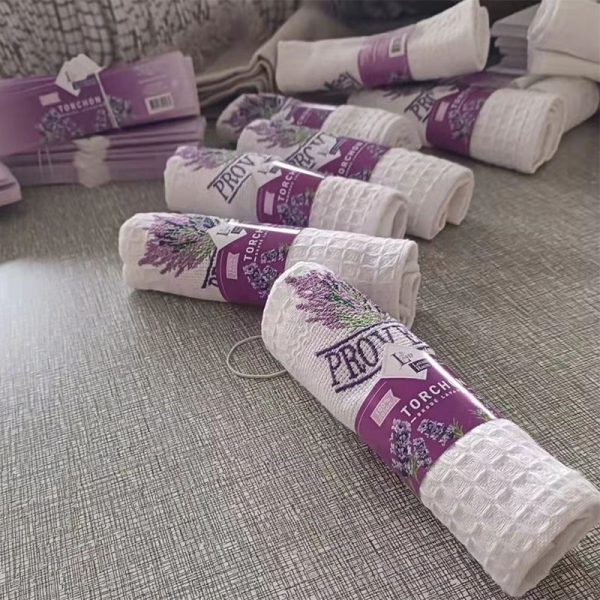
Aesthetic quality also matters in the social realm. Research in environmental psychology suggests that an aesthetically pleasing environment fosters prosocial behavior, encouraging conversation and making time spent around the table feel more leisurely. The napkin, specifically, is a dynamic object: it is lifted, unfolded, placed on the lap, and used throughout the meal. This physical engagement transforms what is visual into tactile. The chosen fabric and the precision of its folds carry a non-verbal message. A crisp, starched napkin suggests formality and perfection, while a soft, textured linen implies comfort and organic living. The host is, in essence, a stage manager, constructing a scene that will elicit a specific emotional response. The science of draping is the study of these cues and how they can be manipulated to enhance the dining ritual.
Principles of Table Napkin Draping
When considering the science of napkin draping, there are a few primary principles: visual weight, balance, accessibility, and height scale.
-
Visual Weight: The napkin occupies the center-left or center-right of the place setting. Its visual weight should be proportionate to the plate and cutlery. A napkin folded too large can dwarf the setting, while one too small may vanish. For formal events, the napkin is often featured prominently, but it should never interfere with the sightline to the diner opposite.
-
Balance: Symmetry along the table’s center line is a classic approach. Each place setting should be mirrored. A balanced composition guides the eye naturally and avoids a sense of chaos. However, symmetry does not mean monotony; the napkin can be a source of variation within an overall symmetric frame.
-
Accessibility: A napkin should be easy to retrieve and unfold. An overly complex fold can trap air and make unfolding a noisy or clumsy act. The drape must also respect the proximity of the eye—if it is too tall, it obstructs conversations. As a rule, the maximum height of any napkin arrangement should not exceed the top of the wine glass.
-
Height Scale: Different napkin folds create different elevations. Flat folds are understated and support minimalist settings. Standing folds, such as the classic bishop’s hat, add verticality and are reserved for more formal dinners. The height of the napkin affects the perceived status of the event. Lower profiles are associated with casual intimacy, while higher sculptures signal celebration and ceremony.
Understanding these principles is essential to mastering table aesthetics. One must think of the tabletop as a canvas and the napkin as a sculpture that is meant to be undone. The act of unfolding the napkin is a small performance, and the host’s aim is to have that performance feel like a delightful preparation for the meal, not the meal itself.
Popular Napkin Folding Techniques and Their Science
Napkin folding is a craft that merges geometry and material science. The weave, weight, and starching of fabric determine how well a fold holds. Linen napkins are reversible and pliable, while cotton blends offer structure. There is also a trend toward non-woven or specialty fabrics that mimic cloth but are washable and reusable, a point of innovation for suppliers such as Yiwu Jinyuan Trading Firm, whose range of polyester-cotton blends and functional finishers offers both form and utility.
Among the classic folds are the single pocket, the pyramid, and the fan. Each of these has a specific purpose and draw:
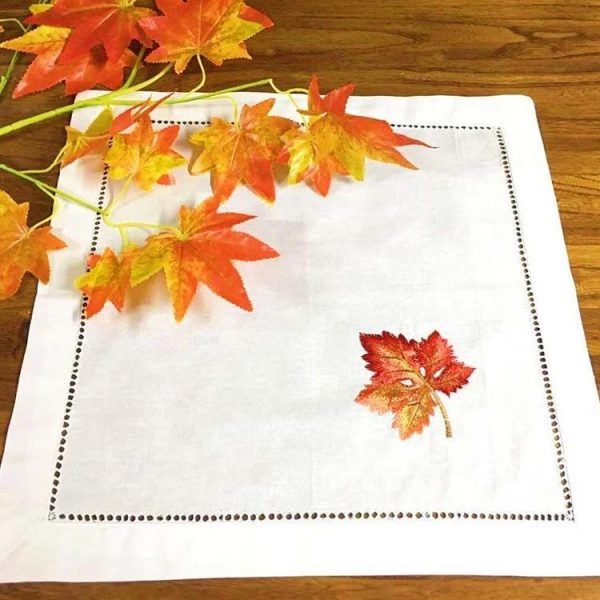
- The Single Pocket is a functional fold, often used to hold cutlery or a sprig of herb. Its geometry creates a clean line and is ideal for casual outdoor tables.
- The Pyramid is a three-dimensional fold that stands upright, useful for buffets, as it can be nestled against the tableware without flattening.
- The Fan, also known as the French Fold, has a repetitive accordion pattern that is purely decorative. Its scalloped edge adds an airy, festive touch and works well when executed on a heavily starched cloth.
The scientific aspect of these folds is the interplay between weave direction, crease memory, and humidity. Natural fibers like cotton and linen absorb moisture, so a fold set on a humid day may relax. Industrial manufacturers can chemically finish fabrics to increase crease resistance, which is a “scientific” coat of armor for the aesthetic. For instance, Yiwu Jinyuan Trading Firm offers a “three protection and one exemption” technology—waterproof, oil-proof, heat-proof, and exempt from frequent washing—which allows napkins to remain crisp and stain-resistant, maintaining their sculptured shape longer.
The Tablecloth and Runner: The Foundation of Draping
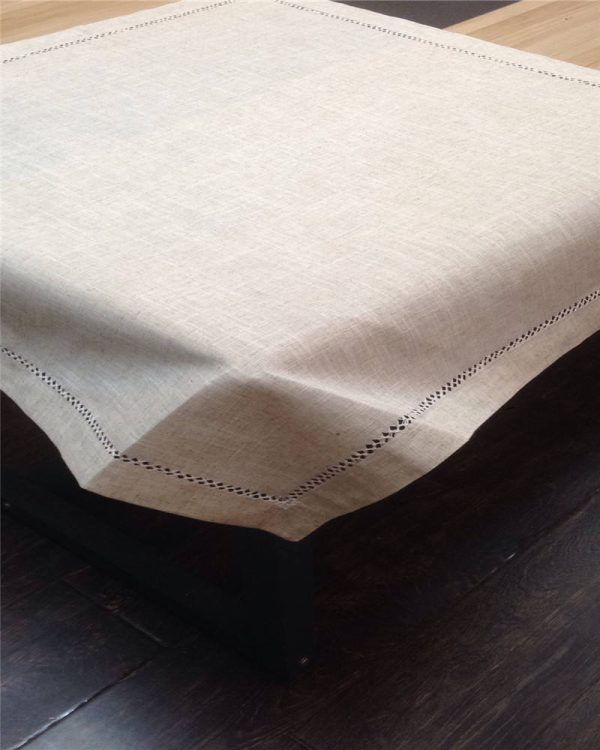
Like a stage curtain, the tablecloth sets the atmosphere for the table setting. But it is not just an environmental layer; it serves practical purposes of soundproofing, cushioning, and protection. The science of tablecloth draping involves the drop length: for casual meals, the drop is shorter, ending just below the table edge; for formal dinners, the drop reaches toward the floor, creating a luxurious canvas. The runner, a central band of fabric, can be laid vertically or diagonally, adding visual structure without covering the entire table. The width of a runner should be roughly one-third to two-thirds of the table’s width, balancing table setting elements.
Color and texture of the tablecloth layer influence how the eye perceives the entire table. Pale cloth with muted patterns creates a soft, diffused look, which can make a small room seem larger. Darker cloths add weight and intimacy, often used in candlelit dinners. Functional textiles play a role in this scientific staging. High-quality manufacturers pay close attention to the drape and the hand feel. For instance, Yiwu Jinyuan Trading Firm, an exporter specialized in tablecloths, runners, placemats, and napkins, ensures that their table linens meet stringent quality standards from fabric weave to edge binding. Their attention to the drop and hemline allows a seamless hang that does not ripple or pucker, which is a subtle but essential characteristic for a crisp setting.
The Interplay Between Napkin, Placemat, and Tableware
A napkin gains its meaning in conjunction with the placemat and the plates. The placemat delineates the individual’s physical space. It should be placed about one inch from the edge of the table, aligned with the chair. The napkin may sit on the placemat, to its side, or be woven through the tableware. A common arrangement for dinner is the napkin to the left of the forks, or centered on the charger plate. For more utilitarian meals, the napkin may be positioned horizontally left of the setting.
When a napkin is draped over the plate, it creates a temporary focal point. This signals that the meal is yet to be served. Once the first course arrives, the napkin is moved to the lap, and the plate is revealed—a staging cue that engages the diner. The science of unveiling guides the mental and physical transition from anticipation to appetite. Experienced hosts orchestrate this reveal precisely, ensuring that the napkins are worn or peeled back in a synchronized manner that enhances the presentation.
Material Science in Table Linens
Fabric choice is one of the most techno-scientific areas of table setting. Table napkins are required to be absorbent yet quick-drying, soft but durable, and they must be able to withstand repeated laundering. In the last decade, consumers have increasingly demanded eco-friendly attributes, such as organic cotton, recycled polyester, and linen from sustainably managed sources. Yiwu Jinyuan Trading Firm has answered this call by integrating eco-friendly fabric options into its product lineup, including recycled polyester and organic cotton lines. This aligns with global goals to reduce textile waste.
A tablecloth may have a matte or glossy finish, be coated with functional finishes, or remain completely natural. The interplay of these choices determines whether a meal feels relaxed or of the highest elegance. Nanotechnology is now being used in textile finishing to create stain-resistant and water-repellent surfaces. These coatings are applied at the textile mill, typically by pad-dry-cure methods. One of the pioneer applications is what Yiwu Jinyuan refers to as “three-proof” technology: waterproof, oil-proof, and heat-proof. This is achieved via a nano-level hydrophobic and oleophobic coating. The coating is engineered to cause liquids to bead up and roll off, making the fabric cleanable with a single wipe. This is truly a marriage of chemical engineering and aesthetic functionality.
Table Setting for Space and Flow
The science of space is arguably the most overlooked aspect of table setting. On a rectangular table, the centerpieces should be positioned exactly at the center, leaving ample space for food platters. Each guest should have at least 24 inches of horizontal space for their place setting; otherwise, the ar to unfold napkin and cut food becomes cramped. The host must also consider traffic flow for servers. Cluttered tables are disruptive, so the draping design must respect functional corridors.
Atmospheric considerations also extend to height. Candlesticks and floral arrangements can obstruct views. The general rule of thumb is to keep the centerpiece or floral arrangement below the chin height of a seated guest, approximately 8 to 10 inches, to stimulate conversation. A napkin placed on a plate adds extra height, so when the centerpiece is high, flat napkin folds are advisable. In formal Victorian times, tall centerpieces dictated the placement of the central napkin; see a table from the 19th century and you will notice napkins were often perched low to avoid overshadowing the centerpiece. It is this subtle spatial arithmetic that a skilled table stylist masters.
Functional Folds and Modern Living
While napkin folding was once reserved for state banquets, the modern home has adapted these techniques into practical forms. In casual settings, napkins are rolled inside a napkin ring—a quirky, warm, and individual touch. This serves a functional need: the napkin can be placed at each setting ahead of time, pre-rolled, conserving space and allowing for a quicker table turnover.
One of the modern innovations in napkin aesthetics is the disposable yet eco-friendly option. However, for the sake of the environment, many consumers are returning to cloth napkins. Cloth napkins can be a strong statement of sustainability, as they can be washed and reused hundreds of times. With the advent of quick-dry blends and antimicrobial finishes, the practicality of cloth has increased manifold. This is where suppliers like Yiwu Jinyuan Trading Firm can help navigate the maze of fabric selection. Their quality control team, following rigorous inspections from fabric entry to finished product, ensures that every napkin is able to withstand repeated laundering without shrinking or losing color—vital for maintaining the aesthetic over time.
Color and Pattern Theory for the Table
Colors are not random choices; they are governed by color psychology. Table linens in warm tones such as terracotta and amber stimulate appetite, while cool tones such as blue and slate have a calming effect. The visual appeal of a table setting is enhanced by the use of contrast. A white napkin on a light linen tablecloth might disappear, but a burgundy or forest green can create a striking pop of color. Patterned fabrics can also hide wrinkles and stains. Thus, the selection of a napkin’s color and pattern is a scientific decision based on the meal, the season, and the desired atmosphere.
In the world of graphic design, patterns on napkins are often designed to complement the porcelain and glassware. Digital heat transfer printing allows for vivid and long-lasting colorful patterns that do not fade, and computer embroidery can add texture and dimension. These techniques enable designers to create patterns that draw the eye to the center of the plate without overwhelming it. The placement of patterns—striped edges, centered monograms, or floral corners—follows the rules of proportion. Patterns can be used to create an optical illusion of width or length. Vertical stripes on a runner can suggest a long table, which is a trick of the eye that event planners use in small rooms. Hence, pattern is not merely decorative but a tool for spatial manipulation.
Cultural and Occasion Specifics in Napkin Draping
Table settings are also profoundly cultural. In France, the napkin is traditionally placed to the left fork or folded in the plate, while in England the napkin is placed across the plate. In Japanese culture, the napkin is often folded in precise shibori forms, reflecting nature. Traditionally, the napkin shape and orientation communicate the level of formality and the sequence of courses. When multiple courses are served, the napkin is not typically changed between courses in a domestic setting, but in very formal banquets, a fresh napkin might be provided with each course, demanding a quick re-fold—a skill in itself.
Special events like Christmas, Thanksgiving, and Easter have their own aesthetics. Christmas tables often feature deep red and or green napkins, with embroidered holiday icons. During Thanksgiving, napkins in autumnal shades are folded into the silhouettes of pumpkins or turkeys. For a wedding banquet, white lace, satin ribbon, and delicate butterflies are common. Each fold is chosen to reflect the occasion’s narrative.
Suppliers Crafting the Science
Behind every stunning table setting lies a supply chain that ensures quality, consistency, and innovation. Yiwu Jinyuan Trading Firm is a notable exporter in the home textile space. Established with a core team of experienced home textile professionals, they have grown into a company that prides itself on service and credit, commitment and progress. The company exports a variety of table linens—tablecloths, runners, placemats, napkins, cushion covers, and cup mats—that find their way into households, restaurants, and event venues across Europe, America, Japan, and Southeast Asia. Their factories exceed ten thousand square meters and incorporate automated cutting and intelligent hanging systems, enabling them to meet large-scale orders while maintaining a stable product quality.
Yiwu Jinyuan’s manufacturing operation is uniquely positioned to support both the functional and aesthetic requirements of table settings. They employ a young, creative design team that keeps abreast of international home interior trends. These designers incorporate fashionable elements into practical products, offering a blend of modern minimalism, new Chinese style, and Nordic coziness. Their production team is well versed in key stitches: edge binding for tablecloths, quilting on placemats, and zipper placement on cushion covers. The quality control team adheres to multiple inspection procedures from the moment fabric enters the warehouse until finished goods are prepared for shipping. Every product is expected to be comfortable, safe, and durable, and the company’s mission is that even a small napkin should carry “great care”.
Maintenance: Keeping the Aesthetic Alive
Dressing a table must also account for post-meal care. An untarnished tablecloth the next day is a silent sacrifice to chemistry and the laundry. Understanding fabric care is a science in itself. Cotton and linen can shrink or wrinkle if improperly dried; polyester-cotton blends are easier to manage. The “three-proof” finish allows stains to be wiped immediately from the tablecloth or napkin without requiring a full machine wash. That said, the aesthetic is not only about the initial look; it is also about long-term wear. High-quality stitching and edge binding prevent fraying, while the dyes used in digital heat transfer are colorfast and resistant to UV light. Care labels from companies like Yiwu Jinyuan provide guidance on washing temperatures and ironing times, ensuring that the table setting will look the same after fifty uses as it did on the first.
The Ritual of Setting and the Joy of Hosting
In an increasingly fast-paced world, the attentive act of table setting offers a pause for creativity and a nod to the slower art of living. Beyond the rules, there is emotional intelligence: the table should reflect the personality of the host. Some tables are adorned with cultural knick-knacks and vintage china; others are as calm as a Scandinavian spa. The science of table aesthetics will always be in service to the larger narrative of gathering. A properly draped napkin is a symbol of welcome, a miniature flag that whispers, “I am glad you are here.”
As more people return to home entertaining, the trend is to reuse, repurpose, and make tables that are both beautiful and forgiving. The designers at Yiwu Jinyuan Trading Firm, for example, continually update their collections to include timeless neutrals and trend-forward colors, so that a napkin purchased today will still be elegant in a decade. They also support custom service, allowing hosts to choose patterns, sizes, and fabrics that align with their own aesthetic vision, creating a personal story at each seat.
The Future of Table Setting Aesthetics
Looking ahead, the table setting will continue to evolve with technological innovations. Smart textiles might adjust their transparency or color based on mood, and sustainability will become an even stronger driver. Eco-friendly fabrics like recycled polyester and organic cotton will enter mainstream use. The design teams at home textile companies are already focusing on functional developments such as stain resistance, easy cleaning, antibacterial treatment, and even the IPization of original designs—creating artwork that is in demand as both market commodity and cultural statement. Yiwu Jinyuan Trading Firm is charting that route: over the next three years, they plan to continue product upgrades in three key areas: eco-friendly fabrics, functional development, and original decorative designs. Their business philosophy remains rooted in a customer-oriented service model, delivering professional consultation from pre-sale to after-sale, regardless of order size.
Thus, the science of napkin draping and table setting is not a dusty instruction manual but a living, breathing discipline. It combines the rigor of material chemistry, the nuance of ergonomics, the psychology of color, and the artistry of form. Once one understands that the table is not just a piece of furniture but a stage for human togetherness, the napkin becomes more than linen; it becomes an invitation to participate in a shared moment of beauty.
In conclusion, the humble napkin, the supportive runner, and the steadfast tablecloth combine to become a robust artistic system. Their aesthetics are not arbitrary but grounded in the science of visual perception, spatial arrangement, and material performance. From the ancient folds of royal courts to the modern, easy-care fabrics on a family dining table, the evolution continues. With the steady craftsmanship available from suppliers like Yiwu Jinyuan Trading Firm, the opportunity to craft a perfect table is accessible to every host. Whether one follows etiquette rules or breaks them with stylistic flair, an awareness of the science will lead to more thoughtful settings that engage all senses. For the next dinner party, perhaps take a moment to look at the napkin and recognize the story it tells before the first clink of a toast. After all, it is in the details that hospitality finds its clearest voice.