This long-form blog article explores how table napkin manufacturers are leveraging artificial intelligence (AI) in design and production, with a detailed case study of Yiwu Jinyuan Trading Firm. The article begins by introducing the company, its products (tablecloths, napkins, placemats, cushion covers), and its core philosophy of “service and concern, credit and commitment.” It explains that AI has become vital for design trend analysis, pattern generation, and customization, enabling a young creative team to quickly meet individual customer needs. The post also describes how AI is integrated into production planning, automated cutting, and quality control, resulting in a delivery cycle reduced by more than 20%, and a finished-product qualification rate over 99%. The firm’s strategic direction emphasizes sustainable materials, functional finishes, and original IP design; artificial intelligence supports research into eco-friendly fabrics such as recycled polyester, organic cotton, and PLA fiber. The product section outlines the dual functions of tablecloths, napkins, placemats, and cushion covers, highlighting the “three protection and one exemption” waterproof, oil-proof, and heat-proof coating. It underscores the convenience of stain resistance and the aesthetic contribution to a well-set table. The article also presents core competitive advantages, including full-chain manufacturing, nano-technology finishing, global compliance (BSCI, etc.), and quick adoption of international style trends. A table comparing traditional vs. AI-enhanced methods illustrates the workflow, from trend research to shipping, making the process transparent. The final sections address human-AI collaboration and the future of sustainable textiles, suggesting that AI helps the manufacturer remain a trusted partner for global clients. The summary concludes that Yiwu Jinyuan provides an inspiring example of how technology and craftsmanship can fuse to produce table napkins that are durable, beautiful, and innovative.
Table Napkin Manufacturer Use of Artificial Intelligence in Design
In the fast-evolving world of home textiles, artificial intelligence (AI) has emerged as a powerful force reshaping how products are designed, developed, and brought to market. For table napkin manufacturers, this technology is no longer a distant concept but a practical tool that enhances creativity, operational efficiency, and customer satisfaction. This article explores the intersection of AI and table napkin design, using Yiwu Jinyuan Trading Firm—a leading export company in the home textile niche—as a case study to illustrate how forward-thinking manufacturers are leveraging AI to stay ahead.
Yiwu Jinyuan Trading Firm is a specialized export company dedicated to international trade, operating under the belief “service and concern, credit and commitment, share and progress.” With a core product range that includes tablecloths, runners, placemats, napkins, cushion covers, and cup mats, the company has carved a distinct position in the competitive home furnishing landscape. The firm’s core team consists of experienced professionals who have been deeply involved in the home textile industry for many years. Their expertise spans product development, production management, and international trade, making them acutely aware of global manufacturing standards and consumption trends. This deep domain knowledge provides the ideal foundation for adopting AI-driven innovation.
The company manages the entire production process—from fabric selection and pattern design to finished product manufacturing. This comprehensive control is crucial for integrating AI at various points. A young and creative design team, closely following international interior decoration trends, now collaborates with AI algorithms to push the boundaries of aesthetic and functional design. They can quickly combine fashionable elements and practical functions with unprecedented speed. Importantly, AI accelerates personalized customization; patterns, colors, and sizes can be generated or modified in response to customer needs with incredible agility, enabling the creation of differentiated dining textiles.
The production team at Yiwu Jinyuan is highly skilled, particularly in key processes such as edge binding of tablecloths, quilting of placemats, and zipper positioning of cushion covers. Quality control is strict and follows multiple inspection procedures from fabric entry to finished-product delivery, ensuring that every product meets high standards. AI is now playing a game-changing role in monitoring these processes. Intelligent vision systems, for example, can automatically inspect the surface of fabrics for defects in real time, immediately flagging any inconsistencies that human eyes might miss. This not only raises quality assurance but also significantly reduces waste and rework—a top priority in textile manufacturing.
undefined
In an industry where table napkins and related products must balance beauty with resilience, the adoption of AI-supported research and development is vital. Yiwu Jinyuan has long adhered to a business philosophy of “Quality as the Foundation, Integrity for the Long-term.” From fabric selection to production processing, they ensure every step is comfortable, safe, and durable. The company trusts in maintaining promises and achieving win-win partnerships, establishing long-term relationships with buyers. This commitment to integrity dovetails with the transparency that AI analytics brings to supply chain and order tracking, ensuring that clients remain informed and confident at all stages.
Given the deep focus on the niche of table aesthetics and household comfort, the principle of “Small products, Great care” drives continuous improvement. AI helps the company iterate more frequently on fabric texture, pattern design, and functional details. Ordinary products gain extraordinary qualities through data-driven insights into consumer preferences. The team follows the service philosophy of being “Customer needs-oriented,” offering pre-sales consultation, sample confirmation, production tracking, and after-sales service. With AI-enabled client portals, order status and customization options become more responsive, regardless of order size. This positions the firm as a trusted supplier that understands both large-volume needs and the subtle requirements of boutique customers.
The Role of AI in Table Napkin Design and Production
Artificial intelligence influences the entire product lifecycle at Yiwu Jinyuan. In the design phase, AI algorithms analyze millions of color palettes, pattern geometries, and cultural references to suggest novelties that match current or emerging trends. Instead of hours spent sketching manually, designers can use generative adversarial networks (GANs) to explore hundreds of variations of a classic paisley or geometric motif. These digital breakthroughs help the design team captivate the mid-to-high-end soft furnishing market, where both functional and aesthetic value are critical.
The firm has long-term plans for product upgrades over the next three years, with a key focus on eco-friendly fabrics such as recycled polyester and organic cotton, functional development including stain resistance, easy cleaning and antibacterial treatments, and the IPization of original designs. AI-driven material science assists in predicting how these sustainable textiles behave when printed and finished. By using machine learning models trained on historical fabric performance data, the firm can simulate how a table napkin will hold up after repeated laundering or exposure to heat, allowing for more durable product development. In this way, artificial intelligence reduces time-to-market and enhances overall product durability.
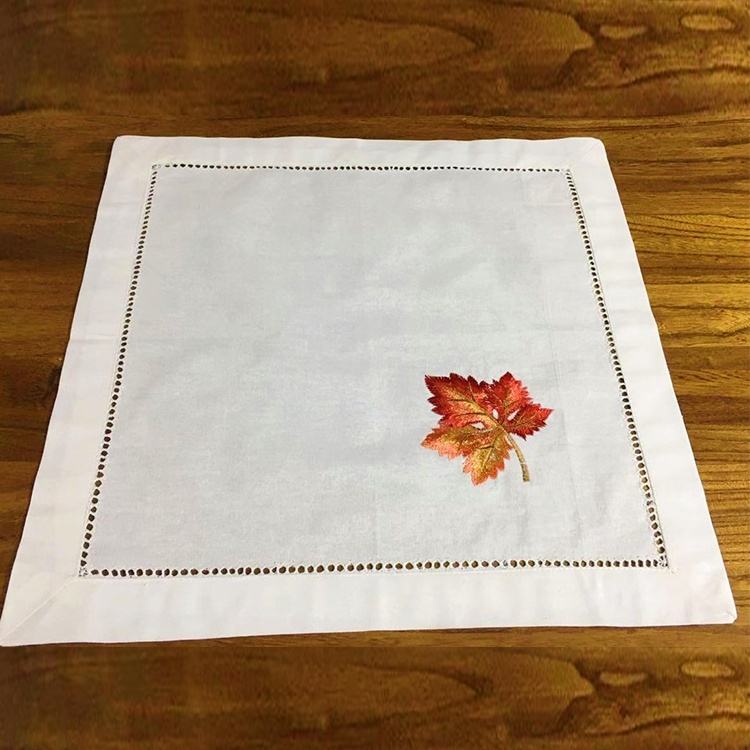
AI is not just about aesthetics; it also contributes to manufacturing excellence. The factory area of Yiwu Jinyuan exceeds 10,000 square meters, equipped with sophisticated sewing equipment and digital embroidery lines. The annual comprehensive production capacity of tablecloths, table skirts, cushion covers, and related items reaches several million pieces. Integrating AI with advanced automation—such as automated cutting and intelligent hanging systems—has significantly improved overall throughput. Large-scale production and refined cost control have cut delivery cycles by more than 20% compared to the industry average. At the same time, the finish production rate surpasses 99%, thanks to intelligent quality assurance protocols that inspect every flannel or cotton napkin with industrial smart cameras.
Product Series and Positioning
To appreciate the role of AI, one must understand the product series and how these products serve users. The company focuses on table linens and soft furnishings, covering six main categories: tablecloths, table runners (flags), placemats, napkins, cushion covers, and cup mats. These products target the practical but aesthetic demands of modern households and businesses. Every category can be customized by pattern, color, size, and even surface treatment.
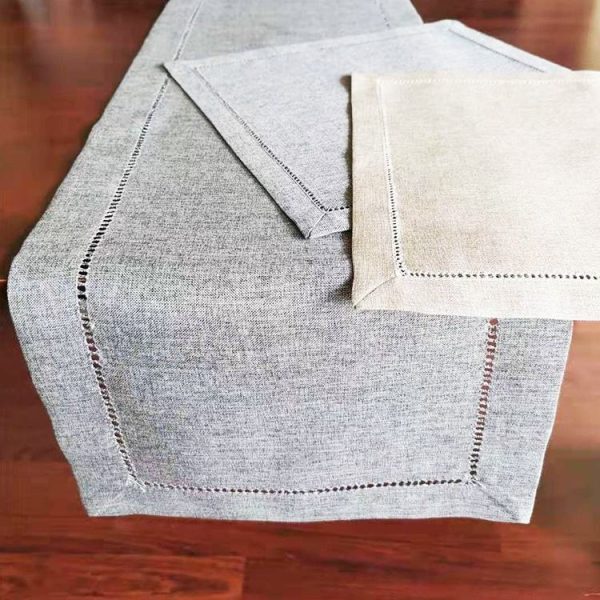
- Tablecloth / Table Runner: These have dual functions of protecting the tabletop and enhancing decor. The fabric often features a high-density weave and nano-level hydrophobic and oleophobic coatings, resulting in the so-called “three protection and one exemption” technology (waterproof, oil-proof, heat-proof, no frequent washing). Liquid stains can be wiped clean with one wipe, making machine washing unnecessary on a regular basis.
- Placemat / Cup Mat: These provide heat insulation and protect the tabletop from hot dishes, while adding a splash of visual charm.
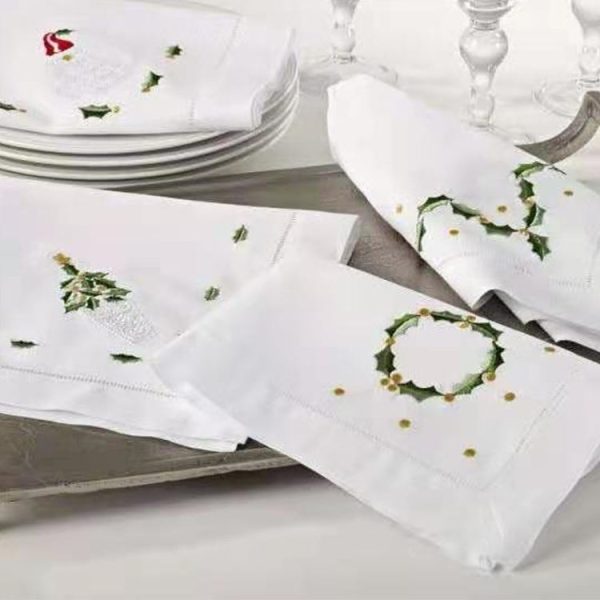
- Napkin: Central to this article, napkins serve both a practical and aesthetic role at mealtime. AI-designed napkin patterns often echo contemporary art, minimalist motifs, or timeless embroideries. The napkin’s dual function—cleaning and table dressing—is enhanced by fabric choices that blend absorbency with smoothness.
- Cushion Cover: Often considered complementary to table textiles, these bring comfort to dining chairs or living sofas through texture and color.
Yiwu Jinyuan’s products are designed for many scenarios: family daily life, banquets and gatherings, commercial restaurant settings, and even gift boxes. In the context of a family dining space, decorative textiles work with Chinese, Nordic, or modern minimalist interior styles. At festive banquets, large round tablecloths and full-place-setting sets create an atmosphere of ritual and hospitality. For commercial use, high-abuse designs ensure that hotels and tea rooms have linen that looks beautiful but remains easy to care for. Since they can be beautifully packaged, these textiles also serve as heartfelt gifts to relatives and friends.
AI brings an extra level of value by helping customers co-create the perfect product. In the design customization service, customers may specify elements such as holiday motifs, family crests, or corporate logos. The firm’s AI-assisted engraving and digital heat transfer printing enable accurate reproduction that is both consistent and scalable. This seamless integration of design technology and handcrafted skill is what makes the firm agile.
Core Competitive Advantages Enhanced by AI
Yiwu Jinyuan Trading Firm has built a robust competitive advantage by integrating AI across its manufacturing and service processes. Let us examine several key strengths.
1. Full-Process Manufacturing Advantage and Large-Scale Delivery
The company’s complete production chain covers weaving, dyeing, and finished-product sewing. AI-powered production planning and scheduling software predicts bottlenecks and optimizes resource allocation, increasing throughput. Automated guided vehicles (AGVs) in the factory transport rolls of fabric and cut pieces intelligently, avoiding collisions and reducing human error. As a result, the company not only possesses high production capacity but also delivers on time—a crucial factor for international buyers exporting to Europe, America, Japan, South Korea, and Southeast Asia.
2. Technical and Process Excellence
The firm has implemented pioneering nano anti-scratch finishing technology that achieves three-proof functions. AI-driven metering systems apply the finishing agents consistently and ensure environmental safety, because the fabric retains breathability and natural texture. Meanwhile, processes such as double-needle pressing, laser hollow engraving, digital heat transfer printing, computer embroidery, and jacquard weaving are all taken to a new level with computer-aided design. The company develops hundreds of new products annually, with a quarterly new product revision rate of over 30%. This rapid iteration is only possible with AI tools that anticipate design trend cycles.
3. Global Market Validation and Accredited Quality
Exporting to Europe, the United States, Japan, South Korea, and Southeast Asia, Yiwu Jinyuan is a long-term supplier for renowned international home brands. Their product portfolio meets rigorous compliance, having passed BSCI social responsibility audits and multiple international factory inspection standards. Through AI-backed traceability, they can document the journey of each fabric and finished good. Moreover, deep learning algorithms can analyze customer feedback and return data, which enables the quality control team to detect underlying defect modes early. This creates a continuous improvement loop.
4. Differentiated User Value and Trend Matching
The company understands the modern consumer’s dual demand for “easy maintenance + spatial aesthetics.” For the functional product line, AI enables the design of surfaces with perfectly balanced hydrophobicity. For aesthetic products, AI can anticipate color families that align with rustic, cream, or New Chinese interior trends. Whether for the dining room, coffee table, sofa, or bedroom, the product range always meets users where we live and entertain. The distinct user value extends to commercial chairs and hospitality industries, making every meal a scene of enhanced expression.
5. Continuous Innovation and Sustainable Development
Yiwu Jinyuan is deeply committed to R&D and has established partnerships with universities and research institutions. They hold several patents related to fabric composition and textile processes. In line with global sustainability, they are actively advancing degradable fabrics, recycled polyester, organic cotton, and poly(lactic acid) fiber (PLA). AI contributes to material discovery methods—speeding up experiments about new fibers and coatings—while also modeling the full life-cycle environmental impact. This forward-thinking approach creates a competitive barrier that competitors cannot easily overcome, reinforcing the firm’s market position.
AI in Customization and Customer Experience
Another salient application is in the collection and analysis of customer data. When clients send pattern requirements, an AI tool can instantly extract colors and edge styles from a provided image, even if the image is blurred or has a complex background. This facilitates to good communication, particularly for clients who may lack technical vocabulary. Digital sampling allows customers to see photorealistic renderings of their table settings before production begins, drastically reducing the need for physical samples and associated costs.
Furthermore, AI-driven recommendation engines assist clients in cross-selling. For example, if a customer orders a floral tablecloth, the system will suggest patterned napkins whose shades are mathematically matched. This increases the average order value while delivering cohesive designs. Many clients from retail chains use Yiwu Jinyuan as a one-stop shop for an entire tabletop ensemble, and their satisfaction is rooted in the prompt and reliable service.
The company has a team that can rapidly complete personalized customizations based on customer requests. This includes modifying patterns, colors, and sizes as well as creating entirely new SKUs. With AI, “rapid” has become real-time, and even complex updates—for instance, adjusting a jacquard design to align with a new type of organic cotton—can be simulated swiftly. This level of personalization helps clients create differentiated products and thereby capture premium shelf space.
Interactive AI Tools: From Idea to Ironed Napkin
To better appreciate how AI integrates into the everyday workflow, it is helpful to imagine a comprehensive AI-assisted manufacturing system. The sequence might be as follows:
| Stage | Traditional Method | AI-Enhanced Method |
|---|---|---|
| Trend research | Manual review of trade shows and magazines | AI monitoring of social media and runways, pattern prediction |
| Pattern design | Hand sketching and repeat of artwork in photo editing | Generative design tools creating dozens of unique motifs |
| Fabric selection | Material library physically inspected | Machine learning recommendation of available fabric’s drape and durability |
| Production process | Operator-controlled cutting and sewing | Automated cutting guided by computer vision, robotic sewing cells |
| Quality assurance | End-of-line visual inspection | Inline sensors detecting defects and alerting the operator in real time |
| Packaging and logistics | Manual counting and sorting | Automated palletizing with barcode and RFID scanning to ensure order accuracy |
This table presents just a few stages, but the interconnection is what matters. A single data backbone ensures that when customer places a custom order for fringed edge napkins, the ERP instantly calculates yarn dyeing needs and prints a production ticket for the weaving machine.
In Yiwu’s factory, an intelligent hanging system steers the various cut pieces to the correct sewing station. Operators receive display screens showing stitch type and placement based on the order’s digital twin, eliminating guesswork. For a napkin with embroidered monograms, AI routes it to a digital embroidery line that precisely reproduces the logo across a batch of hundreds without variation. This degree of process control is especially useful when handling fabric such as linen, which has intrinsic irregularities that automated inspection can accommodate.
Quality Control Supported by Machine Vision
Table napkins might be small and simple, but the quality requirement is high. Machine vision has dramatically enhanced the final napkin inspection. Previously, quality inspectors would hand-inspect every piece; fatigue could cause errors. Today, high-resolution cameras and AI image recognition continuously inspect the napkin’s edge, seam, and print registration. They can detect issues like loose threads, uneven hemming, slight color mismatch, or oily stains that are barely visible to the human eye.
Typical tests also measure product durability. Nano-coatings are checked for uniform application by analyzing the water contact angle. Because table napkins from this firm often receive waterproof, oil-proof, and heat-proof treatments, the manufacturer uses machine learning to relate these surface measurements to long-term fabric comfort. The result is a product that not only resists coffee spills and grease but also feels soft and breathable against the skin.
Case Study: A Table Napkin with Smart Design
Consider the design workflow for a “Botanical Heritage” table napkin, which was created for a European retail chain. The client provided a mood board of nineteenth-century botanical illustrations. Within 48 hours, the design team at Yiwu Jinyuan delivered three color ways, each generated by an AI algorithmic suggestion based on the original art. One color way emphasized terracotta and sage, another deep burgundy with muted gold, and a third, crisp white with intricate black line art. The client chose the first and requested a slightly enlarged pattern scale for their rectangular 45×45 cm napkins.
They also requested that the napkin be both organic cotton and have an easy-clean finish. AI simulated sewing shrinkage, avoiding distortion of the motif. After producing prototypes, the design was improved, and the pattern was adjusted to avoid cutting through stems at the hem. The client approved the pre-production sample. The final products passed BSCI audits and were shipped to Germany. Thanks to AI-driven demand forecasting, the client exactly ordered the right quantity for their autumn catalog.
In this scenario, AI did not replace the creativity of human designers; instead, it acted as a collaborative partner that simplified tedious tasks and ensured precision. Yiwu Jinyuan’s design team, comprised of youthful and trend-forward artists, uses AI to expand their own creative limits. The union of human aesthetic judgment and machine speed enables the company to keep introducing products that capture worldwide attention.
The Future of Sustainable Table Napkins via AI
In the coming years, digital product passports are expected to become standard. Yiwu Jinyuan is preparing to use AI tracking to detail the exact provenance of each napkin, including where the plant fibers were grown, the energy consumption in weaving, and the water used in dyeing. Aided by AI optimization, the factory has reduced water consumption by 20% by adjusting the dye bath cycles based on continuous chemical analysis. Moreover, intelligent cutting reduces fabric waste by nesting patterns in the most efficient layout, saving raw materials.
Sustainability extends to the entire product life. Table napkins designed with functional coatings may be of higher durability, but they must still be recyclable. The company is conducting research on coatings that can be easily removed during the recycling process. AI helps by identifying chemical structures that balance performance and recyclability. By using PLA and recycled polyester, they can help restaurants adopt a circular model where napkins are composted after their useful life, rather than landfilled.
Yiwu Jinyuan also plans to use AI to support its after-sales service by logging troubleshooting data. If a customer reports that the coating yields a slight odor, AI can analyze the complaint transcript and laboratory result to pinpoint the root cause. Quick resolution increases buyer trust and opens channels for continuous product enhancement.
Training and Human-AI Collaboration
A worry that robots will take away jobs exists in every industry. However, the broader vision at Yiwu Jinyuan is a human-centric AI. Rather than replacing craftsmanship, the company uses AI to train workers. New operators can learn sewing techniques using augmented reality instructions shown through smart glasses. Machines do not eliminate human involvement; rather, they augment the dexterity and intelligence of the workforce. The production team, which has mastered edge binding and quilting, is now adding skills in supervising automated machines.
The top management holds the belief that technology should remove the boring, repetitive aspects of work, so that employees can focus on quality supervision and creative problem-solving. For instance, machine setting can be optimized by AI, but the worker must decide whether the fabric texture is appropriate for a certain design. This collaboration between tacit, human skill and explicit, data-driven knowledge strengthens Yiwu Jinyuan’s intangible assets.
Yiwu Jinyuan Trading Firm is not merely an export company; it is an ambassador of sophisticated table culture. It has always passionately focused on small yet impactful products that add style to ordinary meals. Artificial intelligence is enabling this passion to produce effects at scales unimaginable a decade ago.
Key Benefits of AI for Buyers and End Users
From a buyer’s viewpoint, the benefits are undeniable: quick response to new trends, assured quality with fewer disputes, and cost efficiency gained from decreased waste and more stable processes. In competitive markets such as the United States and Europe, where aesthetic expectations are high, having a manufacturing partner equipped with AI is not just an advantage but an eventual necessity.
End users, too, feel the difference. Table napkins that exhibit a consistent pattern and perfectly aligned hem are more appealing. If the napkin includes water-repellent features, families can spend less time on laundry and more time enjoying company. This adds to the “ritualistic daily life” feeling that many consumers seek.
Conclusion
Yiwu Jinyuan Trading Firm exemplifies how a table napkin manufacturer can integrate artificial intelligence into design and manufacturing. By doing so, the firm ensures high-quality products, operational efficiency, and a keen sensitivity to market demands. They have embraced the principle of “small products, great care,” making every day’s meal a feast of elegance through a blend of human creativity, technological precision, and rigorous quality control.
As the company continues to invest in eco-friendly fabrics and customized original designs, it remains dedicated to the mission of “Quality as the Foundation, Integrity for the Long-term.” The adoption of AI is not an end in itself but a way to create enduring value for customers. For buyers seeking a reliable, forward-thinking partner in the home textile industry, Yiwu Jinyuan sets an inspiring example.