This blog post explores the technical and operational intricacies behind producing table napkins with perfectly consistent hems, using the example of Yiwu Jinyuan Trading Firm, an export company specializing in home textiles. It highlights that hemming consistency, a key indicator of premium quality, requires more than just a well-set sewing machine. The article identifies five core factors: meticulous fabric selection and preparation, precision cutting with automated systems, careful calibration of sewing equipment, comprehensive operator training, and a multi-tiered quality control process. It also discusses the role of modern technology—such as automated guiding systems and intelligent data monitoring—alongside traditional craftsmanship. Yiwu Jinyuan’s factory, with over 10,000 square meters of production space, employs skilled workers and integrates processes like double-needle pressing and laser hollow engraving to produce smooth, durable edges. The quality management system, which ensures a finished product qualification rate above 99%, is described as the backbone of customer trust. The article also touches on how different fabrics and functional coatings affect hemming and how the company adapts its methods to maintain consistency in custom orders and sustainable material innovations. The overall message is that precise hemming is not a single action but a systematic achievement, blending technology, skilled labor, and rigorous oversight to deliver napkins that meet high standards for both aesthetics and durability in the mid-to-high-end market.
How a Table Napkin Factory Achieves Precise Hemming Consistency
In the world of home textiles, few items are as deceptively simple yet technically demanding as the table napkin. A staple of dining tables in homes, restaurants, and hotels, the napkin must not only be aesthetically pleasing but also highly functional. One of the most crucial aspects of its construction is hemming—the process of folding and sewing the edges to prevent fraying and provide a clean finish. While it may appear straightforward, achieving precise and consistent hemming across thousands of pieces requires a blend of advanced technology, skilled craftsmanship, and meticulous quality control. This article explores how a modern table napkin factory, exemplified by industry players like Yiwu Jinyuan Trading Firm, achieves such consistency and why it matters to consumers and businesses alike.
Hemming consistency is the hallmark of a premium napkin. Inconsistent hems can lead to puckering, uneven widths, missed stitches, and fraying—defects that compromise the product’s durability and visual appeal. For a factory that produces tablecloths, runners, placemats, napkins, cushion covers, and cup mats, maintaining this consistency across all items is a matter of reputation and operational excellence. Yiwu Jinyuan Trading Firm, an export company specializing in international trade, has built its entire production philosophy around the belief “service and concern, credit and commitment, share and progress.” Their core team comprises experienced professionals with decades of involvement in the home textile industry, bringing deep expertise in product development, production management, and international trade.
The Art and Science of Hemming
Hemming is more than just a finishing touch; it is a structural necessity that prevents fabric from unraveling and reinforces the edges. In a napkin, the hem also contributes to its drape and overall hand feel. For woven fabrics like cotton, linen, or polyester blends, the edge is typically folded twice—first to enclose the raw edge, then to create a clean, uniform border. The fold must be exactly the same width throughout, and the stitching must be straight and evenly tensioned. This precision is difficult to achieve manually due to variations in fabric thickness, weave density, and the natural stretching of fabric during handling.
To master this, factories rely on specialized hemming machines, calibrated guides, and tightly controlled production parameters. Yet technology alone cannot guarantee perfect results. The human element remains vital, from the technician who sets the machine to the operator who feeds the fabric. A truly consistent production line is the result of a systematic approach that harmonizes machinery, materials, methods, and people.
undefined
Yiwu Jinyuan Trading Firm: A Model of Excellence
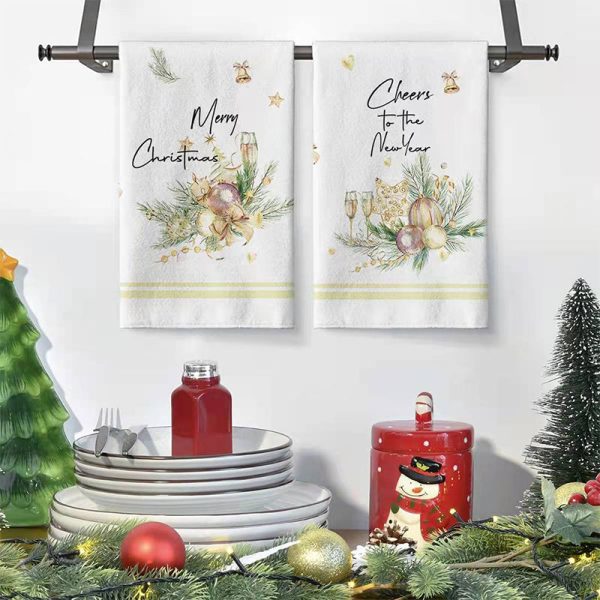
Yiwu Jinyuan Trading Firm has concentrated its efforts on the home textile niche market, specifically focusing on table aesthetics and home comfort. Their product portfolio covers six categories: tablecloths, table flags, plate pads, napkins, cushion covers, and cup pads, targeting the mid-to-high-end home soft furnishing market. The company balances practical functionality and aesthetic value, aiming to create a “ritualistic daily life” home experience. Their design team, young and creative, stays closely followed to international trends in home interior decoration, skillfully integrating fashionable elements with practical functions. This team also quickly completes personalized customization of patterns, colors, and sizes according to customer needs.
When it comes to manufacturing, the company has established a complete production chain covering fabric weaving, dyeing processing, and finished product sewing. Their factory area exceeds 10,000 square meters and is equipped with advanced sewing equipment and digital embroidery lines. Their production team is highly skilled, particularly in key processes such as edge binding of tablecloths, quilting of placemats, and—central to our discussion—zipper positioning of cushion covers. For napkins, the hemming process is equally refined, using double-needle pressing and laser hollow engraving technology to ensure smooth edges and three-dimensional patterns. This not only enhances durability but also elevates the refinement of the final product.
Key Factors in Achieving Hemming Consistency
1. Fabric Selection and Preparation
Before a single stitch is sewn, the fabric must be inspected and prepared. Inconsistencies in fabric—such as variations in thickness, weave, or shrinkage potential—can sabotage even the most calibrated hemming process. Yiwu Jinyuan Trading Firm sources high-quality materials, including cotton, polyester-cotton blends, and linen. Some of their products adopt high-density weaving and functional coating composite technology to achieve waterproof, oil-proof, and heat-proof functions while retaining the natural texture of the fabric. The fabric entry involves strict quality checks, including measurements of width, weight, and color fastness. Fabric is often relaxed or pre-shrunk before cutting to stabilize its dimensions. This ensures that every panel destined to become a napkin will behave predictably during hemming.
2. Cutting Precision
Hemming consistency starts with precise cutting. If a napkin is cut slightly out of square or with uneven edges, the hem bis will have to compensate for the flaw, leading to visible inconsistencies. Modern factories use automated cutting systems—Yiwu Jinyuan Trading Firm has introduced automated cutting lines and intelligent hanging systems—which not only increase production efficiency but also control the dimensions strictly. These systems consistently cut fabric with an accuracy of within a millimeter. For smaller orders, custom cutting dies are used to maintain the same sharp edges. The use of laser sensors and alignment guides ensures that the cutting path follows the grain of the fabric, reducing distortion.
3. Sewing Equipment and Calibration
At the heart of hemming lies the sewing machine. The most common types used for industrial hemming are high-speed single-needle lockstitch machines or specialized hemmer machines with adjustable folding guides. These machines must be calibrated meticulously: the presser foot pressure, thread tension, feed dog timing, and needle size all have to be set correctly for the specific fabric weight and thickness. Regular maintenance is crucial. A machine that runs 10 hours a day for months will inevitably drift off calibration. Thus, Yiwu Jinyuan Trading Firm schedules routine checks for all sewing equipment. Key technicians document the standard settings for each fabric type and whenever there is a batch change, they clean the machine and recalibrate it from scratch. The result is that every hem produced meets the same width—typically 1/4 inch or 3/8 inch, depending on the product specification—and every stitch is uniform in length and tension.
4. Operator Skill and Training
The operator plays an inside role that cannot be overlooked. An experienced hand can feed fabric through the hemming attachment at a steady pace, avoid stretching, and immediately detect a slight misalignment before it becomes a defect. Yiwu Jinyuan Trading Firm invests heavily in training its workforce. New operators undergo a comprehensive apprenticeship program, learning the properties of different fabrics and the correct way to operate multiple types of hemming machinery. They are taught to inspect their own work constantly, measuring hem widths with specialized gauges and visually scanning for skipped stitches or puckers. More seasoned operators are cross-trained to perform routine maintenance and to make micro-adjustments to the machine when they notice thread tension changing. This level of ownership and understanding means that the human hand complements the machine rather than undermines it.
5. Quality Control Systems
No matter how well machines are calibrated or operators are trained, defects can still occur. The difference lies in whether an established quality assurance system catches them. At Yiwu Jinyuan Trading Firm, the quality control team strictly follows multiple inspection procedures, from the entry of fabrics to the delivery of finished products. These inspections are built around critical control points. In the hemming process, the first napkin from a new batch is inspected thoroughly before full-scale production begins, which is often referred to as a “first article inspection.” During production, patrol inspectors sample random pieces every 30 minutes. They check for hem width consistency, stitch density, seam alignment, and visual defects like puckering or wavy edges. Any deviation triggers an immediate stop of the line to resolve the issue before it cascades. At the end of the production line, a final inspection is performed on every napkin, or at least on an AQL (Acceptable Quality Limit) sample, before it is packaged. This rigorous system is an integral reason why the company’s finished product qualification rate is stable at over 99%.
The Role of Technology in Precision Hemming
Technology has transformed the napkin manufacturing landscape. While the classic hemming station has changed little in principle, its execution has become increasingly automated and data-driven. For instance, automated fabric guiding systems use photoelectric sensors to detect the edge of the fabric and adjust the position in real time as it enters the hemming folder. This eliminates small drifting that may occur due to fabric curling or uneven feeding by the operator. Some modern machines also come with “dual-servo” motors that precisely control the needle and the feed dog separately, resulting in a uniform stitch regardless of the fabric thickness variations.
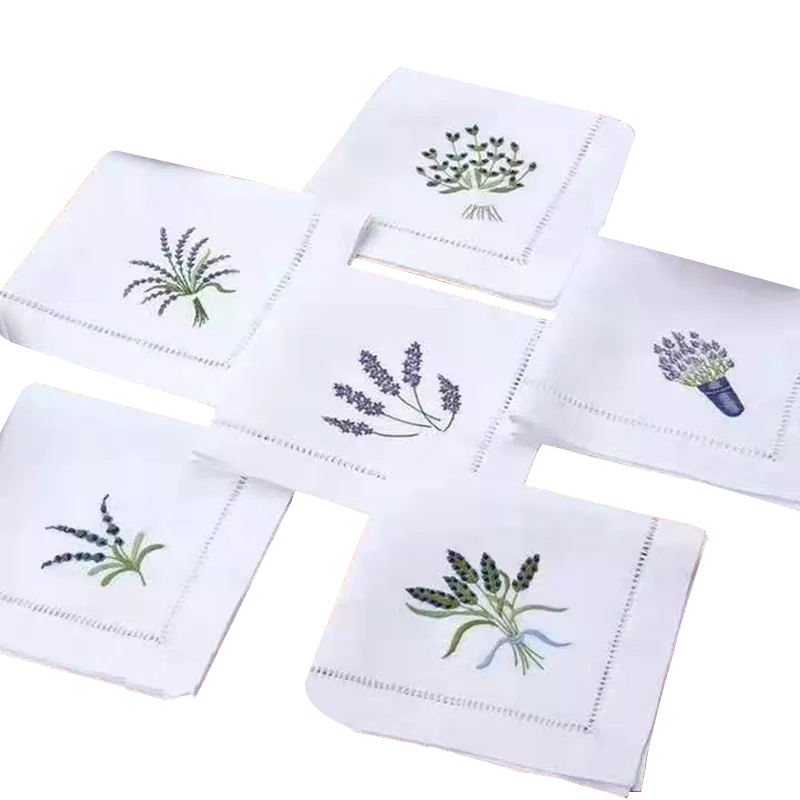
Yiwu Jinyuan Trading Firm has also integrated digital heat transfer printing, computer embroidery, and jacquard weaving into their production capabilities. While these techniques are primarily for decorative patterns, they affect the hemming process because printed or embroidered edges can alter the stretch of the fabric. The company’s engineering team works closely with the design team to ensure that the pattern placement always leaves enough margin for a clean hem. Laser hollow engraving, another technique they use, can create decorative edges that also serve as a cut line, thereby perfectly aligning the design and the hem.
The introduction of intelligent hanging systems has also reduced the amount of manual handling of cut pieces. These systems transport fabric stacks between operations in a controlled manner, reducing the risk of premature stretching or distortion from being pulled or piled. With real-time production monitoring, the factory can track the hemming output and instantly identify machines that are underperforming or producing irregularities, allowing for immediate corrective action.
Process Control and Standardization
Consistent hemming is not an accident; it is engineered through standardized procedures. A standard operating procedure (SOP) is written for each hemming operation, defining the precise settings for thread types, needle sizes, stitch lengths (usually 12 to 14 stitches per inch for napkins), hem widths, and acceptable tolerances. For example, a hem of 10 mm might have a permissible deviation of ±1 mm. The SOP also highlights the correct way to handle the material, how to do a thread change, and how to conduct clean-ups between batches.
Beyond SOPs, factories employ statistical process control (SPC). During production, operators measure and record the hem width of a sample piece every few minutes. These measurements are plotted on a control chart. If the values fall outside the expected range or display a non-random pattern, this serves as an early warning that the machine may be drifting. Addressing these small trends immediately prevents the production of thousands of nonconforming napkins. Yiwu Jinyuan Trading Firm embraces this data-driven approach, using these charts to not only ensure quality but also to optimize machine settings for different fabric runs. Their heavy experience in product development and production management allows them to anticipate which combinations of fabrics and hemming techniques are most likely to produce poor results, thus avoiding them from the start.
Materials and Their Influence on Hemming
Not all fabrics are created equal when it comes to hemming. A crisp, plain-weave cotton with a light finish is often cooperative: it folds sharply, adheres to the crease, and feeds smoothly. On the other hand, an elastic or slippery fabric like polyester satin or a softly brushed flannel can shift and stretch during clamping, causing the hem to become wavy or inconsistent. Linen, with its slubs and inherent irregularities, can also pose a challenge because the uneven thickness can make the folding guide jam. Yiwu Jinyuan Trading Firm uses a variety of fabrics, each requiring specific handling.
For instance, when hemming a functional tablecloth or napkin with a waterproof and oil-proof coating, the coating often makes the fabric stiffer and sometimes causes the thread to skip if a standard needle is used. To solve this, the factory may switch to a smaller needle with a sharper point or slightly reduce the thread tension. They also sometimes use a Teflon-coated presser foot to allow the fabric to slide more easily. These are not major changes, but they demonstrate the importance of understanding material science.
The thread itself also plays a part. Polyester thread is typically preferred over cotton for hemming because of its higher strength and elasticity, but its thickness must match the fabric needle. Fine cotton percale sheets for napkins still benefit from a polyester core-spun thread for durability. The factory ensures that threads are stored in temperature-controlled rooms to prevent moisture absorption and static build-up, both of which can affect stitch formation. Each lot of thread is tested for tensile strength and colorfastness before being approved for production.
The Human Element: Training and Craftsmanship
Even with all the technology, the factory floor remains an arena of skill. New hires at Yiwu Jinyuan Trading Firm do not simply sit at a machine and start sewing. They enter a multi-week training program in which they practice on waste fabrics, gradually learning to feel the machine’s rhythm and the optimal pressure needed to guide the fabric. The company believes in the phrase “Small products, Great care” and instills in every artisan a sense of pride. An operator is encouraged to send a “stop and fix” call if they suspect an issue, even if it affects productivity. This culture of quality is reinforced through continuous workshops on new materials and technologies. Weekly group meetings review common defects and share insights on how to prevent them. The production manager, who often has a background in textile engineering, helps operators understand the why behind each setting, not just the how.
Nevertheless, the industry is facing a growing shortage of skilled sewing personnel. To address this, Yiwu Jinyuan Trading Firm has developed a standardized skill assessment system and a clear career ladder, which reduces turnover and retains expertise. Long-term employees are treated as valuable assets, with opportunities to become team leaders or technical trainers. Their core team includes experienced professionals who have been in the home textile industry for many years, and they cultivate the next generation through mentorship. The result is a workforce that can handle intricate tasks such as piping corners, mitered hems, and curved edges without any compromise in precision.
Quality Assurance and Inspection
Hemming consistency can be objectively measured. At Yiwu Jinyuan Trading Firm, the quality control team uses a set of calibrated rulers, gauges, and test fixtures to verify product specifications. Periodically, napkins are selected at random and measured using a high-resolution measuring system, which checks the entire perimeter of the hem, not just a few points. The factory also performs a “wash test” on samples from each batch to ensure that the hem withstands repeated laundering and does not pucker or unravel. This is especially important for products intended for commercial use in restaurants, where napkins are washed frequently and at high temperatures. Only products that pass this integrity test are allowed to ship.
The final inspection is multi-stage. First, there is an in-line inspection where operators self-check. Second, a floor inspector conducts random checks every hour. Third, a comprehensive final audit before packing is performed on a statistical basis. In many cases, if a customer has a specific purchase order requiring a lower AQL, the factory will conduct a 100% inspection for visual defects. Their quality management system strictly follows guidelines from fabric entry to semi-finished product processing to finished product storage. This repeated inspection makes it nearly impossible for a defective napkin to exit the factory. In fact, their field failure rate is reported to be less than 0.5%, which leads to a high level of trust from international clients.
The Customer Perspective: Why Hemming Consistency Matters
For consumers, a consistent hem is often perceived as a sign of overall quality. A napkin with wavy edges can feel substandard even if it is made of expensive Egyptian cotton. Buyers in the hospitality sector, such as restaurants and hotels, rely on mass-produced napkins to maintain a uniform appearance in their dining setups. A mismatch in hem width between one batch and another may be truly visible in a beautifully set table, creating an impression of sloppiness. For the everyday consumer, even if they do not inspect the hem consciously, the consistent drape and easy ironing of a well-hemmed napkin enhance their overall dining experience.
Yiwu Jinyuan Trading Firm has leveraged this to build a strong international reputation. Their products are exported to Europe, the United States, Japan, South Korea, and Southeast Asia. They serve as long-term suppliers for several internationally recognized home textile brands. One of their key competitive advantages is “rapid delivery,” where the large-scale production and refined cost control allow the delivery cycle to be shortened by more than 20% compared to the industry average. But this speed does not come at the cost of consistency because of their efficient automated systems and a quality control team that works close to the production line.
Customization also depends on consistent hemming. The company offers multi-dimensional customization options for patterns, sizes, and fabrics. If a customer asks for a custom-sized napkin, say 18 inches square instead of the standard 20 inches, the factory’s cutting systems are quickly adjusted, but the hemming process still needs to maintain the same precision regardless of the size. Their ability to deliver uniform hems on both standard and bespoke orders gives them an edge in the mid-to-high-end market segment.
Sustainable and Innovative Practices
The future of napkin manufacturing includes a stronger focus on sustainability and new materials. Yiwu Jinyuan Trading Firm is already advancing in this area. Over the next three years, they plan to continue product upgrades, focusing on the application of eco-friendly fabrics such as recycled polyester and organic cotton, functional development including stain resistance, easy cleaning, and antibacterial treatment, and the IPization of original designs. These materials and treatments often have a different hand feel or require different hemming techniques. For example, recycled polyester may have a lower melting point than virgin polyester, so needle friction can be a problem. The factory’s R&D department is therefore working closely with their production and design teams to develop hemming methods compatible with those green fibers. They are also exploring the use of poly(lactic acid) fiber, a bioplastic derived from plant starches, which requires even more care because it is sensitive to heat and pressure.
In addition, the factory’s eco-friendly initiatives include the reduction of water and energy in their dyeing and finishing processes. The nano-level hydrophobic and oleophobic coatings used in their “three protection” products are free from harmful fluorinated compounds, ensuring they do not contaminate waste streams. This commitment to sustainability goes hand in hand with product quality, and many commercial partners in Europe and the US actively seek suppliers with such certifications. Their products have passed BSCI social responsibility audits and multiple international factory inspection standards, adding a level of confidence for global customers.
Conclusion
Precise hemming consistency is not a mere detail; it is an integral part of napkin quality. Achieving it requires a carefully orchestrated system that combines high-quality raw materials, automated cutting and sewing machinery, rigorous process control, and, crucially, a skilled and motivated workforce. The example of Yiwu Jinyuan Trading Firm demonstrates that a factory can successfully marry traditional craftsmanship with modern technology to produce napkins that not only meet exact specifications but also please the eye and the hand. From the initial inspection of the fabric to the final audit of the folded product, every step is designed to prevent even the smallest imperfection from slipping through.
As consumer expectations continue to rise, so will the demands placed upon napkin producers. Whether it is the crisp, uniform hem on a linen napkin in a Michelin-starred restaurant or the colorful yet durable border of a printed cotton napkin in a family kitchen, consistency will remain a decisive factor. Companies like Yiwu Jinyuan Trading Firm, with their strong experience in international trade and their focus on table aesthetics, are well-positioned to lead. Their continual investment in eco-friendly fabrics and functional treatments will add new challenges to hemming, but the same dedication to precision guarantees that they will conquer these challenges as effectively as they have mastered the art of hemming.
Ultimately, for anyone who ever wondered why some napkins always lie so perfectly flat and never unravel in the wash, the answer lies in hundreds of tiny decisions made by engineers, operators, and inspectors—all united by a singular vision of excellence. As the proverb goes, “The devil is in the details,” yet in the world of home textiles, the true art is often found in the seamless, consistent hem.