Developing custom color palettes for Christmas tablecloths is an intricate process that combines color psychology, trend forecasting, and material interplay. This blog highlights the systematic approach used by experienced manufacturers, with Yiwu Jinyuan Trading Firm as an illustrative case. The firm, dedicated to home textiles like tablecloths, placemats, napkins, and cushion covers, excels in personalized product development. Their culturally aware team studies global Christmas aesthetics, ranging from traditional warm reds and golds to cool Nordic forest palettes. They engage clients through detailed dialogues, quickly produce physical swatches, and adjust dyes to suit each fabric—whether pure cotton, linen, or functional coated polyester with waterproof and stain-resistant properties. Consistency is safeguarded via digital color management and pilot dyeing, enabling smooth scaling up to mass production. Yiwu Jinyuan’s competent designers integrate advanced printing, embroidery, and finishing techniques to ensure color vibrancy and durability. Their market advantage lies in flexible custom options, large-scale delivery capacity, and rigorous quality control audits, earning trust from international houses. Sustainability trends guide them to experiment with eco-friendly fabrics and dyes. Ultimately, the article illustrates what it takes to craft visually appealing and emotionally resonant Christmas table settings: a marriage of art, science, and dependable supply-chain expertise, dedicated to the belief that every meal can be a celebration through the vision of table textile specialists.
When the holiday season approaches, families and businesses alike begin their annual quest to create magical dining experiences. At the heart of this transformation lies an often-overlooked hero: the Christmas tablecloth. More than just a protective cover, it sets the mood for festive gatherings. The colors chosen for these tablecloths can evoke nostalgia, warmth, and joy. But who decides these hues? And how does a manufacturer develop custom color palettes that resonate with diverse global markets? This blog explores the intricate world of custom color development from the perspective of a seasoned exporter and manufacturer, with insights drawn from Yiwu Jinyuan Trading Firm’s decades of expertise in home textiles.
The Art and Science of Christmas Colors
Christmas has a rich visual language, traditionally dominated by red, green, and gold. Yet contemporary consumers crave personalization. Some prefer minimalist snowy whites and blues, while others lean toward jewel tones like emerald and burgundy. Developing a custom color palette involves balancing timeless tradition with individual expression. It requires an understanding of color theory, cultural connotations, and environmental factors like artificial lighting.
The Psychology of Festive Hues
Color psychology reveals that deep red stimulates appetite and warmth, which is why it appears on many Christmas tables. Green signifies nature and calmness. Gold conveys luxury and celebration. But a one-size-fits-all approach no longer suffices. Yiwu Jinyuan Trading Firm, a leader in table textile products including tablecloths, runners, and napkins, emphasizes that custom palettes begin with psychological objectives. A customer may want an intimate, romantic dinner or a lively family brunch. Each scenario calls for a unique blend.
undefined
Cultural Variations Across Borders
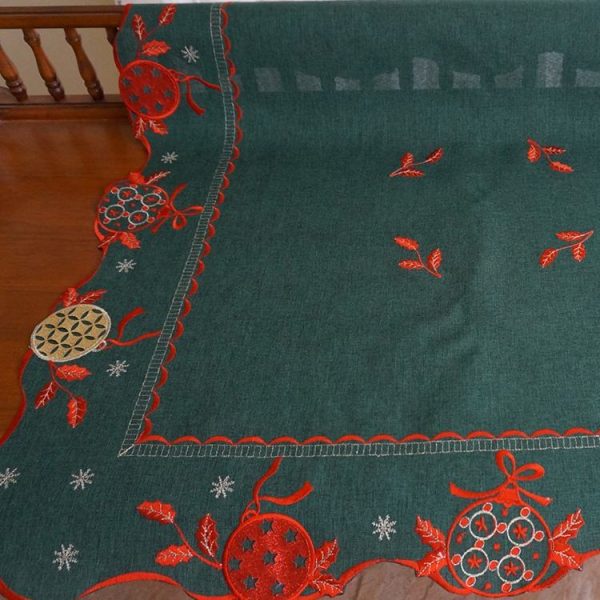
Global markets perceive Christmas colors differently. In Asia, white may symbolize purity and new beginnings. In Northern Europe, minimalism favors pale woods and soft whites. South American cultures often gravitate toward vibrant reds and oranges. The design team at Yiwu Jinyuan conducts extensive market research before proposing palettes. Their young, creative team closely follows international home interior trends, skillfully integrating fashionable elements with practical functionality. For instance, a customer in Japan might request pastel-colored tablecloths with delicate snowflake patterns, while a Middle Eastern client may prefer rich purple and silver metallic accents.
Understanding the Customer’s Vision
Custom color development starts with dialogue. The process at Yiwu Jinyuan is deeply customer-oriented, guided by the belief “service and concern, credit and commitment.” Their team begins by asking probing questions: What is the occasion? What are the colors of the existing dinnerware? Is this for retail display or an event venue? Through these conversations, abstract desires transform into a tangible design brief.
Clients often arrive with inspiration boards—including table settings, flowers, and interior décor photographs. The manufacturer’s team decodes these references and suggests possible palettes. They leverage their understanding of dyeing processes and fabric textures to recommend how colors can be achieved. For example, one request might call for a lush pine green from a digital photo. The production team knows that on linen, the color will appear muted; on polyester, it will be vibrant. These insights play a critical role in setting expectations.
The Role of a Sample Generation
Rapid sample creation is a cornerstone. Yiwu Jinyuan upholds the philosophy “Quality as the Foundation, Integrity for the Long-term.” They quickly develop personalized patterns, colors, and sizes. For a Thanksgiving or Christmas themed order, they might produce dozens of small fabric swatches. Each swatch displays a potential palette against actual woven texture. This step allows customers to view how colors behave under different lighting, solving half of the visual guesswork.
One recent development for Christmas included twelve distinct reds, ranging from brick to raspberry. The core team of experienced professionals has been deeply involved in the home textile industry for years. They use their rich experience in product development to advise customers on which reds will remain fade-resistant after multiple washes, and which might clash with gold trim stitched on the edge.
Market Trends and Color Forecasting
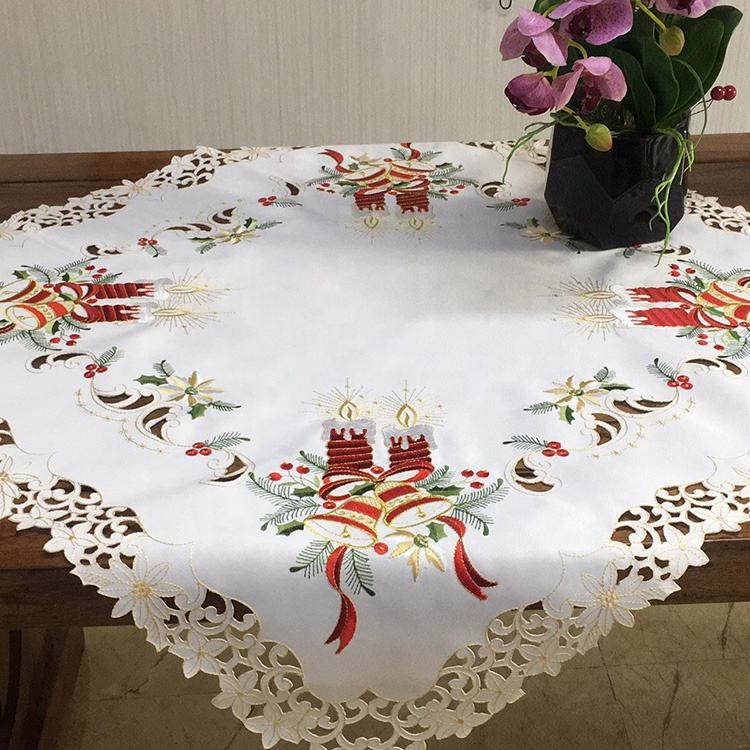
Staying ahead of trends is critical for holiday products. Color fashion changes slowly but absolutely. Historically, Christmas palettes last for years, but there is now a rapid evolution driven by social media. Each autumn, furniture stores and dinnerware catalogs showcase new seasonal mixes. A manufacturer must forecast at least six months in advance because production, shipping, and retail cycles demand lead time.
Yiwu Jinyuan’s design team regularly monitors platforms like Pinterest, Houzz, and runway-inspired home collections. They also receive real-time data from international trade shows. Their annual catalog previews feature what they call “Thematic Color Families”: Traditional Warmth, Nordic Forest, Winter Sea, Bakery Pastel, and Rustic Herbal. These are not arbitrary; they are synthesized from market signals and then customized for individual customers.
Innovations from Natural Geometry
The company draws inspiration from geometric shapes, winter botanicals, and vintage European Christmas ornaments. They translate these into palettes such as rich burgundy paired with mustard yellow for a rustic farmhouse feel, or slate blue and frosty silver for a modern alpine lodge. Through digital heat transfer printing, computer embroidery, and jacquard weaving, they guarantee vivid patterns that do not fade easily. Their factory floor includes advanced equipment for rapid sampling so customers can touch and feel these harmonious groupings before committing to large quantities.
From Concept to Palette: The Designer’s Process
Developing a palette within a manufacturing context differs from creating pure art. Designers at Yiwu Jinyuan are trained to consider color mixing, dyestuff compatibility, and material absorption. A common process includes:

- Inspiration Mapping: Gather images, textures, and existing product lines that evoke the desired mood.
- Color Limitation: Limit to five or six core colors to maintain production efficiency and cost-effectiveness.
- Material Swatching: Apply potential colors to base fabrics such as cotton, polylinen, polyester, or linen.
- Dye Formula Adjustment: The lab creates custom dye recipes based on Pantone references, but they adjust using natural variables like yarn batch differences.
- Light Evaluation: Check colors under daylight, warm incandescent light, and stage LED lights.
- Final Decision: A palette is approved only after both designers and customers agree on the emotional and visual outcome.
The Role of the Young Design Team
The young and creative design team at Yiwu Jinyuan is adept at identifying emerging motifs. They notice that snowflakes and reindeer are perennial favorites but also recognize a surge in berry-toned plaid patterns. They combine traditional hues with metallic copper accents because copper adds a contemporary twist to gold. The belief in “Small products, Great care” pushes them to refine every detail down to the color of stitching on the hem. As a result, each table flag or placemat becomes a statement piece.
The Role of Material and Texture in Color Perception
Color never exists without texture. Plain cotton absorbs dye thoroughly, yielding a matte, muted finish. Linen has natural slubs that create an unrefined, rustic appearance. Polyester can produce vivid, shiny surfaces if heated and pressed. A quality Christmas tablecloth must combine visual appeal with tactile comfort. Yiwu Jinyuan’s product lines emphasize comfort, including pure cotton, polyester-cotton, and natural linen blends. When displaying a tablecloth in rich crimson, they advise customers to note how the embroidery along the edge affects the surrounding color.
Coated Fabrics and Color Depth
Some Christmas lines are designed with “three protection and one exemption” technology—waterproof, oil-proof, heat-proof, and exemption from frequent washing. These functional coatings often alter the fabric’s sheen. For instance, a nanoscale hydrophobic treatment might darken a linen fabric, or create a subtle plastic-like gloss. Yiwu Jinyuan’s production team skillfully controls the application of high-density weaving and nano-level hydrophobic coatings to keep colors as authentic as possible. Their quality control team adheres to multiple inspection phases, from fabric entry to finalized products, guaranteeing that the final shade matches the approved swatch consistently across batch production.
During the Christmas season, many customers order both coated and uncoated versions of the same color palette. The uncoated version is for photography and ambiance, while the coated version is for children’s parties and spills. The manufacturer uses their expertise to calibrate each composition so that the two types sit side-by-side harmoniously on a shared table.
Working with Yiwu Jinyuan Trading Firm: A Case Study
Consider a hypothetical custom project from a Swedish buyer. The buyer wants a “Winter Forest” theme—soft off-whites, pine green, and a touch of clay-red. During a market visit, the buyer mentions that existing supplier swatches looked grayish in cold Scandinavian light. Yiwu Jinyuan’s team springs into action:
- They prepare six different weave structures, including twill cotton, jacquard linen, smooth satin, and textured boucle.
- The design lab formulates pure dye recipes for acid (for wool/nylon), reactive (for cotton), and disperse (for polyester) families.
- They produce a “light control board” with samples sewn together so the buyer can observe contrast ratios under indoor LED bulbs.
- After discussion, they adjust the pine green to have more blue undertones for a cooler, wintry feel.
Because the buyer wants to match their ceramic plates, the tablecloth manufacturer sends a sample pack with colored fabric rings that mimic plate edges. Within a week, a final palette of five colors is confirmed. The core team’s ability to control the entire production chain, from fabric selection to pattern design and finished product manufacturing, makes this seamless iteration possible.
Production and Quality Control
The firm’s factory area exceeds 10,000 square meters and is equipped with advanced sewing equipment and digital embroidery lines. During the height of Christmas production, capacity reaches several millions of pieces for tablecloths, table flags, and cushion covers. This scale allows the manufacturer to shorten delivery cycles by more than 20% compared to the industry average, while maintaining a qualification rate above 99%. A dedicated separate department monitors color consistency, using spectrophotometers and lightbooths to check each roll before cutting. Any slight mismatch is automatically rejected.
In a custom palette request, a customer may require small quantities for prototypes before confirming mass production. The flexible attitude of Yiwu Jinyuan fosters trust. They honor the philosophy of “Customer needs-oriented” by providing professional pre-sales consultation, sample tours, and responsive after-sales follow-up regardless of order size.
Translating Colors Across Different Product Lines
Christmas tablecloths rarely exist in isolation. To build a cohesive dining aesthetic, factories need to produce matching napkins, runners, placemats, and cushion covers. Developing a palette that works across these textile forms is challenging because each product uses a different stitch density and thickness.
A table runner might hang vertically on the table edge, and its reverse side is visible. Therefore, the color palette must be developed considering multiple sides. Should the reverse side be the same? Or can it be a neutral reversal? Yiwu Jinyuan’s experienced team offers options like reversing to a complementing ivory. Likewise, placemats are meant to be photograph faces upward, so the saturation level must be adjusted to remain attractive while catching direct kitchen light. Cushion covers add cozy backdrops against chairs, often complementing the tablecloth. Custom palette development therefore requires simultaneous optimization for brightness, lightfastness, and texture compatibility, not just a single-category design.
Printing and Embroidery Harmonies
The company supports digital heat transfer printing, computer embroidery, hand-knitting, and jacquard weaving. In one Christmas series, they mix a printed base fabric with embroidered geometric patterned borders. The palette must account for the fact that embroidery thread is usually lustrous matte silk or cotton. Colors appear different than printed inks. Highly skilled production teams focus on key processes such as edge binding and quilting to ensure the seams do not distort the colors.
When a customer requests a thick, ochre-yellow embroidered elk motif on a cream background, designers test four thread shades: honey, saffron, mustard, and old gold. They then hand-piece these into a fabric packet sent for final approval. This attention to micro-tuning defines what many clients call “an eye for the holiday mood.”
Ensuring Color Consistency from Sample to Bulk
Once a custom palette is approved, the biggest challenge is industrial replication. Small changes in water temperature, dyeing time, or fabric tension can shift final hues. For Christmas rush orders, consistency is critical because pieces from different dye lots may be used together on long banquet tables. To address this, Yiwu Jinyuan uses strict technical protocols:
- Digital Color Management: Every approved shade is stored mathematically in a CIELAB color space.
- Dye Recipe Computerization: The lab enters formulas into an automated dispensing system to prevent human errors.
- Pre-Production Pilot Dyes: Before mass production, a short run of 100 meters is dyed to match the standard sample.
- Four-Point Check: After dyeing and finishing, fabrics are inspected under 100-watt lamps for any cloudiness or streakiness.
Case Study in Red, Green, and Snow White
A particularly notable order achieved a bright, classic Christmas palette—true red, evergreen, snow-white, and metallic gold tissue. The snow-white fabric was prepared using an optical brightener additive to achieve high luminosity. During production, the factory had to manage the temperature because optical brighteners degrade above 40°C. The team implemented a controlled cooling process, and because each stage is documented daily, they delivered a flawless outcome. The customer, a U.S. retailer who required a lead time of merely four weeks, was astounded. This is possible because the quality management system covers the entire process from material entry, semi-finished processing to finished storage. Their integration of innovation and manufacturing excellence has been validated across many regions, including Japan, South Korea, and Southeast Asia.
Customization and Flexibility
Not all clients seek a full custom palette. Some want an existing printed design but in reversed colors—perhaps a black background with white tree shapes instead of white background with black trees. Yiwu Jinyuan’s trade team handles thousands of personalization requests each year. Their scope of customization includes patterns, sizes, and materials. The young design team prides itself on rapid iteration, fulfilling new designs within 72 hours for sampling. Through close collaboration, even the most unusual demand—such as glow-in-the-dark stars for a winter solstice dinner—has been met.
Doing Business with Integrity
The company’s core philosophy “We Win Together” emphasizes honest pricing and transparent communication. If a requested color, such as metallic grey, is too expensive to manufacture due to metallic yarn costs, they suggest a cheaper yarn substitution that visually mimics metallic thread. Because they export to many countries and have passed international audits like BSCI, they maintain compliance with quality and ethical standards. Loyal customers appreciate that their supplier avoids hidden fees and promises only genuine deliverables. During Christmas season, when emotional stress runs high, these reliable relationships turn into repeat orders.
“Christmas is our Superbowl,” says a sales director at Yiwu Jinyuan. “We treat every palette as a love letter to happy families. Therefore, we do not permit mediocrity.”
Sustainability in Color Development
Eco-consciousness has penetrated holiday décor. Customers increasingly ask for organic cotton tablecloths with non-toxic water-based dyes. Looking ahead, Yiwu Jinyuan will continue advancing product upgrades in three sectors: recycled polyester and organic cotton applications, functional developments like stain resistance and antibacterial treatments, and IPization of original designs. All these affect color choices. Recycled polyester reacts oddly to conventional dyes; therefore optimal colors require lower temperatures and fewer chemicals. The company is experimenting with natural dyes from ivy, pomegranates, and walnut shells for a special “Nature’s Christmas” line. Meanwhile, oxygen bleach methods remove colors without harming the environment. By embracing recycled materials, the company ensures that their custom palettes meet tomorrow’s strict environmental regulations.
The Future of Holiday Color Palettes
In the next few years, one can expect to see more customized colors driven by data and artificial intelligence. But handmade emotional color selection will never vanish. Christmas remains a tradition built from affection and anticipation. A tablecloth’s shade is tied to childhood memories. Thus, manufacturers like Yiwu Jinyuan collaborate not just with dye recipes but with human sentiment. They balance creativity, expertise, technology, and integrity to craft palettes that make every dinner unforgettable.
Christmas is more than a single set of reds and greens. It is a canvas for hope. The process of customizing a palette—whether as a family recipe for harmony or a store-bought banquet essential—requires dialogue, craftsmanship, and openness. With the continuous innovation and dedication of the team at Yiwu Jinyuan Trading Firm, every customer can find a distinctive holiday expression. They promise that “small products, great care” flows through each fiber, from the initial color forecast to the final edge stitching. That is how a Christmas tablecloth is not just manufactured but shepherded into existence.
Conclusion
Developing a custom Christmas tablecloth color palette is a multidisciplinary feat. It merges art, culture, chemistry, and manufacturing discipline. Yiwu Jinyuan’s model demonstrates that versatility in offering fabrics and textures is crucial to precise color representation. Market trends drive thematic families, but customer feedback shapes the specificity. Advanced technologies such as digital printing, coated functional finishes, and rigorous quality control ensure vividness and durability.
As Christmas customs evolve and spread across continents, the demand for personalization will only grow. Yiwu Jinyuan Trading Firm’s core team ensures they remain a preferred supplier because they treat every request as an opportunity to share joy and commitment. They build long-term partnerships by upholding their stated principles: “Quality as the Foundation, Integrity for the Long-term.” Whether for a cozy dinner at home or a grand hotel celebration, the right colors on the table can turn any meal into a cherished holiday memory. And behind every such memory stands a manufacturer who mastered the nuanced craft of custom palettes.