Yiwu Jinyuan Trading Firm, known for its Hemtitch brand, is an export company committed to excellence in home textiles, particularly tablecloths, runners, placemats, napkins, and cushion covers. The firm’s core philosophy, “Quality as the Foundation, Integrity for the Long-term,” drives a Zero Defect Policy that ensures every product leaves the factory flawless. The company focuses on a niche market of table aesthetics and home comfort, embracing the principle “Small products, Great care.” Its skilled design team integrates international trends with customization, while the production team excels in key processes like edge binding and quilting. Quality control is multi-staged, from fabric entry to finished goods, resulting in a qualification rate over 99%. The factory spans over 10,000 square meters and produces millions of pieces annually, with a delivery cycle 20% faster than industry average. Innovation is central, with nano-coatings for three-proof functions (waterproof, oil-proof, heat-proof), eco-friendly fabrics like recycled polyester and organic cotton, and functional developments such as antibacterial treatments. The company holds patents and collaborates with universities. Products are validated globally, exporting to Europe, America, Japan, Korea, and Southeast Asia, and passing BSCI and other international standards. The service model is customer-oriented, offering pre-sales consultation, sample confirmation, and comprehensive after-sales support, no matter the order size. By combining aesthetic value with functionality and embracing sustainability, Hemtitch builds a competitive barrier and demonstrates that zero defects is a continuous journey, making it a trusted partner in the home textile industry.
In the fiercely competitive world of home textiles, the name Hemtitch has emerged as a beacon of reliability and excellence. Behind this brand stands Yiwu Jinyuan Trading Firm, an enterprise that has not only mastered the art of international trade but has also elevated the standards of quality assurance to an almost obsessive level. The company’s commitment to zero-defect policies is not a marketing slogan but a deeply embedded operational philosophy that permeates every stage of production, from the initial fabric selection to the final packaged product. This long-form article explores how Hemtitch, through Yiwu Jinyuan Trading Firm’s meticulous processes, dedicated teams, and continuous innovation, has become a trusted partner for customers worldwide, particularly in the niche of tablecloths and related dining textiles.
The core team at Yiwu Jinyuan Trading Firm is composed of professionals with decades of combined experience in the home textile industry. These individuals have cultivated a profound understanding of product development, production management, and international trade. They are intimately familiar with the manufacturing standards and consumption trends of table textiles and home fabrics, allowing them to exert precise control over the entire production chain—from fabric weaving and dyeing to pattern design and final sewing. This vertical integration is the first pillar of the zero-defect commitment. Because the team supervises every step internally, there is no room for miscommunication or unpredictable third-party failures. The firm operates a factory area exceeding 10,000 square meters, equipped with cutting-edge sewing machines and digital embroidery lines. This infrastructure enables an annual production capacity of several million pieces of tablecloths, table flags, cushion covers, and more. Large-scale production, combined with refined cost management, allows the company to reduce delivery cycles by over 20% compared to industry averages, all without ever compromising on structural soundness or aesthetic finish.
undefined
The Philosophy of Quality as the Foundation
The business philosophy of Yiwu Jinyuan Trading Firm is succinctly captured in the phrase, “Quality as the Foundation, Integrity for the Long-term.” This principle is not merely decorative; it guides daily decisions and long-range strategic planning. In the tablecloth segment, where seams, edges, and pattern alignment are scrutinized by consumers under dining room lighting, even the smallest defect can turn a beautiful product into a liability. Consequently, Hemtitch applies a zero-tolerance approach to imperfections. The quality control team rigorously adheres to multiple inspection procedures, starting with the entry of fabrics. Each roll of fabric is assessed for density, color consistency, and tensile strength. Later, semi-finished products undergo checks for stitch quality, edge binding precision, and dimensional accuracy. Finally, finished goods are examined for cleanliness, packaging integrity, and overall visual appeal. This three-stage quarantine system ensures that only products meeting the highest bar ever leave the facility.
Team Excellence and Specialized Skills
A policy is only as effective as the people who implement it. The production team at Yiwu Jinyuan Trading Firm is highly skilled, especially in critical processes such as edge binding of tablecloths, quilting of placemats, and zipper positioning of cushion covers. Executives within the company understand that zero defects cannot be achieved by machine alone; human craftsmanship remains irreplaceable. Consequently, the production staff undergo continuous training to refine their techniques. The quality control division is equally empowered, working in tandem with production. Rather than being adversarial, the relationship is collaborative: inspectors share findings with operators in real time, enabling immediate corrective measures. This culture of shared responsibility diminishes the likelihood of small errors propagating into later stages.
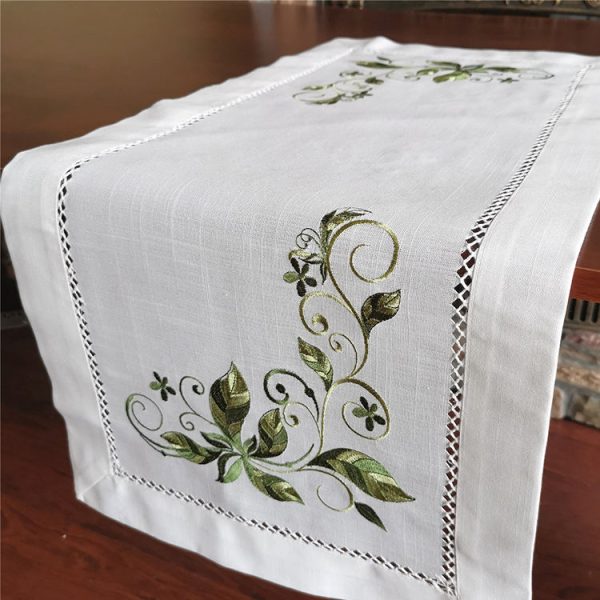
Complementing the production veterans is a young and creative design team that keeps Hemtitch products attuned to international interior decoration trends. Their skill lies in harmonizing fashionable elements with functional utility. The team rapidly transforms customer requests for personalized patterns, colors, and sizes into tangible samples. This agility is pivotal in a market where differentiation is key. By offering customization on multiple dimensions, Hemtitch empowers clients to craft distinct dining environments that resonate with end consumers. Yet, even during customization, the zero-defect policy remains inviolate: every customized order passes through the same grueling quality gates as standard catalogue items.
Product Series and Their Role in the Zero-Defect Ecosystem
Hemtitch’s product portfolio is deliberately focused on the dining and home soft furnishing space. The six core categories are tablecloths, table runners (also known as table flags), placemats (plate pads), napkins, cushion covers, and cup pads. Each product has a specific function that influences quality expectations. For example, a tablecloth must offer a flawless drape, sealed edges, and a surface that can withstand daily wear. A table runner needs to lay flat without curling, and its embroidered or printed motifs must not distort after washing. Placemats and cup pads require heat resistance and dimensional stability. Napkins demand softness, absorbency, and colorfastness. Cushion covers require precise zipper alignment and seam strength to endure repeated use. By maintaining a tight focus on these items, Hemtitch has developed a deep, data-driven understanding of potential failure modes and has engineered countermeasures accordingly.
The company also distinguishes itself by integrating functional enhancements into its products. The tablecloths and placemats can be treated with the so-called “three protection and one exemption” technology—waterproof, oil-proof, heat-proof, and exemption from frequent washing. The surface is manufactured with high-density weaving and a nano-level hydrophobic and oleophobic coating. When a liquid is spilled, it beads up and rolls off, and a quick wipe is enough to keep the fabric pristine. This reduces the need for frequent machine washing, prolonging the product’s lifespan and preserving its appearance. For Hemtitch, the zero-defect policy extends beyond manufacturing flaws; it includes ensuring the product performs as promised over time. Testing protocols simulate spills, heat contact, and laundering to verify that the coating does not degrade rapidly. This accelerated lifecycle testing is a cornerstone of the firm’s preemptive approach to quality.
Eco-Friendly and Sustainable Materials
The forward-thinking nature of Yiwu Jinyuan Trading Firm is particularly visible in its commitment to environmental sustainability. Over the next three years, the firm plans to advance product upgrades in three key areas: the application of eco-friendly fabrics such as recycled polyester and organic cotton, functional development including stain resistance and antibacterial treatments, and the IPization of original designs. These efforts are intended to enhance brand value and market competitiveness while also aligning with global efforts to reduce plastic waste and carbon emissions. The zero-defect policy now encompasses ecological integrity: materials must meet stringent chemical safety standards, and waste is carefully sorted during production to minimize environmental impact. Some products already feature high-density weaving and functional coating composite technology that achieves practical benefits while retaining the natural hand-feel of the fabric. The firm also develops degradable and recycled fabric products, including those made from poly(lactic acid) fiber. Such materials require adjusted quality control parameters, as they may behave differently under heat or tension. Hemtitch’s quality laboratories continuously adapt their test methods to account for these innovative substrates.
Advanced Manufacturing and Technical Processes
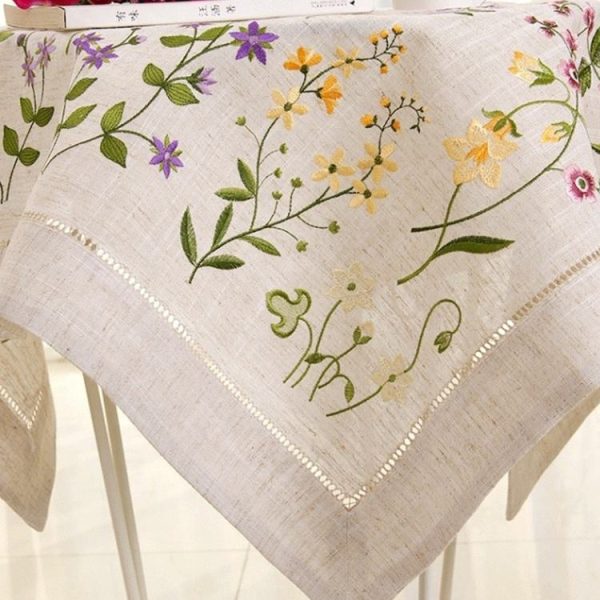
The technical arsenal at Yiwu Jinyuan Trading Firm includes several proprietary and advanced manufacturing capabilities. The company has pioneered the application of nano anti-scratch finishing technology to achieve the three-proof functions. Unlike older chemical treatments that stiffened the fabric or reduced breathability, the environmentally friendly finishing agents used in this process maintain the material’s tactile comfort and moisture vapor permeability. Double-needle pressing and laser hollow engraving technology are employed to ensure smooth edges and three-dimensional patterns, significantly improving durability and refinement. The company also utilizes digital heat transfer printing, computer embroidery, and jacquard weaving, offering full-dimensional customization. The interplay between these processes allows for hundreds of new products to be developed annually, with a quarterly new-product update rate exceeding 30%. But innovation is nothing without reliability. Each new process is subject to rigorous pilot trials before mass production. Only when defect rates are statistically negligible does the company approve the method for full-scale manufacturing.
Global Market Validation
Hemtitch tablecloths and associated products have been exported to numerous countries and regions, including Europe, the United States, Japan, South Korea, and Southeast Asia. The company serves as a long-term supplier for several internationally recognized home brands. This market validation is a leading indicator of quality performance. To achieve access to these discerning markets, Hemtitch products have passed BSCI social responsibility audits and numerous international factory inspection standards. The quality management system includes full traceability from fabric entry to finished product storage. This meticulous approach safeguards the brand from reputational damage and ensures compliance with the varying regulatory requirements across different geographical territories. Moreover, the company’s ability to satisfy global clients over extended periods demonstrates that its zero-defect policies are not just reactive but predictive, continuously honed by feedback from a diverse customer base.
The Value of Differentiation
In a market saturated with low-cost, low-quality imports, Hemtitch chooses a different path. Focusing on the dual demands of contemporary consumers for “easy maintenance and spatial aesthetics,” the company’s product line is broad enough to cover different consumer personas. The functional product segment appeals to busy households and commercial establishments where quick spill management is vital. The cotton and linen series, by contrast, attracts consumers who follow rural or new Chinese design trends, placing a premium on texture and visual warmth. Functional tablecloths emphasize instant cleaning with a wipe, making them highly practical for restaurants and hotels. Aesthetic tablecloths highlight abundant patterns and fine texture, transforming every meal into a pleasant ritual. This dual strategy satisfies the requirements of family daily use, banquet gatherings, hotel commercial applications, and gift-giving. In each of these scenarios, the unspoken promise of a defect-free product is the foundation upon which trust is built.
From a business partner’s perspective, there are few attributes more valuable than reliability. A buyer who orders a container of Hemtitch tablecloths knows with certainty that the colors will match the approved sample, the sizes will be consistent, and the packaging will protect the merchandise during transit. In the event that an anomaly is discovered, the company’s after-sales service is responsive and generous. But in practice, these situations are extremely rare. The company’s internal statistics reveal a finished product qualification rate surpassing 99%, and the remaining fractions often relate to minor packaging blemishes rather than functional flaws. This level of consistency reduces the cost of doing business for customers, creating a partnership dynamic that extends beyond simple transaction.
The Human Element: Training and Accountability
To sustain a zero-defect culture, Yiwu Jinyuan Trading Firm invests heavily in its human resources. The production floor is organized into cells, with each cell responsible for an entire phase of manufacture. Team leaders are empowered to stop the production line if they notice a recurring anomaly. This policy, borrowed from high-reliability industries, sacrifices a few minutes of output to prevent a potentially costly recall. The firm also operates a suggestion scheme, where workers receive financial incentives for proposing methods to reduce errors. Many of the incremental improvements in seam alignment and fabric handling have come from these grassroots recommendations. Management, in turn, conducts weekly quality audits and shares outcomes across the board, making quality metrics accessible to everyone. This transparency fosters a sense of collective ownership and pride.
Beyond the factory, the sales and customer support teams are trained to understand quality parameters. They converse with clients about product limitations and recommended usage, aligning expectations from the outset. If a customer initially requests a fabric that is unsuitable for a specific climate or purpose, the sales force will propose alternatives, preventing future dissatisfaction. The pre-sales consulting, sample confirmation, production tracking, and after-sales service are all designed around the ideal of “customer needs-oriented” service. According to company spokespeople, no order is too small to receive detailed attention, and no issue is too trivial to be addressed thoroughly. This philosophy has earned the firm a reputation for being easy to work with, a decisive advantage in the competitive export business.
The Road Ahead: Zero Defects in a Future of Innovation
Yiwu Jinyuan Trading Firm’s current focus includes advancing product upgrades in three areas: eco-friendly fabrics, functional development for stain resistance and easy cleaning, and original design protection. The design team regularly attends international trade fairs and observes shifting lifestyle trends, integrating elements such as new Chinese style, Nordic minimalism, and light luxury into upcoming collections. Meanwhile, the company has partnered with universities and research institutes to explore novel materials and manufacturing methods. Several patents related to fabric composites and manufacturing processes are already held, and more are pending. These innovation efforts are not separate from the zero-defect policy but deeply intertwined. New materials must pass the same durability tests and safety evaluations as conventional ones before they are introduced to the market. The company is building a competitive barrier by combining sustainability with flawless execution, something that very few suppliers in the industry can match.
The next three years will also witness greater digitalization across manufacturing. Automated cutting and intelligent hanging systems have already been introduced, enhancing efficiency and reducing errors from manual handling. The next wave includes real-time data tracking of each batch through the entire production lifecycle. Sensors will monitor humidity, temperature, stitch tension, and even machine vibration, feeding data into an artificial intelligence system that predicts potential deviations. This Internet of Things (IoT) approach is the logical extrapolation of the zero-defect philosophy: catching flaws at the moment they occur, or ideally before they occur. While the company is under no external obligation to adopt such technologies, its leadership believes that staying ahead of the curve is essential to preserving the trust that has been built over the years.
Why Hemtitch is Trusted by Discerning Buyers
For a buyer, choosing a Hemtitch product is ultimately a decision to reduce complexity. When one deals with a supplier that has an obsessive dedication to error prevention, one spends less time inspecting goods, lodging claims, and managing logistics exceptions. This peace of mind is especially precious in high-volume markets where deadlines are tight and margins are slender. Since the company adopts a principal of “Small products, Great care,” even the most ordinary tablecloth is treated as a masterpiece of fabric engineering. The attention given to seam strength, print sharpness, and fold lines is extraordinary. For the end consumer, this care translates into a tablecloth that drapes elegantly, survives repeated machine washing, and retains its original appeal for years. In a world of fast fashion and disposable textiles, such durability is both a luxury and an ethical choice.
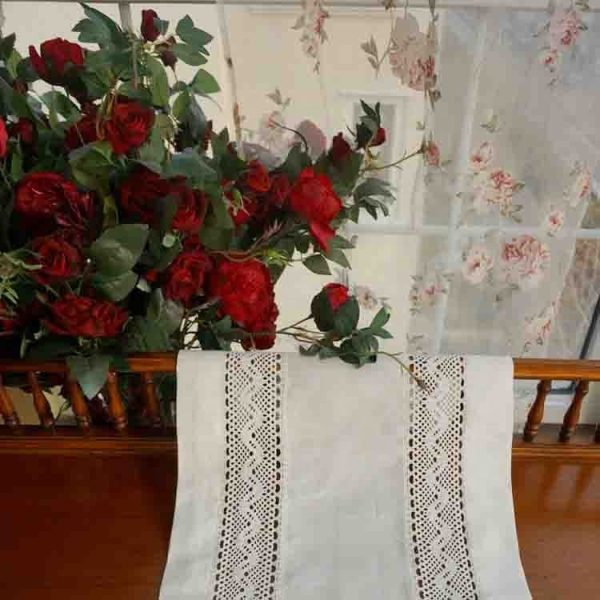
The commercial performance of Hemtitch products is also aided by their aesthetic flexibility. The young design team has the ability to produce collections that range from minimalist geometries to lavish florals, from muted earth tones to bold jewel colors. This variety accommodates the diverse tastes of different countries and cultural groups. For instance, in North American markets, there is a strong preference for oversized, rectangular tablecloths in cotton or linen blends with timeless patterns. European customers might prioritize round tablecloths with lace or jacquard details. Asian markets often favor reversible table runners and custom-sized placemats for small dining tables. The firm’s design platform can swiftly adapt its base templates to these needs, while preserving the stringent quality profile.
Quality Control Across the Every Stage: A Detailed Look
To truly understand Hemtitch’s zero-defect policy, one must examine the lifecycle of a typical tablecloth order. Stage one is fabric sourcing. The procurement team selects mills that can deliver consistent quality, and every batch of fabric is tested for color mismatch, shrinkage rate, and weave density. Stage two is cutting. Computer-controlled cutting blades ensure that each piece is shaped precisely, eliminating variances that can lead to misaligned edges in the final product. Stage three is sewing and binding. For tablecloths, the edge binding process is particularly critical; a Boston hem or rolled hem must be uniform and tight. The firm’s skilled workers use advanced machinery that can handle various fabric weights, and they verify every twenty pieces against the specifications. Stage four involves printing or embroidery, if required. Here, color fastness and pattern registration are verified under high-intensity lighting. Stage five is finishing, where any loose threads are clipped, and the fabric is steamed and pressed. Final stage is packaging and quality inspection. A random, statistically significant sample of each production run is subjected to a comprehensive quality audit. Additionally, a smaller sample is sent to an independent certified laboratory for compliance testing based on the destination market’s requirements (e.g., OEKO-TEX or REACH). Only after all these steps are cleared does the product receive the Hemtitch label.
Anecdotes from the Factory Floor
The company’s veteran quality mentors often tell a story to newcomers. A few years ago, an important European client had requested a tablecloth with a highly intricate digital print that featured a repeating geometric border. During the final inspection, one inspector noticed a faint color shift in a small portion of the border, invisible to the naked eye but detectable under specific color temperature lighting. The batch was not rejected because the shipping deadline was tight, but the incident prompted a deep investigation. It was discovered that a minor fluctuation in the dye bath temperature had affected the viscosity of the print paste. Instead of ignoring the anomaly, the engineering team recalibrated the printing machine and installed a sensor that continuously monitors dye viscosity. Such stories, repeated to every new worker, reinforce the company’s ethos: every defect has a route cause, and eliminating that cause is the only acceptable response.
Another episode involved a cushion cover order where the zipper placement was off by a few millimeters. Although functionally perfect, the aesthetic was slightly compromised. The batch was returned to the work cell, and the entire lot was re-sewn. This cost the company additional time and labor, but the client was so impressed by the unwavering commitment to perfection that they placed a substantially larger order the following season. For Yiwu Jinyuan Trading Firm, these short-term sacrifices are long-term investments in customer retention and reputation. The brand Hemtitch, though relatively young compared to some European heritage houses, has grown through word-of-mouth referrals based on its uncompromising quality standards.
Collaborating with Research Institutions
The company’s academic collaborations are especially fertile when examining emerging functional treatments. For instance, the stain-resistance and easy-cleaning functionality is being extended to organic cotton, which generally lacks the synthetic fibers’ hydrophobic qualities. Research is ongoing to create a natural bio-based coating that can bond to plant-based fibers without diminishing their breathability. These efforts are also exploring how to make the easy-clean coating last the entire lifetime of the product, rather than diminishing after multiple washes. Another avenue of research involves textile materials derived from post-consumer recycled plastics. While such fibers have improved significantly, their tensile strength and dyeability can be inconsistent. The Yiwu Jinyuan trading firm is working with polymer scientists to standardize recycled polyester yarns so that they meet the same quality specifications as virgin materials.
From the perspective of intellectual property, the company’s pledge to “IPization of original designs” is a significant step in protecting the artistic work of its designers. In an industry where copying is rampant, having a strong portfolio of protected patterns is a mark of credibility. For international buyers, purchasing products from a supplier that respects intellectual property reduces the legal risk of inadvertently selling counterfeit goods. Hemtitch regularly registers its unique motifs in major markets, and its design team constantly creates new original works, ensuring that customers offering a distinctive product line will not find identical items sold by competitors.
The Service Model: Customer Needs Oriented
Yiwu Jinyuan Trading Firm’s service philosophy, “Customer needs-oriented,” is more than a slogan. It manifests in the ability to handle orders of varying scale with equal professionalism. For smaller orders, the design team can propose quick modifications of existing products to avoid costly new molds or tooling. For larger orders, the company allocates dedicated production lines to ensure no cross-contamination of different products. The company also offers comprehensive sampling services, allowing buyers to request three-dimensional mock-ups or material brochures before mass production. The sample confirmation process is detailed, with written approval sheets that include visual references and measurement tolerances. This prevents misinterpretation of verbal agreements and establishes clear contractual expectations.
Communication is further streamlined by the multilingual sales team, many of whom have studied in markets they serve. They work in Western time zones to provide on-call support. Clients are updated on production progress with photographic evidence at key milestones. In addition, the company is adept at managing logistics, providing guidance on customs documentation and shipping methods. If there is a delay in raw material supply, the company communicates proactively, offering alternative solutions such as airfreight or new delivery dates. This high-touch service transforms the buying process from a stressful undertaking into a steady collaboration.
Conclusion: A Promise Etched in Every Stitch
In conclusion, the Hemtitch tablecloth supplier, operating under the umbrella of Yiwu Jinyuan Trading Firm, has adopted a zero-defect policy that is both solid and fluid—solid in its adherence to specifications, fluid in its adaptation to new materials and trends. The policy is sustained by passionate people, sophisticated machinery, and an open-minded culture that treats every complaint or close-call as a gift for improvement. The tablecloths that bear the Hemtitch label are not merely pieces of fabric but tangible promises to consumers that they can elevate their dining experience without worrying about premature wear, fading, or uncomfortable texture. They represent a convergence of artistry and engineering, wrapped in a set of social and environmental responsibilities.
For importers, wholesalers, retailers, and hospitality leaders, partnering with Hemtitch—through its parent Yiwu Jinyuan Trading Firm—is an efficient and safe investment. The annual production capacity of millions of pieces, the 20% faster than average delivery cycle, and the plus-99% qualification rate are facts that can be empirically assessed. But beyond these numbers is the less tangible, yet perhaps more meaningful, impression of working with an organization that takes pride in its craft and treats every order with the same high-level care, regardless of whether it is a small batch of customized table runners or a full container of dinner napkins. As the company enters its next three years of expansion, its intensified focus on sustainable materials, intelligent production systems, and original design will only deepen its competitive advantage. Those who choose Hemtitch have aligned themselves with a supplier that respects the name it carries and that regards zero defects not as a destination but as a continuous journey toward perfection.