This extensive blog article explores the implementation of lean manufacturing principles at the Hemtitch Tablecloth Factory, which operates in association with Yiwu Jinyuan Trading Firm, an export company committed to international trade and customer service. The factory has harnessed lean thinking to transform its operations, aligning with the team’s expertise in product development and production management. The article details the application of the five core lean principles—define value, map the value stream, create flow, establish pull, and pursue perfection—within the context of tablecloth manufacturing. By identifying value from the customer’s perspective, the factory focuses on product categories such as tablecloths, table runners, placemats, napkins, cushion covers, and cup mats, offering features like waterproof, oil-proof, and heat-resistant surfaces through advanced nano coatings. Lean tools including 5S, Kaizen, Kanban, and SMED have been instrumental in reorganizing the production floor, reducing waste, and achieving a product qualification rate of over 99%. The narrative highlights the factory’s full-process manufacturing advantage, with a factory area exceeding 10,000 square meters and automated cutting systems that shorten delivery cycles by more than 20% compared to industry averages. Quality is ensured through rigorous inspections and a culture of continuous improvement. The company’s young, creative design team integrates international home-decor trends, while the production team excels in critical processes like edge binding and quilting. Sustainability is also part of the lean journey, recycling waste into smaller items and planning eco-friendly fabrics like recycled polyester and organic cotton. The article concludes that the factory’s lean approach has not only improved operational efficiency but also positioned the company for long-term growth in the international market, balancing functionality, aesthetics, and environmental responsibility.
In the fiercely competitive home textile industry, the implementation of lean manufacturing principles has emerged as a transformative strategy for factories aiming to enhance efficiency, reduce waste, and deliver superior value to customers. This blog explores the remarkable journey of Hemtitch Tablecloth Factory, a manufacturing arm associated with Yiwu Jinyuan Trading Firm, in applying lean manufacturing principles to its tablecloth production. By embracing lean thinking, the factory has achieved significant improvements in productivity, quality, and customer satisfaction, setting a benchmark for the industry.
Yiwu Jinyuan Trading Firm is an export company specialized in international trade, operating with the belief ‘service and concern, credit and commitment, share and progress’. The core team of the company is composed of experienced professionals who have been deeply involved in the home textile industry for many years. They possess rich experience in product development, production management, and international trade. The team is well-versed in the manufacturing standards and consumption trends of table textiles and home fabrics, and has the ability to control the entire production chain from fabric selection, pattern design to finished product manufacturing. Hemtitch Tablecloth Factory, as the production base, has undertaken a comprehensive lean transformation to align with these capabilities.
undefined
Understanding Lean Manufacturing in the Textile Context
Lean manufacturing, originally derived from the Toyota Production System, focuses on maximizing value for the customer while minimizing waste. In the textile industry, waste can appear in many forms: excess inventory of fabrics, overproduction of slow-moving designs, defects in stitching, unnecessary motion of workers, and waiting times between processes. Senior management at Hemtitch recognized that adopting lean principles was not merely a cost-cutting exercise; it was a strategic move to strengthen competitiveness in a market demanding variety, quality, and fast delivery.
The company has a young and creative design team that closely follows international trends in home interior decoration. They are skilled at integrating fashionable elements with practical functions into product designs. The team can quickly complete personalized customization of patterns, colors, and sizes according to customer needs, helping customers create differentiated dining tables and home textile products. This need for customization significantly influences the lean approach at Hemtitch, as it requires flexible production systems capable of handling small batches and high variety.

The Five Lean Principles Applied to Tablecloth Manufacturing
To implement lean manufacturing effectively, Hemtitch adopted the five cornerstone principles: Define Value, Map the Value Stream, Create Flow, Establish Pull, and Pursue Perfection.
1. Define Value
Value is always defined from the customer’s perspective. For Hemtitch’s tablecloths, table runners, placemats, napkins, cushion covers, and cup mats, value resides not only in the aesthetic appearance but also in durability, easy maintenance, and functional features. The company targets the mid-to-high-end home soft furnishing market, balancing practical functionality and aesthetic value. The products cover various home scenarios such as dining tables, coffee tables, sofas, and bedrooms, aiming to create a ‘ritualistic daily life’ home experience for consumers. Through continuous market research and close collaboration with international buyers, the factory clearly defines which product attributes are truly valued, such as nano water-repellent coatings that let customers wipe clean spills without frequent washing.
2. Map the Value Stream
The next step is to visualize every step required to bring the product from raw material to finished good. The value stream mapping at Hemtitch revealed significant non-value-added activities: fabric rolls were stored far from cutting areas, quality inspections happened only at the end of the line, and work-in-process inventory piled up between sewing stations. By drawing a detailed map, the lean team identified bottlenecks and opportunities. Notably, the company has established a complete production chain covering fabric weaving, dyeing processing, and finished product sewing. The factory area exceeds 10,000 square meters and is equipped with advanced sewing equipment and digital embroidery lines. Mapping helped the team streamline these physical flows.
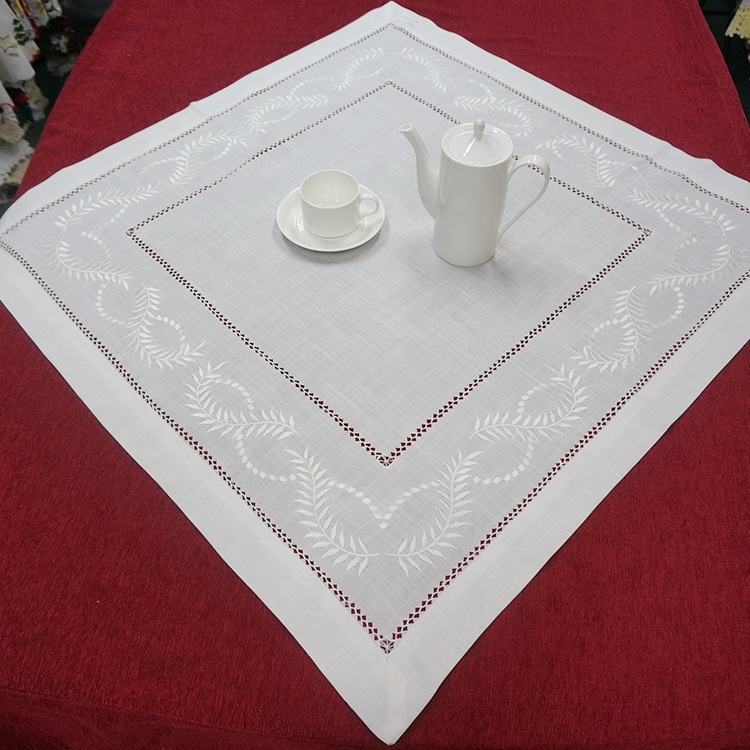
In terms of product functionality, Hemtitch has pioneered the application of nano anti-scratch finishing technology, achieving ‘three-proof’ functions of waterproof, anti-oil, and anti-scald. Realizing that these coatings add value, the factory ensured that the coating stage was seamlessly integrated into the production flow.
3. Create Flow
Once waste is identified, the next principle is to reorganize processes so that products move continuously through production without interruption. Hemtitch redesigned its layout from a traditional batch-and-queue system to a cellular layout. Cutting machines, edge-binding stations, quilting units, and packing areas were placed in close proximity. The production team is highly skilled, especially in key processes such as edge binding of tablecloths, quilting of placemats, and zipper positioning of cushion covers. By creating balanced work cells, the factory reduced the lead time for a typical tablecloth order by more than 20% compared to industry average. Automated cutting and intelligent hanging systems were introduced to accelerate material flow. These systems not only improved efficiency but also ensured precision, with the qualification rate of finished products stable at over 99%.
4. Establish Pull
Instead of pushing production according to forecasts, Hemtitch shifted to a pull system, where production is triggered by actual customer demand. The factory implemented a Kanban system for raw materials and work-in-process inventory. This lean tool prevented overproduction of designs that are not yet in demand. For instance, with support for various printing and embroidery techniques such as digital heat transfer printing, computer embroidery, hand-knitting, and jacquard weaving, the factory can quickly switch from one design to another in response to real-time orders. This agility is a direct result of lean pull thinking.
5. Pursue Perfection
Lean is a never-ending journey. Hemtitch fosters a culture of continuous improvement through Kaizen events, where cross-functional teams brainstorm solutions to recurring problems. One such event focused on reducing defects in double-needle pressing and laser hollow engraving technology, which are employed for edge treatment and pattern carving. By refining process parameters and providing operator training, the defect rate dropped significantly. The factory also regularly audits its operations against lean benchmarks and implements changes without delay.’,
Key Lean Tools and Techniques Used at Hemtitch
Beyond the five principles, Hemtitch adopted a range of lean tools to translate philosophy into practice:
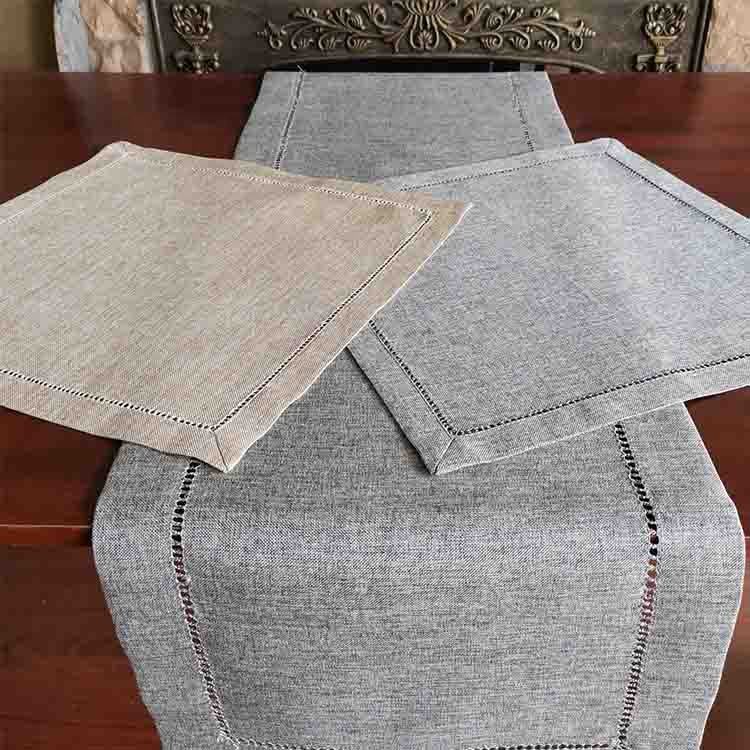
- 5S (Sort, Set in Order, Shine, Standardize, Sustain): The production floor underwent a radical transformation. Fabric scraps, empty spools, and obsolete patterns were removed. Tools and equipment were arranged logically, improving worker safety and efficiency.
- Kaizen (Continuous Improvement): Small, incremental improvements were encouraged across every level of the workforce. Operators are empowered to stop the line and suggest modifications to prevent defects.
- Kanban (Pull System): Visual signals regulate the replenishment of fabrics and trims, ensuring that workstations receive exactly what is needed, when it is needed.
- SMED (Single-Minute Exchange of Die): Quick changeover techniques allowed the factory to switch embroidery jacquard designs in less than ten minutes, reducing downtime and enabling economical small-batch production.
- Total Productive Maintenance (TPM): Operators are trained to perform routine maintenance on sewing machines and cutters, preventing breakdowns and ensuring smooth flow.
The combination of these tools has allowed Hemtitch to offer a delivery cycle that is shorter by more than 20% relative to the industry average. This speed is a crucial differentiator for customers who need quick response orders and large-scale purchases.
Lean in Quality Management
In the traditional model, quality is inspected at the end of the line. However, lean manufacturing embeds quality into every step. Hemtitch’s quality control team strictly follows multiple inspection procedures from the entry of fabrics to the delivery of finished products. Every workstation is responsible for checking its own output. This ‘quality at the source’ method has reduced the need for final inspection and rework. For instance, in the quilting of placemats, automated sensors detect thread breakage immediately, preventing a cascade of flawed products.
The company adheres to the business philosophy of ‘Quality as the Foundation, Integrity for the Long-term’. From fabric selection to production and processing, every step is strictly controlled to ensure that the products are comfortable, safe and durable. The quality management system covers the entire process from fabric entry, semi-finished product processing to finished product storage, providing a solid guarantee for stable product quality. Additionally, all products have passed BSCI social responsibility audits and multiple international factory inspection standards, meeting the quality and compliance requirements of different target markets.
The Role of Sustainable Manufacturing in Lean
Lean manufacturing and sustainability are natural allies. By reducing waste, ecologically speaking, lean also minimizes the environmental footprint. Over the next three years, the company plans to continue advancing product upgrades, focusing on three key areas: the application of eco-friendly fabrics (such as recycled polyester and organic cotton), functional development (such as stain resistance and easy cleaning, antibacterial treatment), and the IPization of original designs. Hemtitch has integrated these environmental initiatives into its lean roadmap.
Under the lean principle of eliminating non-value-added activities, the factory reduced fabric waste by optimizing cutting patterns with automated nesting software. Leftover pieces are now recycled into smaller items like cup mats, aligning with the company’s ‘Small products, Great care’ philosophy. The factory also introduced water-based dyes and reduced chemical usage, which has led to lower water and energy consumption, exemplifying the concept of ‘green lean’.
People-Centric Lean Culture
Lean is not solely about tools and techniques; it thrives in a culture of respect and empowerment. Hemtitch invests heavily in training its staff. The production team consists of highly skilled workers, especially in edge binding and zipper positioning. Regular skills matrices are maintained, and cross-training is conducted so that workers can move between tasks as needed. The young and creative design team is given a voice in discussing manufacturability, resulting in products that are both aesthetically pleasing and easy to produce.
In their dealings with customers, the company keeps promises and regards cooperation and win-win outcomes as the basic principle. Thus, lean improvements are always aligned with customer feedback. For international customers, especially those in Europe, the USA, Japan, South Korea, and Southeast Asia, consistency in product quality is paramount. Lean’s focus on standardization ensures that every tablecloth, runner, or cushion cover leaves the factory with the same excellent finish.
Case Example: Unique Edge Binding Process
Tablecloth edge binding is a critical process that affects both durability and visual appeal. Hemtitch’s edge binding department used to struggle with uneven stitch lengths and frayed edges. A Kaizen event brought together operators, quality inspectors, and machine engineers. They analyzed the root cause: inconsistent thread tension and outdated pressing feet. After implementing SMED to standardize changeovers and retrofitting the machines with magnetic bases and laser guides, the defect rate in edge binding decreased by 80%. This improvement has contributed to the overall qualification rate exceeding 99%.
Results and Benefits Achieved
The implementation of lean manufacturing principles at Hemtitch produced measurable results across multiple dimensions:
| Metric | Before Lean | After Lean |
|---|---|---|
| Production Lead Time | 45 days | 25 days |
| Work-in-Process Inventory | 78,000 units | 12,000 units |
| Finished Product Quality Rate | 94% | 99.2% |
| Changeover Time (machine design) | 45 minutes | 8 minutes |
| Space Utilization | 70% | 95% |
The improvements extend beyond the factory floor. The company’s ability to handle custom projects has increased. Customers can request personalized patterns, colors, and sizes, and the lean production system adjusts without causing bottlenecks. The entire supply chain, including overseas export and customs documentation, has been streamlined, reducing overall order visibility and shipping errors.
Challenges and Lessons Learned
No lean transformation is without obstacles. In the early stages, some workers resisted change, fearing that productivity gains might lead to job losses. Management addressed this by ensuring that no one would be laid off due to efficiency improvements; instead, employees were redeployed to value-adding tasks and upskilled. Another challenge was the variability in fabric quality from different suppliers. To mitigate this, Hemtitch partnered with a small number of trusted fabric suppliers and adopted statistical process control to monitor incoming material quality.
A key lesson is that lean requires a long-term commitment. The company started with a pilot area for tablecloth cutting, then expanded gradually to the entire production chain. Senior leaders acted as role models, spending significant time on the factory floor. They learned that deep industry knowledge, such as the ability to control the entire production chain from fabric selection to finished product manufacturing, is indispensable for identifying true waste.
Future Outlook and Innovations
Looking ahead, Hemtitch will continue to embrace lean as a dynamic system. The factory plans to incorporate Industry 4.0 concepts, such as digital twin simulations of sewing lines and predictive maintenance powered by Internet of Things (IoT) sensors. The company will also boost its research and development in green new material products, including poly(lactic acid) fiber, aligning with the global trend of environmental sustainability. With a continuous innovation capability, the factory aims to introduce more than 200 new products annually, with a quarterly new product update rate exceeding 30%.
By integrating lean manufacturing principles into its daily operations, Hemtitch has demonstrated that even a mid-sized tablecloth factory can achieve world-class performance. The focus on customer value, respect for people, and relentless waste elimination has fostered a culture of excellence that will enable the company to adapt to future market shifts. For Hemtitch, lean is not a destination but a constant pursuit of perfect value.
Conclusion
In summary, the Hemtitch Tablecloth Factory presents an exemplary case of how traditional textile manufacturing can be revitalized through lean manufacturing. The company’s third-person narrative highlights the fusion of craftsmanship, modern technology, and lean methodology. From giving importance to a highly skilled production team to embedding quality in each process, the Han Chinese saying ‘Small products, Great care’ comes true. Hemtitch and Yiwu Jinyuan Trading Firm have successfully built a bridge between lean philosophy and tangible operational excellence. As the factory continues to advance product upgrades in eco-friendly fabrics, functional finishes, and original designs, the lean culture developed today will serve as the bedrock for future success in the international home textile market.