Lot traceability is an essential practice for any hemstitch tablecloth supplier, particularly for export-focused enterprises like Yiwu Jinyuan Trading Firm. The company, known for its wide range of home textiles including tablecloths, runners, napkins, and cushion covers, operates with the belief that quality is the foundation of long-term success. Yet, without rigorous lot tracing, even the finest products can lead to costly recalls and reputational damage. This article explores why lot traceability matters, from ensuring consistency in delicate hemstitch production to meeting international compliance standards. It enables a supplier to identify root causes of defects, contain faulty batches precisely, and respond to customer complaints with confidence. Traceability also supports the growing demand for eco-friendly materials, allowing companies to document the origin of organic cotton or recycled polyester fibers. In an era of customization, where each customer may require unique patterns and functional treatments, lot control prevents mix-ups and preserves product aesthetics. For Yiwu Jinyuan, which has introduced automated cutting and intelligent hanging systems, integrating traceability aligns with continuous improvement and operational efficiency. This practice will become even more critical as global regulations demand greater supply chain transparency. By prioritizing lot traceability, a hemstitch tablecloth supplier builds not only safe, compliant products but also a powerful brand story. It provides verifiable quality, transparent sourcing, and swift recall management, turning a logistical tool into a competitive advantage. As the industry evolves, customers will choose suppliers who can truthfully trace every product from fabric to finished cloth. Yiwu Jinyuan Trading Firm recognizes this and is strategically positioned to lead, because they understand the hidden truth of modern textile business: traceability is the invisible thread that holds lasting customer trust and the ultimate proof of craftsmanship in every hemstitched tablecloth.
In the competitive world of home textile exports, a hemstitch tablecloth supplier might believe that the key to success lies solely in exquisite embroidery, fabric quality, or timely delivery. Yet, there is a less visible but equally critical factor that separates thriving manufacturers from those that face costly recalls, damaged reputations, and lost customer trust: lot traceability. Lot traceability refers to the ability to track a specific batch of products—from the raw fabric rolls to the finished hemstitched tablecloths—through every stage of production, inspection, packaging, and shipping. For a supplier like Yiwu Jinyuan Trading Firm, which has positioned itself as a trusted partner to global home decor brands, implementing robust lot traceability is not optional. It is a foundational pillar that underpins product safety, quality consistency, compliance, and long-term business resilience.
Yiwu Jinyuan Trading Firm is an export company dedicated to international trade in home textiles, including tablecloths, runners, placemats, napkins, cushion covers, and cup mats. The company’s core team comprises experienced professionals who have spent decades in the home textile sector, mastering everything from fabric selection and pattern design to finished product manufacturing. With a young and creative design team that follows international home interior trends, Yiwu Jinyuan can quickly customize patterns, colors, and sizes to customer specifications. They also possess highly skilled production teams that excel in key processes such as edge binding of tablecloths, quilting of placemats, and zipper positioning of cushion covers. However, even the most talented artisans and the most sophisticated production equipment can falter without a systematic way to monitor and trace each lot. This article explores why a hemstitch tablecloth supplier must make lot traceability a top priority—not just as a compliance requirement, but as a drivers of excellence in a market that demands accountability.
The Hidden Complexity of Hemstitch Tablecloth Production
At first glance, a tablecloth appears to be a simple textile product. In reality, its production involves multiple stages: fabric weaving, dyeing, printing, hemstitch embroidery, cutting, sewing, edge binding, quality inspection, folding, and packing. Every stage introduces variables—thread tensions, dye lots, print alignment, needle types, operator skill—that can affect the final look, durability, and safety of the product. A hemstitch pattern, known for its delicate, handcrafted look, requires precision. If a batch of fabric from one supplier has a slight color variation, or if an embroidery machine needle breaks and creates a pull, how would the manufacturer detect which finished tablecloths are affected? Without lot traceability, the answer is: they cannot. Instead, they would have to quarantine an entire shipment or risk sending flawed products to customers.
undefined
For commercial export, tablecloths are often produced in large quantities—thousands of pieces per style. Yiwu Jinyuan’s production capacity reaches several million pieces annually, covering tablecloths, table runners, cushion covers, and more. With such scale, a single defect can affect a very large number of units. Lot traceability enables the supplier to narrow down a problem to a specific batch, specific production shift, or even a specific machine. This is especially important for a hemstitch tablecloth, where even a broken thread or an inconsistent stitch can ruin the elegant aesthetic that customers expect. The ability to trace a product back to its lot turns an expensive crisis into a manageable quality-control event.
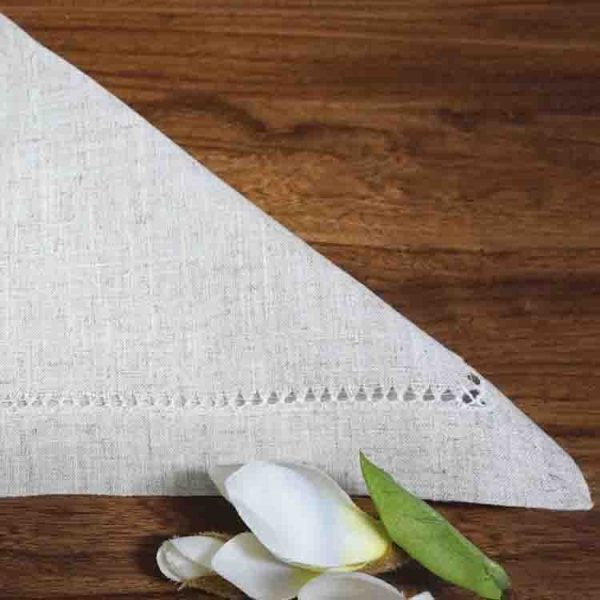
Quality Assurance: Traceability as the Backbone of Consistency
Yiwu Jinyuan adheres to a business philosophy of ‘Quality as the Foundation, Integrity for the Long-term.’ To maintain this promise, the company has established strict quality management systems covering everything from the entry of fabrics to the delivery of finished products. Their quality control team follows multiple inspection procedures, ensuring every piece can withstand customer testing. Yet, quality assurance cannot rely solely on final inspections. If a defect is found in the final inspection, the supplier must be able to trace the product back to its production lot, the raw material batch, and even the specific operator who sewed it. This is how lot traceability directly supports continuous quality improvement.
Imagine a scenario where a European retailer reports that a hemstitch tablecloth’s edge binding shows fraying after ten machine washes. Without lot traceability, the supplier would struggle to identify whether the problem was caused by poor yarn quality, an incorrect needle setting, or an improper wash process during finishing. The retailer would face a recall, and the supplier would perhaps compensate them without understanding the root cause. In contrast, a traceable system would allow Yiwu Jinyuan to quickly pull the original lot records, examine the fabric batch, review the machine calibration logs, and identify where the process went wrong. This allows them to correct the problem permanently and prevent it from affecting other customers. In this way, lot traceability becomes a powerful tool for building long-term reliability—something that Yiwu Jinyuan has always prioritized in its pursuit of win-win partnerships with customers.
Compliance and International Market Requirements
Global exports to regions such as Europe, the United States, Japan, South Korea, and Southeast Asia come with strict regulatory requirements. Products must meet chemical safety standards (such as REACH, CPSIA, and Prop 65), phthalate limits, azo dye bans, and flammability regulations. In addition, importers often require adherence to social compliance audits like BSCI. Yiwu Jinyuan has passed BSCI social responsibility audits and multiple international factory inspection standards, which demonstrates their commitment to ethical manufacturing and product safety. However, passing these audits is just one step. To ensure every lot remains compliant, the supplier must document the exact materials and processes used in each lot, including the sources of recycled polyester or organic cotton, the type of dyes, the finishing agents (like the environmentally friendly nano-coatings used for water and oil repellency), and the factory conditions.
If a customs agency or a retail customer requests proof that a shipment does not contain banned substances, a supplier without lot traceability would be forced to rely on vague, aggregated records. In today’s environment, that is insufficient. A hemstitch tablecloth supplier who can trace its products to specific lots can quickly supply the certificate of analysis, the material safety data sheet, and the production batch records that demonstrate compliance. This not only avoids customs detentions but also builds trust with international buyers. For Yiwu Jinyuan, whose reputation is built on ‘Small products, Great care,’ missing a traceability requirement would undermine their credibility in a niche market.
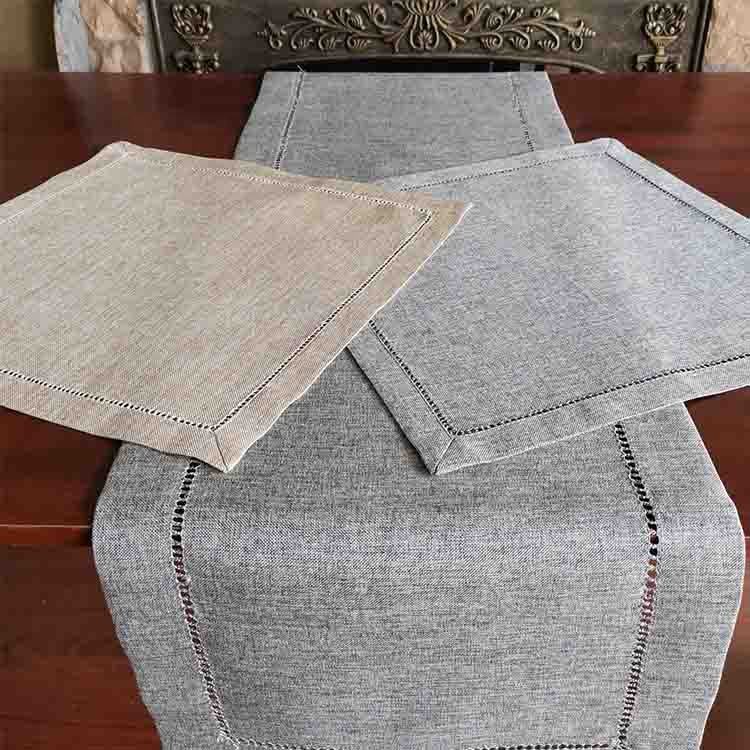
Handling Recalls and Customer Complaints with Precision
No supplier is immune to occasional complaints. The question is how fast and how effectively they respond. When a customer discovers a defect—a stain, a misprinted pattern, a broken zipper on a cushion cover—the first thing they ask is, ‘Can this happen to my entire order?’ A supplier that can trace lots can quickly determine whether the issue is an isolated incident or a systemic batch problem.
For example, if a placemat in a shipment has a pressing issue, the supplier can check if that specific lot used the same fabric roll and the same heat-press setting. If only one roll of fabric was defective, the affected pieces can be clearly identified and recalled. Without lot traceability, the supplier would be forced to either take back the entire order, resulting in enormous losses, or risk the customer discovering more defective products in their warehouse. The former erodes profit, while the latter erodes trust. Yiwu Jinyuan’s production facilities utilize advanced sewing equipment, digital embroidery lines, and automated cutting systems. They also maintain a high 99% finished-product qualification rate. But even the remaining 1% can cause issues. With traceability, that 1% is contained and rectified, protecting the customer and the supplier’s bottom line.
Facilitating Customization and Market Differentiation
Yiwu Jinyuan is known for its ability to customize patterns, sizes, and fabrics to meet customer needs. They also support a variety of printing and embroidery techniques, including digital heat transfer printing, computer embroidery, hand-knitting, and jacquard weaving. For customized products, the risk of error multiplies because designs change and materials vary from order to order. Lot traceability is essential for ensuring that each custom lot is kept distinct. If a customer requests a special coral or a unique pattern, those products must be clearly separated and identified from regular inventory to prevent mix-ups.
Traceability also helps the company manage a diverse product portfolio. With multiple product lines—tablecloths, table flags, plate pads, napkins, cushion covers, and cup pads—each with different sizes, colors, and functional treatments, the potential for cross-contamination of fibers or designs is real. By assigning a unique lot number at the outset and maintaining meticulous batch records, Yiwu Jinyuan can ensure that a floral tablecloth for a European customer does not accidentally mix with a plain organic cotton napkin for a Japanese retailer. In an era where market trends shift quickly and customers demand new products at a quarterly rate of over 30%, traceability provides the control needed for rapid development while preserving brand integrity.
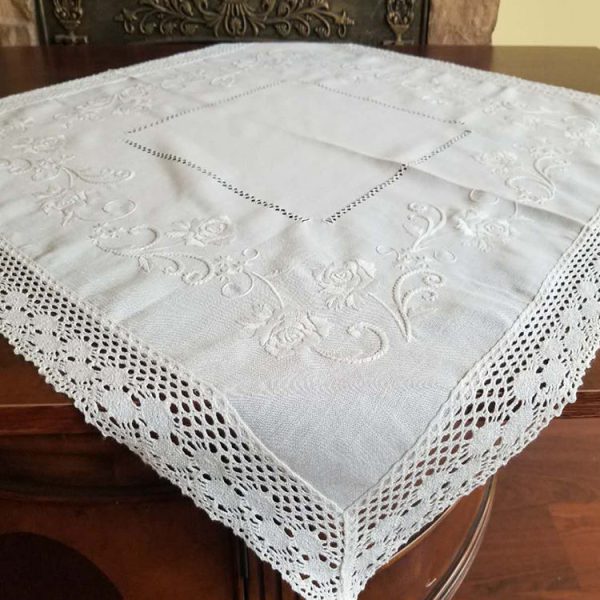
Raw Material Provenance and Sustainability
One of Yiwu Jinyuan’s upcoming strategic priorities is the application of eco-friendly fabrics, such as recycled polyester and organic cotton. They are also focusing on functional development, including stain-resistant, easy-clean, and antibacterial treatments. As sustainability becomes a key purchasing criterion for consumers, buyers require proof that a product contains the stated percentage of recycled content or that the organic cotton truly comes from certified farms. Lot traceability enables the supplier to document the entire supply chain from fiber to finished tablecloth. Each lot’s raw material certifications, transaction certificates, and per-unit material composition can be stored with the lot record.
Furthermore, for eco-friendly products, traceability helps in verifying environmental claims. If a tablecloth is marketed as ‘biodegradable’ or ‘made from polylactic acid fiber,’ the supplier must prove that no contamination occurred during processing. Lot traceability provides that trail. It also supports the company’s and the research institutions’ academic studies on fabric durability and biodegradability. By tracing the lifecycle of each product, Yiwu Jinyuan can build a foundation for future carbon footprint assessments and circular economy initiatives—areas that are rapidly becoming differentiators in global trade.
Improving Supply Chain Collaboration
A hemstitch tablecloth supplier does not operate in isolation. They rely on yarn suppliers, weaving mills, dyeing houses, and print service providers. Each hand-off in the supply chain creates opportunities for errors, delays, and quality changes. A robust lot-traceability system allows the supplier to assign lot numbers to incoming materials and link them to finished goods. For instance, if a fabric supplier provides a roll of grey cloth with a defective weave, traceability allows Yiwu Jinyuan to pinpoint which master carton of tablecloths were made from that roll and then communicate exactly that information to the fabric supplier. This not only facilitates claims management but also fosters a collaborative environment where suppliers can work together to resolve the root cause.
Yiwu Jinyuan’s factory covers over 10,000 square meters and houses highly skilled production teams. But the company also coordinates with external partners for dyeing and perhaps some specialized finishing processes. Lot traceability is the glue that holds these external collaborations together. Without it, accountability becomes vague, and disputes can damage relationships. With it, every partner knows that their work is recorded and linked to the final product. This creates a culture of quality throughout the chain, which is exactly what Yiwu Jinyuan aims to establish under its service philosophy of ‘Customer needs-oriented.’
The Role of Technology in Modern Traceability
Modern lot traceability is not just a paper-based warehouse ledger. It uses barcode or QR code labels, electronic data interchange, and cloud-based manufacturing execution systems. Some advanced suppliers even use automated cutting lines and intelligent hanging systems that assign a unique digital identity to each piece as it moves through the factory. Yiwu Jinyuan has introduced automated cutting and intelligent hanging systems in recent years, which significantly improved production efficiency. These systems can be integrated with lot traceability to automatically record which fabric roll was loaded, which machine operator processed the item, and which inspection station checked the hemstitch quality.
But even a low-tech approach—using pre-numbered lot tags and manual checklists—can work if done diligently. The important thing is that every stage, from fabric entry and semi-finished processing to finished product storage, is logged against the same unique lot identifier. Yiwu Jinyuan’s quality management system already covers the entire process. Adding traceability is a natural extension of this system. By leveraging digital tools, the supplier can also generate detailed reports for customers, showing the journey of their purchased tablecloths. This transparency is highly valued by international home brands that audit their suppliers for ethical sourcing and environmental compliance.
Cost Control and Operational Efficiency Through Traceability
While traceability requires an upfront investment in systems and training, it yields substantial savings in the long run. When defects are traced to a specific lot, only that lot needs to be reworked or discarded—not the entire production inventory. For Yiwu Jinyuan, which produces millions of pieces annually, the physical separation of a defective lot could mean saving thousands of dollars. Similarly, traceability helps identify inefficiencies in production. If lot records reveal that a particular hemstitch machine consistently requires more rework on Wednesday shifts, management can investigate the operator’s training or the machine’s maintenance schedule. This continuous improvement aligns with the company’s goal of shortening delivery cycles by over 20% compared to the industry average because less time is wasted on finding faulty goods.
Additionally, traceability reduces inventory management errors. When different fabric lots look identical but have subtle shade variations, traceability ensures that pieces with the same lot number are packed together, so that customers do not find color mismatches in a single set. This is especially important for tiered sets or tablecloths with matching napkins and placemats. Without lot control, a mixing of dye lots could lead to a beautiful bleached tablecloth paired with a slightly off-white runner—a discrepancy that consumers rarely tolerate.
Traceability as a Marketing and Trust-Building Tool
In the digital age, customers value transparency. They want to know who makes their products, under what conditions, and with which materials. A supplier that openly demonstrates its lot-traceability capability sends a powerful message: ‘We have complete control over our manufacturing process, and we stand behind every piece we ship.’ Yiwu Jinyuan can leverage this in marketing materials, sales presentations, and on social media. When speaking to a potential buyer from Europe, they can explain how each tablecloth can be traced back to its origin, which instills confidence.
This is particularly relevant because Yiwu Jinyuan’s products are positioned in the mid-to-high-end market, serving consumers who appreciate ‘ritualistic daily life’ and meaningful details. Such consumers care about the story behind their home textiles. If the supplier can present a traceability report—showing the use of recycled fibers, environmentally friendly finishing agents, and skilled artisans—they are no longer selling just a tablecloth; they are selling integrity. The hemstitch detail itself is a symbol of craftsmanship, and traceability is a modern reflection of the same craftsmanship ethos: careful attention to every thread.
A Look at the Future: Regulatory Trends and Consumer Demand
The home textile industry is moving toward stricter digital product passports, supply chain due diligence laws, and extended producer responsibility requirements. In the coming years, a hemstitch tablecloth supplier will likely need to provide more comprehensive data concerning the manufacturing date, the exact chemicals used, and the factory location of each finished good. Companies like Yiwu Jinyuan that begin developing robust traceability now will be better prepared to meet these future mandates. They will not face panic-based system implementations or expensive retroactive data gathering.
Furthermore, consumer awareness is rising. A customer may one day scan a QR code on a tablecloth label and see a page displaying the yarn and dye suppliers, the child-labor-free certification, and the water treatment standards. Leading cloth brands in Japan and Northern Europe already experiment with such transparency. Yiwu Jinyuan, which regularly tracks international home interior decoration trends and collaborates with universities and research institutions, is well placed to pioneer these practices in the export market. By embedding lot traceability as a core competence, they can protect their brand value and differentiate themselves from low-cost competitors who still rely on guesswork.
Conclusion: An Essential Priority, Not an Optional Extra
For a hemstitch tablecloth supplier, lot traceability is comparable to a hemstitch itself—an invisible thread that holds the entire production fabric together. It ensures that quality is not just a claim but a demonstrable fact. Yiwu Jinyuan Trading Firm has spent years building a reputation as a responsible and customer-focused export company. Their high-quality products, such as functional tablecloths with three-protection and stain-resistant coatings, beautiful jacquard napkins, and soft cushion covers, are respected in international markets. Yet, one mistake followed by a slow, clumsy recall could undo decades of credibility. Prioritizing lot traceability is a proactive step that minimizes risk and amplifies every positive aspect of the company’s operations.
From fabric entry to final delivery, managing individual lots gives the supplier greater control, better customer service, and a cleaner audit trail. It supports Yiwu Jinyuan’s three-year roadmap for product upgrades, which includes eco-friendly materials, functional treatments, and IP-driven designs. No matter how innovative the fabrics or how charming the patterns, traceability is the silent promise that those products will consistently meet expectations. It allows a hemstitch tablecloth supplier to answer the most critical question from any customer—’Where did this tablecloth come from?’—with certainty and pride. In the intricate, high-stakes world of global textile trade, lot traceability is not a burden; it is a superior form of craftsmanship.