Yiwu Jinyuan Trading Firm, an export company specializing in home textiles (tablecloths, runners, placemats, napkins, cushion covers, etc.), has a robust export documentation process that ensures smooth international trade. The article details each type of document needed—commercial invoice, packing list, bill of lading, certificate of origin, inspection certificates, export licenses, shipping labels, insurance certificates, and others—and highlights how the company coordinates these documents across its production and logistics phases. From order confirmation and production monitoring to pre-shipment inspection, document compilation, presentation to banks, and post-shipment follow-up, the firm demonstrates rigorous compliance. It adapts documentation to various target markets (EU, Japan, Korea, US, ASEAN) and handles customization complexities. The company’s dominant strengths—such as its 10,000+ square meter factory, advanced sewing equipment, high production capacity (several million pieces annually), and quality systems (99%+ product qualification rate, BSCI audit)—support an error-free documentation process. Their team’s expertise, technology integration (ERP systems), and proactive future initiatives (eco-friendly fabrics, functional coatings, digitalized trade) aim to maintain sustainability and compliance. The article emphasizes that clean documentation is a competitive advantage that builds trust, enabling long-term partnerships with global home brands. As a result, Yiwu Jinyuan Trading Firm is not just a manufacturer but a reliable partner in international trade. The firm’s philosophy of “service and concern, credit and commitment, share and progress” manifests in its meticulous export documentation culture, ensuring that its quality products reach worldwide customers without unnecessary hurdles.
In the competitive world of international trade, the export documentation process is the backbone of any successful cross-border transaction. For a specialized manufacturer like Yiwu Jinyuan Trading Firm, a company deeply entrenched in the home textile industry, mastering this process is not just a matter of regulatory compliance—it is a strategic advantage. This blog post explores the step-by-step export documentation journey of a tablecloth manufacturer, shedding light on how the company ensures smooth operations from its factory floor to the global market. Along the way, we will delve into the company’s core strengths, product range, and the meticulous processes that guarantee customer satisfaction and long-term partnerships.
Introduction to Yiwu Jinyuan Trading Firm
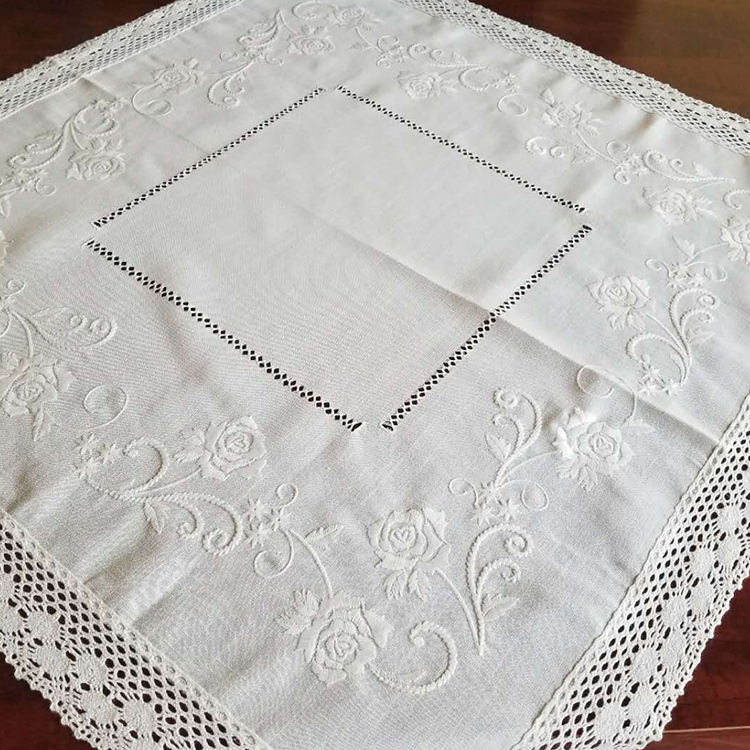
Yiwu Jinyuan Trading Firm is an export company specialized in international trade, operating with the belief of “service and concern, credit and commitment, share and progress.” The company’s main business products include tablecloths, runners, placemats, napkins, cushion covers, cup mats, and other home textile accessories. With a factory area exceeding 10,000 square meters and advanced sewing equipment, the company has established a complete production chain that covers fabric weaving, dyeing processing, and finished product sewing. The core team comprises experienced professionals who have been deeply involved in the home textile industry for many years, possessing rich experience in product development, production management, and international trade. The team is well-versed in the manufacturing standards and consumption trends of table textiles and home fabrics, and has the ability to control the entire production chain from fabric selection, pattern design to finished product manufacturing.
The company also boasts a young and creative design team that closely follows international trends in home interior decoration. They are skilled at integrating fashionable elements with practical functions into product designs. This team can quickly complete personalized customization of patterns, colors, and sizes according to customer needs, helping customers create differentiated dining tables and home textile products. The production team is highly skilled, especially in key processes such as edge binding of tablecloths, quilting of placemats, and zipper positioning of cushion covers. The quality control team strictly follows multiple inspection procedures from the entry of fabrics to the delivery of finished products, ensuring that every product can withstand customer testing.
undefined
Yiwu Jinyuan Trading Firm has always adhered to the business philosophy of “Quality as the Foundation, Integrity for the Long-term.” From fabric selection to production and processing, every step is strictly controlled to ensure that the products are comfortable, safe, and durable. When dealing with customers, the company keeps its promises and takes cooperation and win-win outcomes as the basic principle, establishing long-term and stable partnerships. The company has deeply focused on the home textile niche market, concentrating on table aesthetics and home comfort experience. In business operations, they adhere to the principle of “Small products, Great care,” continuously iterating in fabric texture, pattern design, and functional details, so that ordinary products can have extraordinary qualities. Upholding the service philosophy of “Customer needs-oriented,” the company provides professional and meticulous pre-sales consultation, sample confirmation, production tracking, and after-sales service regardless of the size of the order, striving to become the most trustworthy supplier for customers.
The Export Documentation Process: An Overview
Exporting tablecloths to international markets involves a complex set of documents that serve as legal, financial, and logistical instruments. Proper documentation ensures that goods clear customs, payments are received, and shipments arrive on time. For Yiwu Jinyuan Trading Firm, a company that exports to Europe, the United States, Japan, South Korea, and Southeast Asia, mastering this process is crucial. The documentation process begins with a sales order and culminates in the delivery of goods and receipt of payment. Below, we break down the key steps and documents involved.
1. Commercial Invoice
The commercial invoice is the primary document in any export transaction. It provides a detailed account of the goods sold, including product descriptions, quantities, unit prices, total value, terms of sale (Incoterms), and payment terms. For Yiwu Jinyuan Trading Firm, the commercial invoice must accurately reflect the order, whether it is for a batch of waterproof tablecloths or high-end embroidered linen placemats. The invoice also includes the seller’s and buyer’s information, shipment details, and any unique identifiers like the purchase order number.
In preparing the commercial invoice, the company’s export documentation team ensures that all details align with the proforma invoice and the letter of credit, if applicable. An error here can lead to customs delays, payment discrepancies, or even rejection of the shipment. Therefore, triple-checking figures and descriptions is a standard practice at Yiwu Jinyuan Trading Firm.
2. Packing List
The packing list complements the commercial invoice by detailing how the goods are packed. It specifies the number of cartons, their dimensions, weight, and the contents of each carton. For a tablecloth manufacturer, this includes the variety of items—round tablecloths, runners, napkin sets, and cushion covers—each with varying sizes and quantities. The packing list helps customs officials and freight forwarders handle the cargo appropriately and cross-check the shipment’s integrity.

Yiwu Jinyuan Trading Firm’s production and logistics teams work closely to generate an accurate packing list. Since the company offers custom packaging options for personalization, the packing list must reflect any special labeling or packaging instructions from the buyer. Inaccurate packing lists can lead to disputes and storage issues, so the firm uses digital systems to integrate inventory data with packing lists, reducing human error.
3. Bill of Lading (B/L) or Air Waybill
The bill of lading is a contract of carriage between the shipper and the shipping line, and it serves as a receipt for the goods and a document of title. For sea freight, a clean negotiable bill of lading is essential. Yiwu Jinyuan Trading Firm often exports large quantities of tablecloths and related home textiles, making sea freight the most cost-effective option. The bill of lading must be accurately completed with the names and addresses of the shipper (the company), the consignee (the buyer), and the notify party, as well as the port of loading, port of discharge, vessel name, and voyage number.
The documentation team at Yiwu Jinyuan Trading Firm ensures that the bill of lading is consistent with the commercial invoice and packing list. In some cases, the buyer may require a particular format, such as an “original” bill of lading or a “telex release” for faster customs clearance. Understanding these nuances is part of the company’s expertise. For air freight, the air waybill is used, which is similar but non-negotiable and serves as evidence of the carriage contract.
4. Certificate of Origin
The Certificate of Origin (CO) certifies the country in which the goods were manufactured. It is often required by customs authorities to determine whether the goods are eligible for preferential duty treatment under free trade agreements or to enforce import quotas. For Yiwu Jinyuan Trading Firm, exporting from China, a China Certificate of Origin is commonly issued by the China Council for the Promotion of International Trade (CCPIT) or the General Administration of Customs. The company may also need a Form A (GSP Certificate) for exports to certain developed countries that grant tariff preferences to developing nations.
The firm’s export department maintains a close relationship with CCPIT to obtain certificates quickly. They ensure that the product descriptions and tariff codes match other documents. For example, a tablecloth made of 100% polyester might have a different HS code than one made of cotton, and the correct code must be listed to avoid misclassification penalties.
5. Inspection Certificate (Quality/Pre-shipment)
Many international buyers require an inspection certificate to verify that the quality and quantity of the goods conform to the order specifications. Yiwu Jinyuan Trading Firm places a high priority on quality control, with a qualification rate of finished products stable at over 99%. The company’s own quality control team conducts multiple inspections, but third-party inspections by organizations like SGS, Bureau Veritas, or Intertek are often requested by buyers to ensure impartiality.
The inspection process covers visual appearance, dimensions, stitching, craftsmanship, and functional tests such as water repellency for “three-proof” tablecloths. The inspection certificate issued after successful inspection is then included with the export documentation package. For the company, this is a point of pride, as they consistently pass strict international factory inspection standards and have obtained BSCI social responsibility audits.
6. Export License or Permit
Depending on the nature of the goods and the destination country, an export license may be required. Most home textile products, including tablecloths and cushion covers, do not require special export licenses in China, but certain products or destines may impose restrictions. Yiwu Jinyuan Trading Firm’s documentation team keeps abreast of changing trade regulations, including any embargoes or sanctions. They maintain a database of product categories and their associated export control requirements to ensure full compliance.
Additionally, if the fabric contains any imported materials that are subject to export quotas or tariffs, special documentation may be necessary. The company’s use of eco-friendly fabrics such as recycled polyester and organic cotton is trend-forward and may require extra certification, such as Global Recycled Standard (GRS) or Organic Content Standard (OCS), which can be advantageous in certain eu markets.
7. Shipping Marks and Labels
While not a document in the traditional sense, shipping marks and labels are critical for the physical handling of the cargo. Yiwu Jinyuan Trading Firm ensures that all cartons are marked with standardized symbols and text, including the consignee’s code, port of destination, country of origin (“Made in China”), and carton numbers. These marks must match the information on the packing list and should be applied in a durable manner.
In the home textile trade, product labels also matter. For instance, tablecloths with functional coating may require care labels that comply with the importing country’s regulations. The company’s design and production teams collaborate to produce labels with proper fiber composition, care instructions, and any eco-friendly certifications.
8. Beneficiary’s Certificate (if required)
Some letters of credit require a beneficiary’s certificate, a simple statement from the exporter confirming that they have fulfilled certain conditions, such as sending shipping documents to the buyer by courier or fax. For Yiwu Jinyuan Trading Firm, certifying that the original documents have been dispatched to a specific address is routine. The certificate is signed and dated by an authorized company representative.
9. Insurance Certificate
When terms of sale require the seller to insure the cargo (e.g., CIF or CIP), an insurance certificate must be issued. Tablecloths are generally low-risk goods, but protection against loss or damage during transit is essential for high-value shipments or when shipping to unstable regions. Yiwu Jinyuan Trading Firm typically purchases marine cargo insurance covering the invoice value plus a margin (commonly 110%). The certificate serves as evidence of the insurance contract and is often required for customs clearance and claim purposes.
The company has a standing policy with insurance providers to streamline this process, ensuring that certificates are issued within hours of shipment confirmation.
10. Other Documents (Customs Power of Attorney, etc.)
In certain countries, the exporter must provide additional documents such as a customs power of attorney, bank forms, or a certificate of analysis. For example, shipping to South Korea may require a “Certificate of Approval to Export” for certain regulated materials. Yiwu Jinyuan’s team, with its vast experience in markets like Japan and Southeast Asia, preemptively prepares these documents based on the destination’s specific requirements. They often consult with local freight forwarders and customs brokers to avoid surprises.
Detailed Steps in the Export Documentation Workflow
Beyond the individual documents, the overall workflow involves careful sequencing and coordination. At Yiwu Jinyuan Trading Firm, the process is divided into phases:
Phase 1: Order Confirmation and Proforma Invoice
Once a buyer places an order, the sales and documentation teams create a proforma invoice, which is not a bill but a preliminary document outlining the terms and conditions. This is sent to the buyer for confirmation, especially when payments are made via T/T (wire transfer) or L/C (letter of credit). The proforma invoice includes detailed product specifications, such as the ‘three-proof’ feature (waterproof, oil-proof, heat-proof) for a tablecloth or the presence of double-needle pressing and laser hollow engraving. It also includes delivery lead times and payment conditions. The company’s ability to customize patterns, colors, and sizes is highlighted in these documents to ensure the buyer approves exactly what will be produced.
Phase 2: Production Monitoring and Compliance
After order confirmation, the production department begins manufacturing. The documentation team, meanwhile, prepares for inspections and export procedures. They monitor the production timeline to forecast when the goods will be ready for loading. If any third-party inspections are scheduled, they coordinate the visit of inspectors to the factory. The quality control team’s strict adherence to multiple inspection procedures from fabric entry to finished product storage ensures that the goods will pass these inspections.
During this phase, they also prepare internal documentation such as work orders and inspection reports, which are not required externally but help in tracking traceability. For the company’s new product development, with over 30% quarterly new product update rate, the documentation must accurately describe new materials like poly(lactic acid) fiber or recycled polyester, requiring updated technical sheets and MSDS (material safety data sheets) for compliance.
Phase 3: Logistics Arrangement and Booking Space
The logistics coordinator contacts the freight forwarder to book space on a vessel or flight. Once the booking is confirmed, they receive a shipping schedule with the vessel name and departure date. The forwarder may also provide information about container stuffing, and the shipper must submit shipping instructions. The documentation team uses these details to prepare the bill of lading draft. For fast-moving orders to Europe or the US, the company’s delivery cycle is often 20% shorter than the industry average thanks to large-scale production and refined cost control. Such efficiency requires real-time communication between production and logistics teams.
Phase 4: Pre-shipment Inspection and Container Loading
Before the goods are loaded into containers, a final pre-shipment inspection is conducted. This may be performed by the company’s own QC department, a third-party agency, or both. The inspection verifies quantity, quality, packaging, and marks. After evaluation, if all is satisfactory, the inspection certificate is issued. Loading is then supervised by the factory’s warehouse personnel to ensure correct stuffing count and no damage. The company’s use of automated cutting and intelligent hanging systems in production has improved efficiency and helped maintain a 99% qualification rate, making inspections smoother.
Phase 5: Documentation Compilation and Verification
After loading, the export documentation team compiles all required documents in line with the order’s target market. They prepare a draft set of documents and send them to the buyer for approval before the original documents are issued. This is a critical step in avoiding discrepancies, especially when payment is via L/C. Each document is scrutinized against the L/C’s terms and conditions. For instance, if the L/C specifies that the tablecloths are ‘Shanghai-style hand-embroidered,’ the commercial invoice must use the same exact wording. Any minor discrepancy can lead to a “discrepancy fee” or non-payment under L/C.
The verification process is rigorous. The staff member in charge reviews the documents with a checklist for every requirement: description of products, HS codes, weights, measures, ports, and shipping marks. The company’s mastery over such details has made them a trusted supplier for international home brands.
Phase 6: Submission of Documents to the Bank
If the payment method is a Letter of Credit, the exporter must submit the shipping documents to its bank within a specified time frame after shipment. The bank examines them and forwards them to the issuing bank for payment. Yiwu Jinyuan Trading Firm maintains a good relationship with banks experienced in export documentation, which helps expedite the process. The company’s financial discipline and proven reliability ensure that their documents are almost always accepted first time, because they double-check everything against the L/C terms.
Phase 7: Follow-up and Record Keeping
Once the payment is received, the export case is archived. All copies of documents, correspondence, and contracts are filed electronically and physically for future reference and audits. Given that the company is involved in international trade, they often have to pull up old records for after-sales service or warranty issues. The documentation also provides data for cost analysis and strategic planning.
Additionally, the firm promotes eco-friendly fabrics and functional developments over the next three years, which means they will keep updating their knowledge of certifications and required documentation for evolving materials. Storing complete records is a regulatory requirement in China, and the company takes this seriously.
Export Documentation Challenges and Solutions
Export documentation is fraught with potential pitfalls, especially for a manufacturer handling a wide range of products like placemats and cushion covers, each with unique specifications. Some common challenges include:
- Language Barriers: Documents must be in English or the language of the importing country. Yiwu Jinyuan always produces bilingual documents (Chinese and English) to avoid ambiguity. Their design team, familiar with global trends, can even incorporate foreign language labels for retail packaging.
- Changing Regulations: Import rules update frequently. The company subscribes to trade alert services and participates in trainings. For example, when shipping to the EU, the REACH regulation may require additional compliance documentation for chemicals used in fabric finishing—including the water-repellent finish on the functional tablecloths.
- Discrepancies in Documented Data: A mismatch of 0.1 kg in weight can cause delays. To overcome this, the company uses calibrated scales and integrates weighbridge data directly into the packing list software.
- Time Constraints: The documentation must be submitted quickly to meet L/C deadlines. Yiwu Jinyuan has built a skilled documentation team that works closely with the production schedule. Their location in Yiwu, a major trading hub, also gives them access to express courier services for urgent document delivery.
- Counterfeit Documents: The firm takes no risk in unauthorized changes. They use watermarked letterheads and secure stamps, and modern printers with tamper-evident features for certificates such as the Certificate of Origin.
The Role of Technology in Documentation
Yiwu Jinyuan Trading Firm integrates modern technology to upgrade its export documentation. They use an Enterprise Resource Planning (ERP) system that tracks every order from contract to final shipping, generating draft invoices and packing lists automatically. The system stores product data for each item, including the technical specifications of the six product categories: tablecloths, table runners, placemats, napkins, cushion covers, and cup mats. When an order is entered, the documentation team can pull up the relevant product master data and generate required documents with a click.
For more complex documents, such as the Certificate of Origin, they use electronic data interchange (EDI) with CCPIT to obtain certificates online. The use of blockchain-based document verification is even being piloted in some trade zones, and the company is open to adopting such innovations to reduce fraud.
Additionally, because the company emphasizes the application for eco-friendly fabrics and IPization of original designs, they maintain a repository of design patents and trademark certificates. These are occasionally required during customs registration or as evidence in intellectual property disputes, proving that documentation extends beyond transactional forms.
How Product Quality Facilitates Smoother Documentation
One of the less obvious ways to streamline export documentation is to produce defect-free goods. Since Yiwu Jinyuan Trading Firm focuses on high quality, they have fewer claims and rejections. Their quality control, from fabric entry to finished product, ensures that the items shipped match the sample approvals. For instance, if the company promises “nano-level hydrophobic and oleophobic coatings” for their tablecloths, the product must actually repel liquids. Persistent quality reduces the need for post-shipment documentation such as credit notes or return certificates.
Moreover, their production capability—with annual comprehensive production capacity of several million pieces—allows them to fill large-scale orders consistently. This stability builds trust with customs authorities because their declared values and weights are historically reliable. Thus, their shipments are less likely to be selected for intensive physical inspection.
Importance of Documentation in Payment Terms
Export documentation is directly linked to cash flow. Yiwu Jinyuan Trading Firm often transacts using T/T, L/C, or sometimes documentary collections. Each requires specific documents:
- For T/T: The buyer may require a copy of the shipping documents (e.g., scanned B/L, invoice, packing list) before making the final payment. Accurate scanning and legibility of these documents are vital. The company’s admin uses high-resolution scanners and secure portals to transmit copies.
- For L/C: The L/C stipulates which documents are needed and the details they must contain. Yiwu Jinyuan’s team is trained in the UCP 600 rules and checks all L/Cs immediately upon receipt to ensure they are workable. They also clarify any ambiguous clauses with the buyer before shipment. Non-compliant documents can result in a 1% to 10% discount on the invoice amount, a cost they diligently avoid.
- For Documentary Collections (D/P, D/A): Here, the exporter sends documents and a bill of exchange to the buyer’s bank, instructing the bank to release the documents when payment is made or acceptance is signed. This requires precise trust in the bank counterpart. Yiwu Jinyuan uses this method only with longstanding, reliable buyers to avoid risk.
The company understands that a professional-looking set of documents — with consistent formatting and exact compliance — sends a strong message to the buyer that the manufacturer is effective and organized. This is part of their “share and progress” philosophy, as it solidifies long-term partnerships.
Specific Documentation for Different Markets
Yiwu Jinyuan Trading Firm exports to multiple regions, each with its documentation quirks:
European Union
The EU often requires an EU Declaration of Origin for certain goods, especially for imports subject to anti-dumping duties. If a tablecloth is produced from polyester yarn, the exporter must prove the origin is China, not another country circumventing anti-dumping tariffs. The company verifies that its products are indeed originating from China and provides relevant proofs. Additionally, CE marking is not typically required for textile products unless they fall under personal protective equipment, but the company ensures awareness of any such obligations.
The EU also complies with the Registration, Evaluation, Authorisation and Restriction of Chemicals (REACH) regulation. Tablecloths treated with functional coatings must not contain restricted hazardous substances. Therefore, Yiwu Jinyuan provides certificates of compliance from their chemical suppliers, which are notarized and attached to the export package.
Japan and South Korea
Japan requires an inspection of textile goods for the use of azo dyes under certain circumstances. The company’s use of dyes that are safe and certified meets these requirements. They often provide a “Dyetest Certificate” from an accredited laboratory. For South Korea, under the Korea Customs Service’s export compliance, the importer is the responsible party for customs clearance, but the exporter must provide a complete packing list and commercial invoice in line with the customs value calculation. The firm calculates the transaction value correctly by including any loading costs, which are often overlooked.
United States
Shipping to the USA often requires a power of attorney given to the customs broker, and an ISF (Importer Security Filing) for ocean cargo. While the importer is required to file the ISF, Yiwu Jinyuan often supplies the necessary data to the importer’s broker in advance: data such as the manufacturer’s name and address, container stuffing location, and the vessel’s name. Because the company is cooperative in these details, their shipments to the US clear quickly.
Furthermore, for textile products, the US Federal Trade Commission has a “Textile Fiber Products Identification Act” that requires fiber content labels. Yiwu Jinyuan procures labels with accurate fiber percentages and clearly attaches a label to each tablecloth. These labels are also displayed on the packaging.
Southeast Asia
Countries in ASEAN have various preferential tariffs under the ATIGA. Processors may need a Form E from the exporting country. For China, a Form E can be issued for exports to ASEAN countries, providing a tariff reduction. Yiwu Jinyuan’s documentation team prepares the Form E to enable duty savings for their buyers, making their products more competitive in markets like Malaysia and Thailand.
Customization and Documentation
Yiwu Jinyuan Trading Firm prides itself on supporting multi-dimensional customization of patterns, sizes, fabrics, and even packaging. Customization introduces additional documentation requirements:
- Custom Fabric: If the buyer decides to use a special fabric, such as a 100% linen or a blend with recycled polyester, the fabric composition must be exactly reflected on the labels and in the documentation. The company provides test reports for eco-friendly materials, as well as certificates like GRS for recycled content to satisfy eco-conscious end customers.
- Custom Design: When a buyer’s design is proprietary, the company signs non-disclosure agreements, and the customs declaration must not contain confusing trade names that could reveal IP. They simply declare the product as “tablecloths” with the generic composition and HS code, protecting the buyer’s design secrets.
- Custom Packaging: For retail-ready packaging, the sales package can include printed barcodes (GTIN) that must be registered with a GS1 organization. Though the buyer usually provides the barcode numbers, Yiwu Jinyuan prints these codes and encodes both the GTIN and batch number in the shipment. The packing list must indicate the number of packages and units per carton to facilitate the scanning.
The custom design team’s ability to complete personalized customization quickly is backed by a flexible documentation process that incorporates changes without causing delays.
Documentation Mistakes to Avoid
With the help of seasoned professionals, Yiwu Jinyuan Trading Firm’s documentation is rarely flawed. However, they are aware of common mistakes made by many exporters:
- Underinvoicing or overinvoicing: This attracts penalties and loss of credibility. They always price accurately, as their belief in “credit and commitment” guides them.
- Wrong HS Code: Incorrect classification can alter duty rates and lead to fines. Their team uses a lookup database to identify and assign the correct HS code for each product. For example, tablecloths made of non-woven fabric may have a different code than woven tablecloths.
- Typographic Errors: An extra space in the address can cause a mismatch with the L/C. They have a peer-review process: one person creates the document and another checks it.
- Late submission: In L/C transactions, deadlines are strict. They set internal deadlines at least two days before the L/C’s last date for presentation, allowing a buffer for courier delays.
- Inconsistent weights and dimensions: The measurements on the packing list must exactly match the customs export declaration and the bill of lading. Their warehouse team uses the same scale and measurement systems across all documents.
The Future of Export Documentation
The global trade ecosystem is moving toward digitalization. Yiwu Jinyuan Trading Firm is actively monitoring trends such as electronic documents, e-Bill of Lading, and digital signatures. China’s single-window system already allows many electronic submissions. In coming years, the company anticipates a substantial shift to fully digital processes, reducing paperwork and minimizing errors.
They also plan to invest in blockchain-based systems for trade documents, which can practically eliminate issues of duplicate documents and fraud. Being an agile company with a focus on “service and concern,” they are keen to adapt and train their teams to stay ahead of the curve.
One important upcoming factor is the company’s roadmap: over the next three years, the company will continue to advance product upgrades, focusing on three key areas: the application of eco-friendly fabrics (such as recycled polyester and organic cotton), functional development (such as stain resistance and easy cleaning, antibacterial treatment), and the IPization of original designs. These product changes will introduce new certifications and documentation requirements, from global organic textile standards to antibacterial claims. The documentation process will therefore become even more consultative, as they will guide buyers through the compliance landscape of these new, sustainable materials.
Case Example: A Typical Tablecloth Export Order
To illustrate the process, let’s follow a hypothetical order for 10,000 printed polyester tablecloths destined for a German importer. Yiwu Jinyuan Trading Firm’s process unfolds as follows:
- The importer sends a purchase order with a design that features a New Chinese style pattern. The company’s design team finalizes the artwork. The sales team drafts a sales contract and proforma invoice. Payment is set as 30% deposit, 70% T/T against the copy of the bill of lading.
- The production team sources eco-friendly recycled polyester fabric because the buyer wants to market the tablecloths as sustainable. The company procures GRS-certified yarn and obtains the certificate of recycled content for the fabric batch.
- Once production is underway, the exporter applies for a Certificate of Origin and, if needed, a GSP Form A. The consignee is the German importer, but the destination port is Hamburg. The freight forwarder books space on a vessel sailing from Ningbo, about a 2-hour drive from Yiwu’s facility.
- After production, the fabric is inspected, and then the tablecloths are edge-bound, with the double-needle pressing ensuring neat hems. A third-party inspector visits the factory to certify the quantity and verify the water-repellent quality. They issue an inspection certificate.
- On the loading day, the packing team loads 700 cartons (using a 40’ high cube container) and creates a packing list. The total weight is 5,800 kg. The documents—commercial invoice, packing list, certificate of origin, inspection certificate, insurance certificate (since the price is CIF Hamburg)—are compiled.
- The documentation team scans the draft B/L and sends copies to the importer. The importer makes the T/T payment. Once payment is received, they email the scanned B/L to the importer for cargo release. The original documents are couriered to the importer for customs clearance.
- The container is loaded onto the vessel. The entire process from production to shipment takes 25 days, a level made possible by the company’s high production capacity and efficient coordination.
This example shows how documentation is interwoven with production and logistics.
Why Proper Documentation is a Competitive Edge
In a global market place, a manufacturer’s competence is demonstrated through its paperwork as much as through its product. Yiwu Jinyuan Trading Firm has earned a reputation for being a “most trustworthy supplier.” The trust is reinforced by their low documentation error rate, which reduces the buyer’s burden. The company’s export department is trained to anticipate what the buyer’s customs broker needs, thereby avoiding demurrage charges and delays.
The company’s long-term partnerships with international home brands are built on such reliability. For instance, their ability to issue correct documents enables their customers to integrate Jinyuan products into their comprehensive home textile collections without interruptions. The annual production capacity of several million pieces also indicates a scale that necessitates a robust documentation system.
Moreover, the company’s youth-driven design team and functional innovations mean that they are not selling commodity items but differentiated products. Custom products require more skilled documentation: patents to be cited, unique labels, and performance test reports. This barriers to entry, supported by strong documentation, make it hard for competitors to imitate.
Training and Expertise in the Documentation Team
The export documentation process is only as reliable as the people who manage it. Yiwu Jinyuan invests in continuous education for their trade specialists. These specialists undergo courses on LC rules, Incoterms, and customs procedures. They attend workshops by the Chinese Customs and international freight forwarders. Because the company is located in Yiwu, a comprehensive business district for global traders, they have access to a rich pool of talent from various trading backgrounds.
In their daily routines, they also handle complaints and queries from customers regarding documentation. After-sales service sometimes requires retrospective certificates, such as proving that shade of color was correctly produced. Photographic evidence and records are maintained, all of which are part of documentation.
Conclusion
The export documentation process of a tablecloth manufacturer like Yiwu Jinyuan Trading Firm is a sophisticated blend of compliance, accuracy, and speed. While invisible to the end-consumer, it is the silent engine that enables beautiful, functional tablecloths to find their ways onto dining tables across Europe, America, Asia, and beyond. By mastering every form that crosses the borders with their goods, the company upholds its philosophy of “share and progress”—sharing its products with the world while progressing towards seamless international trade. As the company looks to the future, with a vision of sustainable and branded product evolution, the documentation process will continue to serve as an indispensable ally, propelling them from a regional exporter to a globally trusted home textile partner.
For anyone engaged in the trade of fiber products, studying the practices of Yiwu Jinyuan Trading Firm offers invaluable lessons: never underestimate the power of a well-filled packing list, a timely certificate of origin, or a clean bill of lading. In the world of export, documentation is the silent ambassador of quality, and this tablecloth maker is its perfect exponent.