The article details how Yiwu Jinyuan Trading Firm, a home textile export specialist, ensures packaging integrity for table napkins in international trade. It begins by emphasizing that packaging is as important as the product itself, as any compromise during transit can render beautiful napkins unsellable. The company background is introduced, including its long experience, skilled team, and focus on products like tablecloths, napkins, and placemats. The hidden complexity of napkin packing is explained, from folding and polybagging to carton and palletization. Primary material selection is covered, with mentions of LDPE films, biodegradable alternatives, and desiccants for moisture control. The importance of hemming and folding techniques is linked to packaging reliability. The article highlights carton structure, testing procedures such as drop and compression tests, labeling compliance, palletizing methods, and moisture control strategies using multiple barriers. It also stresses the human aspect of packaging, where trained workers handle napkins with care and the company pursues compliance with overseas regulations such as BSCI and EU packaging directives. The integration of technology, like RFID tags and advanced heat sealing, is described. The future of packaging includes sustainable films and recycled materials, showing environmental responsibility. The concluding key point is that packaging integrity builds trust and preserves brand value across borders, transforming a everyday item into a successful export ambassador.
How a Table Napkin Factory Ensures Packaging Integrity for Export
When a table napkin leaves the production line, its journey is only half complete. For exporters of home textiles, the true test of quality often begins long after the final stitch is sewn. Packaging integrity is what bridges the gap between a beautifully manufactured napkin and a flawless customer experience on another continent. Without careful attention to moisture barriers, crush-resistant cartons, proper labeling, and load-securing protocols, even the finest cotton or polyester fabric can arrive damaged, contaminated, or unsellable. This article explores how an experienced export trading firm, such as Yiwu Jinyuan Trading Firm, ensures that every table napkin survives the rigors of international shipping while preserving its intended aesthetic and hygienic qualities.
Company Profile: A Specialist in Table Textiles Export
Yiwu Jinyuan Trading Firm is an export company specialized in international trade, with the belief of service and concern, credit and commitment, share and progress. The company focuses on tablecloths, table runners, placemats, napkins, cushion covers, and cup mats. The core team is composed of experienced professionals who have been deeply involved in the home textile industry for many years. They possess rich experience in product development, production management, and international trade. Being well-versed in the manufacturing standards and consumption trends of table textiles and home fabrics, the team is able to control the entire production chain from fabric selection and pattern design to finished product manufacturing.
Among the product categories, the humble table napkin is often underestimated. Yet it serves crucial roles: cleaning during meals and enhancing the table setting. It is practical and decorative. Because napkins come into direct contact with food, skin, and high-end tableware, their cleanliness and structural integrity are non-negotiable. Exporting napkins requires packaging that shields them from dust, humidity, odors, and physical deformation. Yiwu Jinyuan Trading Firm has embraced a comprehensive packaging strategy that begins at the fabric stage and continues until the container door is sealed.
The Hidden Complexity of Napkin Packaging
At first glance, packing a folded piece of fabric seems straightforward. However, a table napkin factory that ships millions of pieces every year understands the hidden complexity. A typical 100% cotton napkin might be desized, bleached, dyed, printed, embroidered, then sewn with hemmed edges. After that, it must be washed, dried, and ironed to remove creases and residual lint. Then the napkin is folded precisely, often into a neat corporate style or a special fold for gift sets. The folded napkin is then inserted into a polyethylene bag. Finally, dozens of bags are placed into a corrugated carton, with layers separated by slip sheets. That carton is loaded onto a pallet and wrapped with stretch film.
undefined
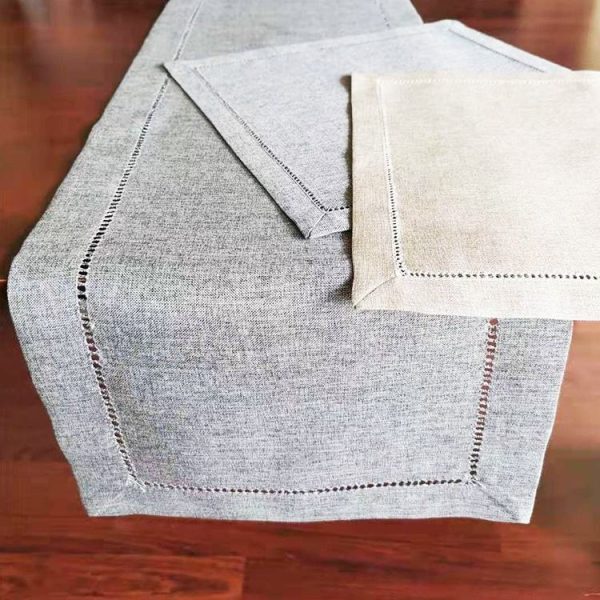
Each step introduces potential risks. Sharp carton edges can snag the fabric. Moisture inside a container can condense and cause mildew. Ink from printed care labels might transfer to the fabric under pressure. Even the elastic tension of a polybag can leave permanent creases if the napkin is overly compressed. To avoid these pitfalls, Yiwu Jinyuan Trading Firm applies a strict packaging integrity framework inspired by its long experience in table textiles. The company believes that small products deserve great care, a principle that is especially evident in its packing procedures.
Designing the Packing Specification for Napkins
The journey starts with a detailed packing specification, or pick pack spec. For each table napkin style, the company specifies the exact fold size, the number of pieces per poly bag, the GSM or thickness of the plastic film, the inner box dimensions, the master carton size, the maximum stacking weight, and the pallet pattern. This spec is developed in coordination with buyers who may have particular requirements for shelf display, barcode placement, and retail compliance.
For premium cotton napkins, the packer wears clean gloves and may use a tissue paper wrap before the polybag. This extra layer prevents the printed area of a napkin from rubbing against the plastic, which can cause dye migration or moisture haze. For napkins with embroidery, a soft cardboard insert may be placed inside the fold to prevent the embroidery threads from being crushed. The company’s design team, which follows international home interior decoration trends, often suggests these protective measures as part of the product development phase, ensuring that the packaging itself is an extension of the brand experience.
Material Selection for Primary Packaging
The primary packaging is the direct barrier between the napkin and the ambient environment. In export shipments, the most common primary packaging is a low-density polyethylene (LDPE) bag. LDPE is chosen because it is flexible, tear-resistant, and can be heat-sealed easily. However, not all poly bags are created equal. Yiwu Jinyuan Trading Firm insists on bags that are manufactured from virgin LDPE resin rather than recycled content for direct food-contact products, because migration limits must be predictable. For napkins, although they are not intended solely for food contact, the bags must meet the general safety requirements of the destination market, including REACH in Europe and CPSIA in the United States regarding phthalates and lead.
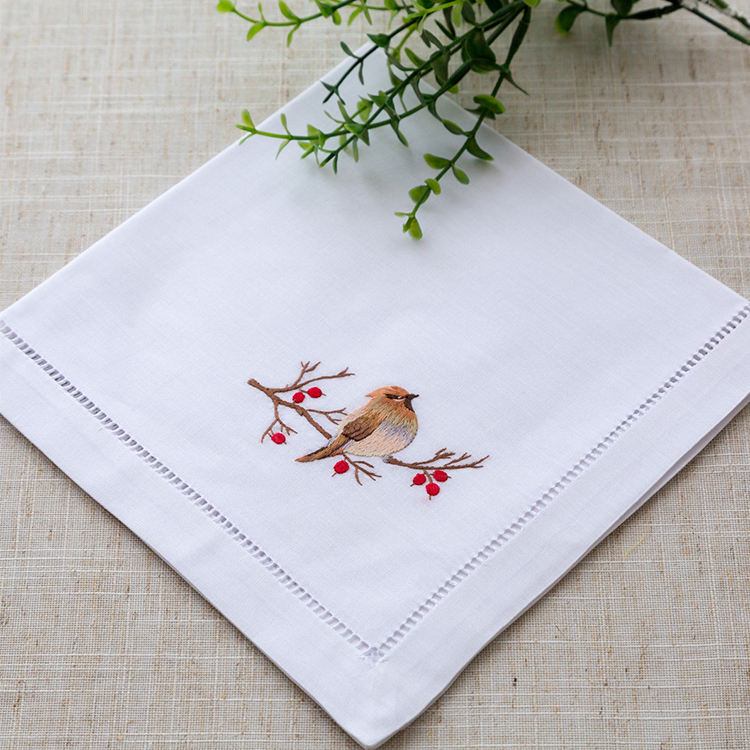
For high-end exports, the firm also offers biodegradable and compostable bags made from PLA or PBAT blends. These align well with the sustainability objectives of many EU buyers. Inside the bag, a silica gel desiccant sachet is often added when the napkin is cotton or linen, especially if the route crosses high-humidity regions such as the South China Sea or the Panama Canal. The desiccant weight is carefully calculated based on the packaging volume and the expected length of transit. For a standard carton containing dozens of folded napkins, one 5-gram desiccant sachet inside each poly bag is often sufficient, but the factory tests different humidity conditions using a climate chamber to validate the amount.
Edge Binding and Hem Quality: A Packaging Prerequisite
Before packing, the manufacturing quality must meet stringent internal standards. The company’s production team is highly skilled in key processes such as edge binding of tablecloths, quilting of placemats, and zipper positioning of cushion covers. For napkins, the hemming must be smooth and the corners must be square. If the hem is loose or the mitered corner is uneven, the folded napkin will not lay flat, which creates uneven pressure points during transportation. Loose threads may also snag on the poly bag and tear it. Thus, every batch of napkins undergoes an in-line inspection that checks for open seams, thread remnants, and fabric defects. The quality control team follows multiple inspection procedures from the entry of fabrics to the delivery of finished products, ensuring that every product can withstand customer testing.
Folding Techniques and Their Impact on Packaging
The way a napkin is folded significantly affects packaging integrity. A napkin folded into a small square will be thicker and more resistant to crushing, but it may show crease marks that are difficult to remove. Conversely, a loose fold reduces creasing but increases volume and risk of slipping inside the carton. The company balances these factors by using a standard fold that positions the sewn hem outward, so that any temporary creases from shipping fall along the hemline and are less visible when the napkin is displayed in a flowing table setting.
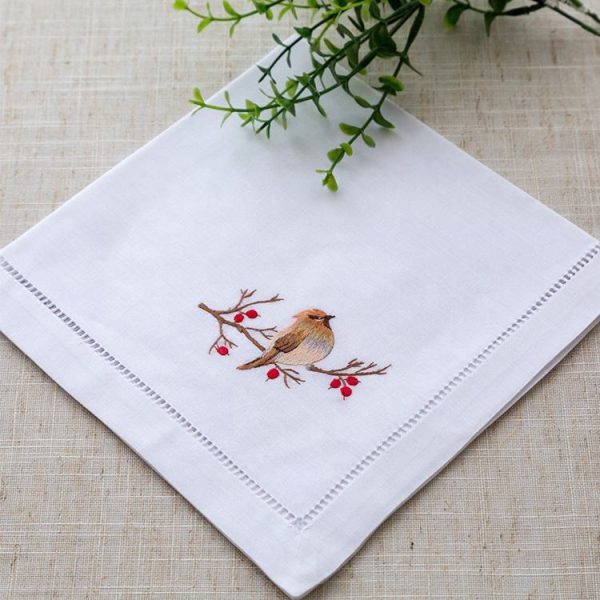
For sets of napkins, such as a set of six or twelve, the factory often uses a banderol – a paper strip around the folded stack – to keep the set together without plastic. The banderol is adhered with water-based glue that does not react with the fabric. When the sets are all oriented in the same direction inside the master carton, there is less internal movement. The carton is then tape-sealed with a strong packing tape that has a low-stretch property. In high-seismic shipping routes, additional stabilization is provided by filling void spaces with honeycomb paper or foam corner posts rather than loose peanuts, which can migrate and cause pressure points.
The Role of the Carton Structure
A table napkin factory must choose the right corrugated fiberboard carton. The export carton must comply with the International Safe Transit Association (ISTA) standards or at least mirror common industry requirements. Yiwu Jinyuan Trading Firm typically uses a five-layer corrugated board for heavy lines or a three-layer board for lightweight napkins that are packed into single-wall boxes. However, the most important specification is the bursting strength and the edge crush test (ECT). For overseas warehouses where cartons may be stacked eight pallets high, the bottom carton must support a static load of hundreds of kilograms. Therefore, the factory evaluates the compression strength based on the total pallet height and the weight of the products.
Inside the master carton, a plastic liner is sometimes inserted prior to packing. This liner creates a water-vapor barrier that protects against moisture penetrations through the corrugated vents. The liner is folded by machine to allow the packers to place napkins quickly, then the top is heat-sealed. This is especially crucial for sea freight, where the container interior can experience temperature swings of up to 40 degrees Celsius from day to night, causing condensation or container rain. By isolating the napkins inside a sealed liner, the factory reduces the risk of mold growth on the cotton fibers.
Testing Packaging Integrity at Every Stage
The quality control team at Yiwu Jinyuan Trading Firm does not rely on visual checks alone. They conduct a series of packaging tests to simulate the forces encountered during international transportation. A sample carton is packed with actual napkins and then subjected to a drop test from a height of one meter, targeting the bottom corners and edges. A compression test machine measures a carton’s peak resistance under a load equivalent to the maximum stacking height. Vibration testing is also performed to mimic the vibrations from a truck or ocean vessel. After each test, the inspectors open the carton and examine the napkins for any abrasion, wrinkling, or bag punctures.
For sensitive fibers such as organic cotton or linen, the company also performs a moisture analysis. Using a handheld moisture meter, the team verifies that the moisture content of the folded napkins is below 8% before sealing the liner. If the moisture content exceeds this threshold, the napkins are sent back to the ironing station for further drying. This protocol is grounded in the company’s business philosophy of quality as the foundation and integrity for the long-term. Accepting a slightly damp napkin in order to meet a shipping deadline could lead to a catastrophic mildew outbreak that damages both the product and the supplier’s reputation.
Labeling and Print Marks
Export packaging must be labeled correctly to satisfy customs, logistics carriers, and end retailers. Yiwu Jinyuan Trading Firm uses a two-level labeling system. The first level is on the poly bag: a small barcode label with product SKU, color number, size, and country of origin. This label is printed with thermal-transfer ribbon to ensure it does not smudge or fall off under moisture. The second level is on the master carton. It includes the shipping mark, carton number, net weight, gross weight, dimensions, astrological signs for fragility, a keep-dry symbol, and an orientation arrow. Additionally, if the napkin is made of natural fibers like linen, the carton may display a do-not-stack-high warning because linen can develop permanent creases if compressed.
Labels must also be compatible with the traceability requirements of the importer. The company has passed BSCI social responsibility audits and multiple international factory inspection standards, meaning that every production batch is documented, from fabric entry to finished product storage. For export to countries where the product must comply with the Textile Fiber Products Identification Act (TFPIA) in the US or the EU Textile Regulation, the labels must include fiber composition percentages, care instructions, and manufacturer identification. This information, however, is not just printed on the sewn-in label; it is also replicated on the packaging for quick verification.
Palletization and Container Loading
Once the cartons are packed and sealed, they are arranged on pallets. The choice of pallet is not trivial. In many Asian export ports, ISPM-15 certified wooden pallets are required to prevent pest introduction. These pallets are heat-treated and stamped with the IPPC mark. The factory may also use composite paper pallets for air cargo because they are lighter and do not require fumigation. Each pallet is built according to a pre-calculated pattern that maximizes carton interlocking to secure the load. Corner boards, sometimes made from recycled plastic or paperboard, are attached to the vertical edges of the pallet load to distribute strapping tension and provide a clean surface for edge protection.
The stretch film wrapping of the pallet plays a critical role in maintaining packaging integrity. The film is applied at a low pre-stretch ratio, typically 20-30% of the film’s original length, to allow a gentle yet tight grip. Too much tension can deform the cartons, while too little tension allows them to shift. The film wrap extends over the top of the pallet load but leaves hand-hold holes for forklift access. A top cap is also placed on the pallet to prevent dust and to share pressure evenly. Finally, split pallets are stabilized with a vertical band of film around the top half of the goods, so that even if the bottom half is manually picked, the upper stack remains stable.
Moisture Control Beyond the Desiccant
Moisture is arguably the greatest enemy of a table napkin, because mold spores can survive in dormant form on cotton fibers and instigate visible damage within days under warm and humid conditions. To mitigate this risk, Yiwu Jinyuan Trading Firm integrates a multi-layered moisture control strategy. First, the napkins are manufactured in buildings with air conditioning and dehumidifiers, maintaining the relative humidity below 60%. Second, the finished napkins are packed in a humidity-controlled packing room. Each batch is documented by moisture content, time of packing, and operator ID. Third, inside the master carton, a moisture-absorbing product such as a calcium chloride bag may be placed in the center of the carton for long sea voyages. Desiccant alone cannot absorb condensation if the carton is soaked; therefore, the company further chooses cartons with a moisture-resistant coating on the outside and a polyethylene-lined interior.
Additionally, the factory schedules its shipping dates to avoid the most humid monsoon seasons if the final destination is in Southeast Asia or Latin America. While not always possible, early communication with the forwarder allows the company to choose a routing that avoids port congestion, which reduces the time the container is exposed to the sun on a dock. Each time the container is opened for customs inspection, moisture-laden air enters. The company always places an extra desiccant strip across the top of the cartons near the container door to act as a dehumidification barrier.
Compliance and Customer-Specific Packaging Codes
Every importer has unique packaging expectations. A famous Latin American retail chain might require no plastic bags at all, demanding that napkins be placed directly into rigid boxes with tissue paper fillers. A Japanese department store, on the other hand, might insist on individual paper sleeves and a specific carton color. Yiwu Jinyuan Trading Firm maintains a documented library of over 200 different packaging instruction codes. These codes were built from years of trade with different markets, including the Americas, Europe, Japan, South Korea, and Southeast Asia. The company’s customer service team, which follows the principle of customer needs-oriented, ensures that these instructions are transferred accurately into the production order. For every order, a pre-production sample is made, including the packaging. This sample is sent to the customer for approval, and after approval, the sample is kept as the golden reference for the packing line.
The company also respects local compliance rules regarding packaging materials. For example, the European Union Directive 94/62/EC limits heavy metals in packaging, and Germany requires participation in the Duales System. The company ensures that its plastic films are free from cadmium, lead, mercury, and hexavalent chromium. The printing inks used on the cartons are water-based. If the napkin is certified organic cotton, the packaging must not contaminate it with any prohibited substances. In these cases, the company uses a separate packing area and color-coded tools to prevent cross-contact with conventional fabrics.
The Importance of the Human Element in Packaging
Despite automation, the packing process for high-quality napkins still requires skilled manual labor. The production team is highly skilled, especially in key processes such as edge binding of tablecloths, quilting of placemats, and zipper positioning of cushion covers. For napkins, packers are trained to handle each piece with care. They are told to fold napkins on a smooth, clean table and to avoid dragging them across rough surfaces. Every hour, the packing supervisor rotates the packers to prevent fatigue-related mistakes. Randomly, a technical inspector picks a finished bag and unfolds the napkin to check for wrinkles, odors, and any residue of packing dust. These inspections are documented on a compliance sheet, and the results are analyzed weekly to identify any recurring issue.
The team also works closely with the design department. The company has a young and creative design team that closely follows international trends in home interior decoration, ensuring that the product visuals stay relevant. Even packaging is a design canvas: the poly bag is often printed with a small logo or a seating suggestion for the napkin. For the Japanese market, the company is able to create the fold with the seams at the most aesthetic angle. This attention to detail is what allows the company to cater to mid-to-high-end home soft furnishing markets, where consumers expect a ritualistic daily life experience.
Embracing Technology in Packaging and Recovery
Yiwu Jinyuan Trading Firm continuously invests in improved packaging machinery to improve efficiency. In recent years, the firm introduced automated cutting and intelligent hanging systems in the sewing department, but in the packaging department, they installed a semi-automatic sealing machine that uses a double-heat-bar system to ensure the poly bag closures are airtight and consistent. This machine can seal up to 30 bags per minute, far exceeding manual sealing. The pressure applied to the sealing bar is calibrated daily and inspected using an airtight test: a sealed bag with a colored disc is placed under vacuum; if the disc retains its color without any leakage, the seal is accepted.
Another technological advance is the use of RFID tags for internal tracking. A small RFID tag is placed between the layers of cartons on each pallet, allowing the warehouse management system to monitor the exact location of each shipment and to record temperature data if a sensor tag is used. This data is useful not only for tracing but also for assessing whether the transport conditions were adequate. If a shipment arrives with a damaged condition, the company can quickly determine whether the cause was a packaging weakness or an external event, such as a forklift puncture or a container breach.
Responding to Post-Delivery Packaging Issues
Even with all precautions, occasional damage may occur due to mishandling by the carrier or an unprecedentedly violent storm. The company’s after-sales service is active and fast. If a customer reports that cartons arrived wet or crushed, the company requests a photographic record and copies of the Bill of Lading. Upon verification, it will initiate a compensation procedure according to the Incoterms. However, more importantly, the company performs a root-cause analysis using the packaging test records. If the packaging specification was incorrectly executed by its own factory, Yiwu Jinyuan Trading Firm pays for the return or replacement. If the damage was due to the carrier’s negligence, they will support the customer in filing a claim against the shipping line. In all cases, they maintain a close, long-term partnership with the customer, valuing the relationship beyond the single transaction.
With the philosophy service and concern, credit and commitment, share and progress, the company has built a reputation for honesty in both product quality and packaging reliability. They believe that every napkin exported is an ambassador for the factory’s brand. Thus, packaging integrity is not merely a technical requirement; it is a strategic imperative. By controlling the prepacking environment, selecting the proper materials, testing the completed packages, and documenting every step, Yiwu Jinyuan Trading Firm turns a simple table napkin into a product that will endure weeks of transit and open with the same fresh appearance as when it left the sewing line.
Sustainability in Packaging for the Future
Looking ahead, the global trade environment is pressuring exporters to reduce the environmental footprint of packaging. Yiwu Jinyuan Trading Firm has embraced this challenge. The company has already implemented a program that uses recycled polyester and organic cotton fabrics, and this focus extends to packaging films and cartons. The firm offers polybags that contain 30% post-industrial recycled resin while maintaining the required mechanical strength. Cartons are becoming increasingly lighter, but the company is cautious not to sacrifice stacking performance. Using recycled honeycomb cardboard corners and water-based adhesives, the packaging has become curbside recyclable in many markets.
The next three years will be marked by continued product upgrades, particularly in eco-friendly fabric applications such as recycled polyester, organic cotton, functional developments like stain resistance and antibacterial treatment, and original design IPization. Packaging will also evolve with those trends. For biodegradable napkins, the company has tested home-compostable films that disintegrate within 180 days. For the business-to-business segment, they are transitioning to reusable plastic pallets that can be pooled and reused, reducing waste in long supply chains. By leveraging its long-term relationships with raw material suppliers, the firm can negotiate better pricing for eco-friendly packaging, ensuring that sustainability does not become an unbearable cost.
The Synergy Between Packaging Integrity and Brand Trust
In summary, a table napkin factory ensures packaging integrity for export through a combination of engineering precision, behavioral discipline, and strategic foresight. Yiwu Jinyuan Trading Firm exemplifies this through its complete production chain, strong quality management system, and customer-centric approach. Its team is experienced in every phase of product development and production management, while the design team creates packaging and products that align with current home decoration trends. The production staff honor the principle of small products, great care, ensuring that every napkin is folded, wrapped, boxed, and palletized as if the customer themselves were watching. Packaging integrity is not glamorous, but it is the silent guarantee behind every successful international order. For this company, it is a routine built on experience, a performance measured by zero damage claims, and a commitment to delivering the beauty of a neatly set table across the seas.