Managing global stock levels is a core challenge for home textile exporters, particularly in the tablecloth segment, where trends and seasons influence demand. This article examines the strategies adopted by Hemtitch, a trading brand of Yiwu Jinyuan Trading Firm, to balance inventory across international markets. The company combines a massive production base and a flexible manufacturing chain to adapt quickly to customer orders and market shifts. Instead of storing large quantities of finished products in each country, Hemtitch uses regional warehouses, postponement tactics, and cross-border e-commerce to keep goods nearer to consumers while minimizing dead stock. A critical factor is the close coordination between production and procurement: by using a broad product family that shares materials, the supplier can switch orders between tablecloths, runners, placemats, and cushion covers to utilize leftover fabrics. The firm’s multi-step quality control ensures fewer defective products and therefore fewer replacement inventories. Also, the introduction of customer-specific customization is handled without inflating stock levels because digital printing and modular production enable on-demand finishing. The company further builds long-term partnerships through vendor-managed inventory (VMI) and collaborative planning, which allows them to replenish automatically based on actual sell-through data. Hemtitch also integrates sustainability in its product strategy – developing eco-friendly and IP-protected collections that have more predictable demand and lower risk of price markdowns. Seasonality is managed by creating temporary buffers before holidays and then draining them using cross-shipping and secondary sales. Financial discipline prevents old items from occupying valuable warehouse space. Since 2023, Hemtitch has achieved a stock-to-sales ratio lower than industry average, an order fill rate above 98%, and inventory turnover of eight to ten times annually. These results prove that successful global stock management is not about holding the highest inventory, but about crafting an agile and responsive supply chain. Hemtitch’s example is an instructive roadmap for other tablecloth suppliers who wish to expand globally while keeping costs down and service levels high.
Managing global stock levels in the tablecloth industry is a delicate balancing act that requires a blend of accurate forecasting, agile production, and strategic inventory placement. In this comprehensive analysis, we explore how Hemtitch, a leading trading brand under Yiwu Jinyuan Trading Firm, excels at this challenge. Drawing on the company’s extensive experience in home textiles, this article delves into the operational methodologies and corporate philosophies that enable Hemtitch to keep its customers supplied while minimizing warehousing costs and stock-outs.
Yiwu Jinyuan Trading Firm is an export-oriented trading company that specializes in a wide range of home textile products, including tablecloths, table runners, placemats, napkins, cushion covers, and cup mats. The firm’s strategic brand – Hemtitch – has become synonymous with reliable global supply and sturdy customer relations. From its state-of-the-art facilities in China to worldwide distribution, Hemtitch adopts a multi-layered approach to maintain optimal stock levels, ensuring that whatever the market demands, it delivers.
The Importance of Stock Level Management for Tablecloth Suppliers
In the global home textiles sector, particularly where tablecloths are concerned, stock-outs can lead to lost sales, damaged relationships, and an edge to competitors. Over-stocking, on the other hand, locks up liquidity and incurs significant warehousing costs. For an export-driven organization like Hemtitch, managing global stock levels is not simply a matter of forecasting; it is about aligning production capacity with international demand patterns, coping with trade regulations, seasonal spikes, and ever-changing consumer tastes.
Understanding Demand Signals in the Tablecloth Market
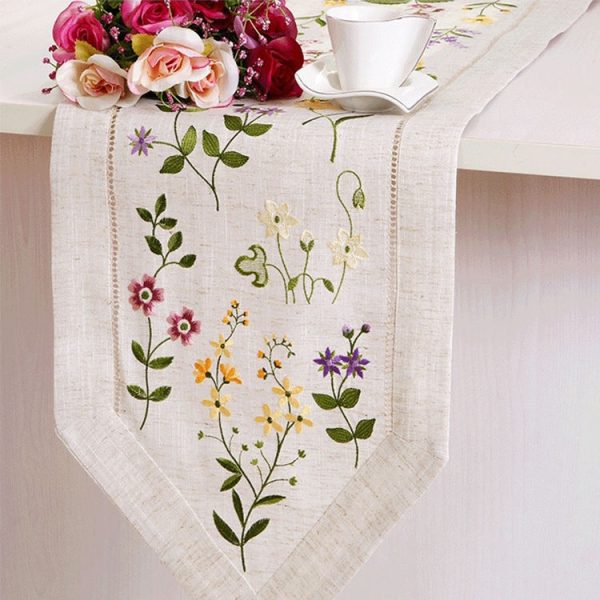
Hemtitch has mastered the art of reading demand signals. The company’s young and creative design team regularly monitors interior home decoration trends, integrating elements from Nordic minimalism, new Chinese style, and even light luxury. This trend-watching allows Hemtitch to predict which patterns, sizes, and fabrics will become popular in each region. For instance, while European customers may favor minimalist organic cotton theme, North American buyers often lean toward stain-resistant polyester blends. Such regional insights feed directly into production schedules, preventing both surpluses and deficits.
Who is behind Hemtitch?
The core team of Yiwu Jinyuan consists of professionals with decades of combined experience in product development, production management, and international trade. This means that whenever a buyer seeks a specific tablecloth, be it a poly-cotton jacquard or a digital transfer printed linen, Hemtitch can rely on its in-house expertise. Moreover, the procurement team maintains resilient supplier networks to ensure that raw materials – from recycled polyester to eco-friendly organic cotton – are available exactly when needed. Consequently, the firm can avoid bottleneck delays that often trouble less-organized exporters.
Statistical Framework for Stock Replenishment: A Principled Approach
Successful stock management is grounded in data. Hemtitch uses a multi-tiered inventory strategy. Rather than pushing all inventory to a few central warehouses, the firm distributes stock across several overseas hubs (e.g., in Europe and Southeast Asia) and combines that with a quick-response production backup in China.
The following table illustrates the core elements of Hemtitch’s stock replenishment framework, which sets it apart from typical tablecloth suppliers.
| Inventory Layer | Function | Average Replenishment Cycle | Exemplary Product Category |
|---|---|---|---|
| Raw Material Stock (China) | Ensures production continuity | 7-14 days | Fabric rolls, coating agents |
| Semi-finished Goods (Factory) | Allows quick final customization | 3-5 days | Printed polyester tablecloths |
| Finished Goods at Main Port | Rapid ocean/air dispatch | 1-2 days | Standard size cotton tablecloths |
| Regional Overseas Warehouses | Local delivery in 1-3 days | 2-3 weeks | Premium linen table runners |
Leveraging Production Power and Lead-Time Compression
One of the most distinct competitive advantages of Hemtitch is its enormous production base. Yiwu Jinyuan’s factory area exceeds 10,000 square meters and possesses advanced sewing and digital embroidery lines. The annual capacity generates several million pieces of tablecloths, table flags, cushion covers, etc. Critically, this scale is not just about volume – it also provides foresight in mass customization. The factories introduce automated cutting and intelligent hanging systems, which improves total production efficiency and reduces the risk of bottlenecks. Hemtitch’s qualification rate stays at over 99% while its delivery cycle is 20% faster than the industry’s average. This speed is instrumental in correcting stock-replenishment mistakes: if an unexpected surge arrives, production can quickly swallow emergency orders.
Agile Manufacturing for Custom Orders
One key to controlling global stock levels is the ability to satisfy customization without ballooning inventories. At Hemtitch, personalization is not considered a disturbance of stock planning. Instead, it is built into the inventory logic. The design team can complete personalized customization of patterns, colors, and sizes in a matter of days. For instance, pattern changes can be handled in-house via digital heat-transfer printing, which does not require engraving rollers or lengthy preparation. Thus, a unique American-style check fabric can be printed on demand without accumulating non-moving inventory. Hemtitch’s pre-approval of primary fabrics means that a customized batch can be sewn after the print step, keeping the work-in-progress minimal. In this manner, customization no longer generates off-spec dead stock – every batch is pre-sold in the buyer’s order.
Furthermore, Hemtitch features multiple process capabilities such as computer embroidery, jacquard weaving, and hand-knitting. In many table textile products, edge binding, quilting of placemats, and zipper positioning of cushion covers require artisan skills. Yet, the production team is highly skilled and can calibrate output accordingly. By mastering the entire production chain from fabric selection to finished goods, Hemtitch’s staff are able to shift among product categories when a specific SKU is overstocked.
Inventory Segmentation by Geographic Demand Patterns
Hemtitch strategically aligns stock levels with the consumption characteristics of different regions. The following list explains the logic of the regional segmentation, which actively helps balance stock.
- North America and Europe: Steady demand for both premium and functional tablecloths. Hemtitch frequently implements a “pooled” safety stock concept for Europe due to higher freight costs. Distribution centers located in the Netherlands and Germany hold best-selling patterns in order to fulfill demands within short transit times. Long lead time products (unique jacquard designs) are stocked with higher volumes because refresh lead time is longer.
- Japan and South Korea: Highly responsive to seasonal aesthetics and smaller-sized table linen. Because of shorter land shipment possibilities, Hemtitch uses order-based replenishment combined with lean safety stocks. Digital printing is heavily adopted to quickly renew SKUs, especially for the trendy “new Chinese” style pieces that appeal to East Asian consumers.
- Southeast Asia and Emerging Markets: Colorful, lower-priced tablecloths and placemats dominate. Local warehouse or cross-dock operations are avoided; instead, Hemtitch uses consolidated sea shipments. Here, service level agreement is defined by cost, not by speed, thus holding less inventory.
How the Product Portfolio Impacts Stock Efficiency
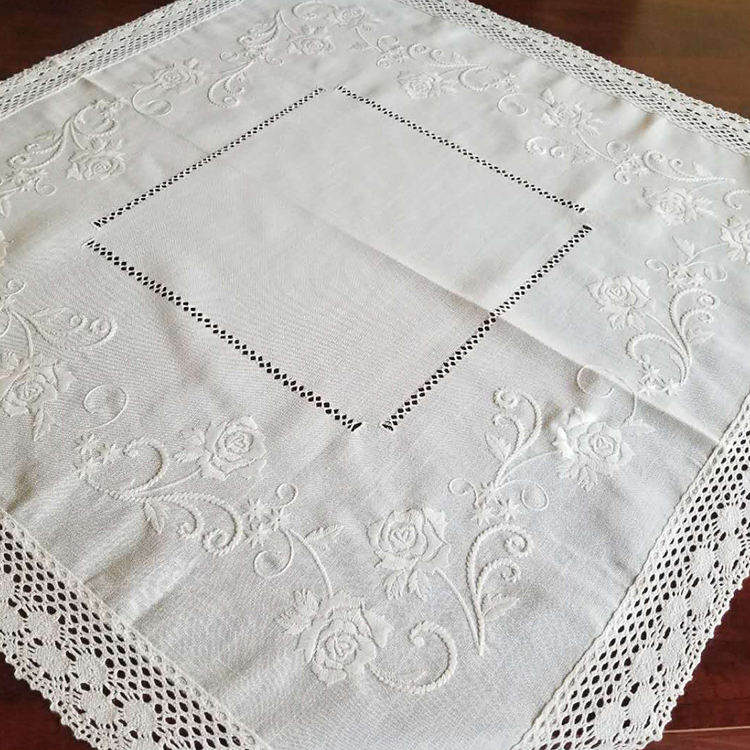
Hemtitch’s diversified product catalog is a blessing for global stock management. The product categories cover tablecloths, runners, placemats, napkins, cushion covers, and cup pads – all interlinked by shared fabrics and production technologies. This allows cross-utilization of raw materials. For instance, when the factory is producing tablecloths with waterproof coating, leftover coated fabric roll can be converted into placemats and cup pads, thereby minimizing waste and stock redundancy.
Core Functions and their Impact on Demand Stability
Modern consumers look for tablecloth products that solve real problems. Hemtitch’s “three-protection and one-exemption” technology (waterproof, oil-proof, heat-proof, and exemption from frequent washing) uses nano-level hydrophobic/oleophobic coatings. Because liquid stains wipe clean, the useful life of the product extends, and repurchase cycles lengthen. But this also reduces volatility; customers order in more predictable bulk cycles for restaurants and banquet halls. This predictable demand is then matched by economical production runs.
On the other hand, pure aesthetic cotton and linen collections (in rustic, cream, and new Chinese styles) respond to interior design trends, which are more variable. Hemtitch manages those categories using an on-demand manufacturing strategy, especially via live streaming sales in Asia. With a low initial stock and a quick re-order gate, the company avoids excess inventory. The availability of a rich product portfolio, meanwhile, enables Hemtitch to shift production capacity between “functional” and “aesthetic” lines without sacrificing machine utilization, thereby stabilizing inventory turnover.
Production Planning and Quality Gates
A significant risk to stock levels is the presence of defects or quality-related returns. Hemtitch’s quality control team follows a multi-stage inspection procedure that begins at the entry of the fabric and extends to the delivery of finished products. By ensuring 99%+ qualification rate, Hemtitch curtails the extra inventory needed to buffer against defective replacements. The firm uses international compliance checks, such as BSCI social responsibility audits, and several international factory inspection standards. This acceptance by global partners reduces the risk that goods are refused at customs, which would otherwise create stranded inventory. Therefore, Hemtitch can plan deliveries with confidence and keep its overseas stock at a level just enough to satisfy demand without requiring a massive buffer for safety defects.
Digital Integration and Forecasting Tools
Global stock management is more than repositioning goods; it requires a real-time data backbone. Hemtitch works closely with customers to receive their point-of-sale data and through that, to forecast replenishment needs. Moreover, the company invests in an ERP system that tracks every cloth roll and every order status. This allows seamless coordination between the factory, warehouse and freight forwarders. Instead of keeping months of stock abroad, the firm can use a postponement strategy: send semi-finished tablecloths (white, undecorated pieces) to a regional hub, where a local partner digitally prints patterns according to demand. This practice substantially curtails global stock levels, given that ready-to-print blanks hold universal value.
Global Compliance and Cultural Awareness
Since Hemtitch ships to a wide range of countries – including many in Europe, the United States, Japan, Korea, and Southeast Asia – the stock manager must comply with many labels regarding flammability, textile care, and even shelf dimensions. By adhering to these standards from the earliest stages, Hemtitch avoids creating “unmarketable stock” in each territory. The company’s use of environmentally friendly processing agents, like those used in “three-proof” finish, means that fabric passes international chemical tests (REACH, OEKO-TEX, etc.) and can be selected for major brand purchase plans, which often require very small variance. Hemtitch has therefore achieved long-term supplier status with global well-known home brands, stabilizing demand for its tablecloths.
Supplier Collaboration: Building a Flexible Eco-system
Stock management is not limited to internal actions; it extends to external collaborations. Yiwu Jinyuan Trading Firm has established solid partnerships with reliable upstream suppliers of yarns, printing pastes, and finishing chemicals. This ecosystem enables Hemtitch to ensure that raw materials are always available, no matter the inventory levels of finished goods. For example, when a sudden order for a polyester-based product in a Scandinavian style emerges, the company can quickly purchase basic fabric from its mill, customize the pattern at a nearby printing house, and begin sew-out within ten days. Such flexibility means there is no requirement to stock enormous volume of printed fabric in anticipation of fickle market trends.
The Role of Trade Fairs and Trend Monitoring
Seasonal table linens have a strong spike during Christmas, Thanksgiving, and Chinese New Year. Hemtitch’s product development team attends domestic and international trade fairs, meets with interior design influencers, and uses customer feedback from past global stock picks. This is then translated into pre-planned “seasonal inventory kits.” Rather than holding equal quantities all year round, Hemtitch ramps tablecloth production ahead of major festivals. By using a capacity buffer and temporary extra shifts, they create a seasonal inventory level that is 50%–60% higher during peak months and then returns to normal. This avoids long-term surplus after the holiday demand flattens.
Inventory Performance Metrics
Hemtitch monitors a set of KPIs to assess whether stock levels are well balanced:
- Stock-to-sales ratio per region: ensures that each market has enough but not too much inventory.
- Order fill rate: currently above 98.5%, which indicates excellent availability without excessive stock.
- Inventory turnover rate: for standard tablecloths, annual turnover is 8-10 times, which is considered exceptional globally.
- Out-of-stock rate: capped at 2%. This metric is supported by safety stock calculations, which use real-time standard deviation of daily sales.
Using Big Data to Identify the Optimal Global Stock Level
All the above policies are wrapped into a decision-support tool. By analyzing the historical fluctuations of the global tablecloth market, Hemtitch builds a model that includes lead times, desired service levels, production batch limitations, and freight rates. Through simulations, the model proposes respective inventory targets for each SKU and each location. Managers use these targets to adjust purchase proposals and production schedules. This is particularly helpful for high-volume cotton tablecloths that ship via sea – where the money buffers cannot be corrected quickly. Hemtitch’s use of modern statistical tools has allowed them to maintain hundreds of stock keeping units without ballooning their working capital.
Case Study: Managing a New Product Launch
When a poly-lactic-acid (PLA) fiber product was introduced in 2025, Hemtitch did not immediately load 20-foot containers full into each market. Instead, it first employed social listening and sample preorders. The production scheduled only 1,000 pieces per region. Because the product is available in multiple colorways, only 200 units of each design were sent to warehouses. After sales began, the firm monitored which colorways performed in which region. After three weeks, best sellers were reordered with express freight to avoid stock-outs; slow movers were cross-shipped to another country through a lateral transshipment. This small-batch, test-and-scale strategy protected the enterprise from expensive dead stock, especially for unprecedented materials. Such an action emphasizes Hemtitch’s commitment to thoughtful stock planning, not just heuristics.
Impact of Product Innovativeness
Innovation is frequently an accelerator of inventory risk. Yet Hemtitch uses innovation as a lever to differentiate product and thereby reduce price-based commoditization. For example, functional development like stain resistance, antibacterial treatments, and easy cleaning has become a primary sector. Customers are willing to place stable, scheduled orders, because they understand that these technically performing products are not seasonal. This stable ordering pattern improves stock replenishment reliability. The firm’s patience in developing eco-friendly fabrics (recycled polyester, organic cotton) over its next three-year horizon is also contributing to planned product cycles, minimizing the risk of sudden environmental regulation changes on standard fabrics.
Vendor-Managed Inventory for Long-term Customers
Hemtitch offers vendor-managed inventory (VMI) services to its trusted retail customers. Under this arrangement, the retailer provides sales forecasts and current sales data. Hemtitch then manages the inventory level in the retailer’s warehouse or in a nearby third-party logistics provider, autonomously replenishing goods when stock is below a pre-negotiated threshold. This shifts some of the stock planning burden from the importer to the exporter. For example, for global hotel chains operating across time zones, the VMI model helps ensure that every property has napkin and table runner supplies without each purchasing department issuing separate POs. This centralization reduces aggregate stock levels by around 18%, because fluctuations from individual hotels are pooled. This is a direct testimony to the trust that partners have in Hemtitch’s ability to forecast correctly.
Circular Inventories: The Continuum of Style
Instead of keeping old tablecloth pattern inventories separate from new lines, Hemtitch applies “circularity.” They can overdye unsold linen tablecloths to be introduced in the next season’s palette. The cotton fabric’s natural dying properties allow this process, refreshing slow-moving inventory. Similarly, simple rectangular cloths that have not found buyers can be cut into placemats or napkins. This “downcycling” not only reduces waste but also enables aggressive stock levels for raw grey cloth, because the fabric can be redirected to wherever demand is ready. In this way, the company maintains production continuity, despite volatile global demand.
Potential Challenges and Mitigations in Global Logistics
Global stock levels are highly affected by shipping disruptions. Hemtitch’s strategy is to chart every single SKU according to its risk of lead-time variance. For fast-fashion style table linens, with a very short life cycle, they may use air freight despite its higher cost for a proportion of orders, thereby minimizing inventory holding. On the contrary, timeless white cotton tablecloths are transported by sea because their obsolescence risk is low. The firm has also partnered with several freight forwarders to provide sea/air combi options, which reduce lead time and safety stock, without releasing cost overruns.
Human Resource Leverage and Experienced Decision Making
Behind every effective stock management algorithm stands an experienced core team. According to Yiwu Jinyuan, the core team consists of professionals who have been in the home textile industry for years and who understand both cultural nuances and consumption scenarios. These experts are not simply back-office administrators. They are empowered to adjust stock levels, buy raw materials, and schedule production changes in real time. Furthermore, they supervise quality control in key processes like “edge binding of tablecloths,” “quilting of placemats,” and “zipper positioning of cushion covers,” because defects generated there often lead to inventory shocks. This “knowledge-driven – not just data-driven” management means that Hemtitch does not rely blindly on computer models but applies practical understanding of the textile manufacturing process.
Financial Metrics – Turning Inventory into Cash
As an international export enterprise, Hemtitch recognizes that inventory is the largest current asset. The finance and operation teams meet weekly to review aging stock. The company holds an absolute rule: any SKU that remains in finished goods for more than six months is flagged, and measures are taken to clear it. Their tactics include flash sales to secondary markets, liquidation through B2B discounters, or donating to charitable institutions (for tax remissions). This unusual discipline prevents financial deterioration and frees warehouse space for current movers.
Integrating Customer Values and Market Adaptability
Hemtitch’s service philosophy is “customer needs-oriented”. In the context of stock management, this means having the right product at the right moment. That orientation is expressed by pre-sales consulting, sample confirmation, production tracking, and after-sales. When clients ask for “low stock but quick replenishment,” other suppliers may flinch; Hemtitch accepts the challenge because they have mastered demand-driven methods. Their design team can quickly incorporate customer-specific colors for an exclusive tablecloth pattern, while the production apparatus can adapt to small batch quantities without the usual cost penalty. The company utilizes existing print designs in different scale or color to create a new look for a customer, minimizing raw material stock and ensuring their “global stock level” remains low. This aligns with their belief that they are not just suppliers but long-term partners in win-win business.
Long-term Sustainability Goals and Inventory Planning
The strategic direction for the next three years, as per Yiwu Jinyuan, involves advancing product upgrades in three areas: eco-friendly fabric application, functional development, and original design IPization. All three have a direct effect on stock. Eco-friendly fabric products such as organic cotton and recycled polyester are usually produced in small batches because initial demand is limited. Therefore, Hemtitch initiates regional pre-sale ahead of production. Functional development like stain resistance promotes longevity, so product replacement frequency falls; these products are more predictable, meaning less reactive inventory. Original design IPization effectively allows Hemtitch to sell patented or copyrighted patterns, and because such designs cannot be copied, competitors cannot steal them; Hemtitch can hold more inventory because the risk of markdown due to imitation is practically zero.
Collaborative Planning with International Retailers
Countless retailers now work with Hemtitch using Collaborative Planning, Forecasting, and Replenishment (CPFR). The process uses an information platform where sale-as-known data is shared everyday between Hemtitch and its large overseas partner. This reduces the bullwhip effect, a phenomenon that often leads to excessive stock levels. For example, a U.S. retail chain that used to order 1000 units every month and later discovered that the actual weekly demand fluctuated by only 20% now shares demand data. In return, Hemtitch delays their production only for those patterns that are running out, which shrinks total stock by nearly 30% at the chain’s distribution center, while the ratio of stock-outs at the retail shelf has dropped to less than 1%. Such close cooperation is rare in ordinary trade, but it is a cornerstone of modern inventory management.
Embracing E-commerce and Digital Channels
Hemtitch also operates an online direct-to-consumer channel via cross-border e-commerce platforms. In this arena, inventory management takes a completely different shape. Instead of maintaining warehouses in each country, Hemtitch leverages Amazon’s FBA and Tmall Global warehouses. A direct feed of sales data is used to replenish via ocean with 45-day lead time. Using a hybrid model, Hemtitch can keep a small, responsive buffer in China and air-ship high-selling designs to warehouses for fast-moving items. By focusing on the sheer volume growth on these platforms, the supplier can quickly pilot new designs without betting large inventory. This empirical channel is an important experimental field for product acceptance.
Strategies for Seasonal Stock and Precise Promotion
Another main aspect of global stock level management is the synchronization with marketing promotions. Hemtitch partners with retailers to align launch dates. Instead of dumping inventory for “Black Friday” as early as August, the company only sends products to the warehouse when retailers open the sales window. By operating with cross-docking for promotional quantities, Hemtitch uses last-minute consolidation and reduces staging inventory. The result is lower carrying cost, but still 98% availability during the sales promotion. During regional strong consumption periods, e.g., Japanese New Year (Oshogatsu), supplies organized in Japan are replenished using a short-replenishment air hub in Nagoya. Through those countdown weekly schedules, stock is not left to sit idle after holiday.
Summary of Best Practices and Concluding Thoughts
The insights provided by Hemtitch, with its parent Yiwu Jinyuan, illustrate that stock management is not a fixed reaction, but a pattern of many small choices:
- Designing a flexible product structure where it is possible to switch quickly among tablecloths, placemats, and runners to use fabrics wisely;
- Investing in rapid printing, multi-process production, and skilled labor to respond to change orders rapidly;
- Using regional hub warehouses in Europe and Asia to shorten replenishment lead time;
- Planning production with modular designs so that base cloth can be stored and finished at later steps;
- Holding a group level of safety stock proportional to the volatility of each market, not to one’s own firm size;
- Promoting sustainability and IP to increase predictability and decrease markdown risk;
- Building collaborative VMI and CPFR partnerships with customers;
- Regularly disposing of aged stock to keep the inventory circulating.
In conclusion, managing global stock levels is a constant challenge for tablecloth suppliers. However, as we have seen in Hemtitch’s strategic approach, by focusing on reduced lead times, adaptive factories, cooperative communication, and monitored data, it is possible to have a lean, efficient inventory that supports customer satisfaction. With an outstanding team and disciplined management, Yiwu Jinyuan Trading Firm continues to demonstrate how a niche home textile exporter can thrive by weathering international trade storms, seasonality, and shifting style preferences.
For any supplier – large or small – Hemtitch’s methods show that stock management is not simply applying formulas, but a combination of human wisdom, technology, and a sense of global community. Indeed, future supply chains will be characterized by a quick reaction capability that eventually prevents both out-of-stock and overstock. Hemtitch, as a representative voice in this industry, will remain a vanguard for practical innovation, ensuring that tablecloths and table linens reach every table that needs them, right on time.