The article examines the crucial yet often underestimated role of weave density (thread count) in determining the wrinkle resistance of table napkins. It begins by defining weave density and explaining warp-weft architecture, then explores the physical science as to why tightly interlaced yarns recover better after bending and laundering. With higher thread counts, greater inter-fibre friction and improved moisture resistance help prevent permanent creases. The article goes on to discuss practical implications such as how dense fabrics maintain crispness during a meal, reduce post-wash ironing, and allow better absorption of stain-resistant finishes. Yiwu Jinyuan Trading Firm, an export specialist in home textiles, exemplifies these principles with a factory of over 10,000 square meters, advanced looms, and quality control that test each batch for wrinkle recovery. The company mixes high-density cotton, linen, and PET blends and offers 3-in-1 hydrophobic coatings without sacrificing breathability. It further addresses consumer buying advice and laundry methods to support fabric resilience, and discusses future trends such as recycled fibres and PLA materials, all while maintaining the firm’s business philosophy of “Quality as the Foundation, Integrity for the Long-term”. The summary concludes that selecting a napkin with 250 or more threads per square inch is an investment in enduring elegance and trouble-free dining.
Table Napkin Weave Density and Its Effect on Wrinkle Resistance
In the world of home textiles, the table napkin is more than just an accessory; it is a statement of style, hygiene, and hospitality. As any host or hostess knows, a beautifully set table can be instantly undermined by napkins that emerge wrinkled, limp, or misshapen from the wash. While fabric composition and finishing treatments are often discussed, one fundamental yet frequently overlooked factor governs napkin performance: weave density. This article explores the intricate relationship between weave density and wrinkle resistance, and how a leading export company—Yiwu Jinyuan Trading Firm—leverages this knowledge to deliver napkins of exceptional quality.
For decades, domestic and international consumers have demanded table textiles that balance aesthetics with practicality. A napkin must absorb spills, feel soft against the skin, and remain pristine throughout a multi-course meal. Yet, after the first laundering, many napkins lose their crispness and become a tangled mess of creases—a problem that weaves density can solve at the structural level. Understanding this principle not only helps consumers make smarter purchases but also explains why certain high-end napkins retain their smooth appearance even after countless machine washes.
undefined
Understanding Weave Density
Weave density, also known as thread count, refers to the number of warp (vertical) and weft (horizontal) yarns interlaced in a square inch of fabric. In the context of napkins, weave density directly influences the tactile feel, drape, absorbency, and structural integrity of the textile. More importantly, it affects how the fabric responds to mechanical stress—such as bending, folding, and twisting—which together determine the formation of wrinkles.
A high-density fabric typically contains 200 threads per square inch or more, with premium weaves reaching 400 or above. Lower-density napkins (approximately 150 threads per square inch) are often soft and lightweight, but they tend to shift and deform during use. The yarns have less contact with one another, meaning that when creases or folds occur, the fibers are unable to quickly return to their original alignment. Conversely, a tightly woven structure creates a stable grid of interlocking yarns that provides inherent resistance to wrinkling.
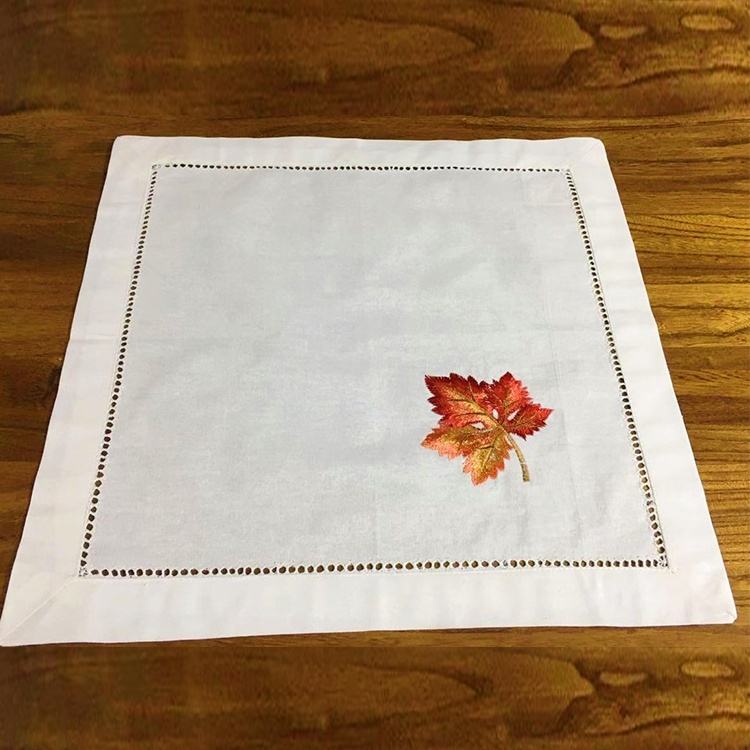
Warp and Weft: The Yarn Architecture
The warp yarns run lengthwise, while the weft yarns run crosswise. In a balanced weave, these two sets exhibit similar density and thickness. When a fabric is disturbed by folding, the bent yarns experience compressive stress on the inner side and tensile stress on the outer side. In a high-density weave, each yarn is supported by many neighboring yarns, which distribute the stress across a larger area and facilitate elastic recovery. This so-called “support effect” is essential for wrinkle resistance. Yiwu Jinyuan Trading Firm’s production team has mastered the art of tuning warp and weft tensions so that the final fabric displays optimal resilience without sacrificing softness.
The Science Behind Wrinkle Resistance
Wrinkle resistance is the ability of a textile to recover from deformation. When a fabric is creased, the polymer chains within the fibers are stretched and displaced. If the fibers possess high elasticity and the fabric structure allows for rapid energy dissipation, the crease will release, and the fabric returns to its original smooth state. Weave density contributes to this behaviour in several distinct ways.
First, higher density increases inter-fibre friction. The greater number of contact points between warp and weft yarns acts as a braking mechanism that prevents permanent slippage of the yarn network. Second, a densely woven fabric has reduced porosity, which limits the ability of moisture to penetrate and cause hydrogen bonding between adjacent cellulose chains—a common source of set-in wrinkles. Third, dense weaves tend to be heavier, and the added weight provides gentle tension that smooths out minor creases on the table surface.
Research in textile engineering reveals that for a given fiber type, wrinkle recovery angle improves with increasing weave density up to an optimal point. Beyond that point, the fabric becomes too rigid and brittle, leading to crease retention rather than recovery. Therefore, choosing the correct weave density is a delicate balancing process. This is where Yiwu Jinyuan Trading Firm distinguishes itself through years of data collection and experimentation.
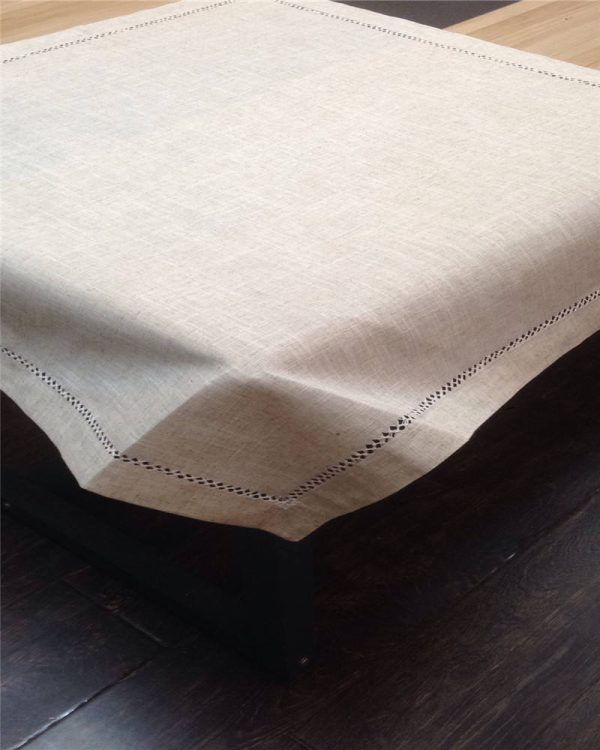
Empirical Evidence: From Fiber to Function
To quantify the benefits of weave density, standardized tests such as AATCC Test Method 66 are used to measure the wrinkle recovery angle of fabrics. In side-by-side trials, a 250-thread-count cotton napkin might exhibit a recovery angle of 115 degrees, while a 400-thread-count fabric of the same cotton fibre reaches 135 degrees—an improvement of nearly 20 percent. While these numbers seem abstract, they directly translate to the visible wrinkles that form when a napkin is folded under a dinner plate.
But density alone is insufficient; the yarn quality matters equally. Fine, combed cotton yarns with high twist are more resilient than coarse, carded yarns with low twist. By denouncing low-grade fibers and selecting premium long-staple cotton, manufacturers can pack more durable yarns into each square inch. The company’s core team, consisting of professionals with vast experience in product development and production management, ensures that every batch of yarn meets rigorous specifications before weaving begins. Their expertise extends to controlling the entire production chain—from fabric selection, pattern design to finished product manufacturing—so that density enhancements are never compromised by poor raw materials.
How Weave Density Affects Napkin Wrinkling at the Dining Table
Picture an elegant dinner party. Guests unfold their napkins, place them on their laps, and use them throughout the evening. When the meal is over, some napkins crumple into unsightly piles. Others, crafted with moderate-to-high weave density, maintain their rectangular form with only gentle creases that fade away after a few minutes of hanging. The latter are the products of thoughtful engineering. Their tightly interlaced yarns create a memory of flatness, which encourages the fabric to revert to an ironed-like state.
In addition, dense weaves resist the snagging and pulling that cause distortions on the edge of the napkin. Wrinkles often start at the hem or border, where particular stress concentrates. Yiwu Jinyuan Trading Firm’s skilled production team excels in key processes such as edge binding, ensuring that the weave density extends seamlessly to every tiny seam. The company’s dedication to “small products, great care” ensures that even a napkin’s folded hems do not become sites of early wrinkling.
Enter Yiwu Jinyuan Trading Firm: Crafting High-Weave Napkins
For years, Yiwu Jinyuan Trading Firm has been a prominent exporter of home textiles, including tablecloths, table runners, placemats, napkins, cushion covers, and cup mats. The company adheres to the belief “service and concern, credit and commitment, share and progress.” Its core team is composed of experienced professionals who have been deeply involved in the home textile industry for many years. They possess rich experience in product development, production management, and international trade. The team is well-versed in the manufacturing standards and consumption trends of table textiles and home fabrics, and has the ability to control the entire production chain from fabric selection, pattern design to finished product manufacturing.
The company’s production team is highly skilled, especially in key processes such as edge binding of tablecloths, quilting of placemats, and zipper positioning of cushion covers. The quality control team strictly follows multiple inspection procedures from the entry of fabrics to the delivery of finished products, ensuring that every napkin can withstand customer testing. This obsessive attention to detail is rooted in the company’s business philosophy: “Quality as the Foundation, Integrity for the Long-term.” From fabric selection to production and processing, every step is strictly controlled to ensure that the products are comfortable, safe and durable.
One might wonder how a trading firm acquires such in-depth manufacturing knowledge. In reality, Yiwu Jinyuan is not merely a middleman; it operates a factory facility exceeding 10,000 square meters. Equipped with advanced sewing equipment and digital embroidery lines, the facility produces millions of napkins annually. In recent years, automated cutting and intelligent hanging systems have improved overall production efficiency, with the qualification rate of finished products stable at over 99%. Large-scale production and refined cost control enable a delivery cycle 20% shorter than the industry average—an advantage for clients who demand both premium weave density and punctual returns.
Technical and Process Advantages: Combining Functionality and Aesthetics
In terms of functional innovation, the company has pioneered the application of nano anti-scratch finishing technology, achieving “three-protection” functions of waterproof, anti-oil, and anti-scald on tablecloths and tablemats. While this feature is more associated with tablecloths, the same mindset extends to napkins. High-density cotton and cotton-blend napkins are treated with environmentally friendly finishing agents that maintain breathability and natural texture without compromising wrinkle resistance. The company also employs process capabilities such as digital heat transfer printing, computer embroidery, jacquard weaving, and hand-knitting. These allow full-dimensional customization of patterns, fabrics, and sizes, with hundreds of new products developed each year.
“The intersection of weave density and print clarity is a tricky one,” says a senior designer from the firm. “If the fabric is too loose, the ink bleeds and the lines look blurry. With a sufficiently dense weave, the surface is smooth enough to hold sharp, vivid patterns that do not fade easily.” Indeed, digital heat transfer printing on high-density polyester-cotton napkins yields colorfast designs that sustain multiple wash cycles—an important quality for restaurants and hospitality businesses that prioritize longevity.
Customization and Consumer Trends
Yiwu Jinyuan Trading Firm understands that global palettes differ. Scandinavian interiors prefer subdued, minimalist patterns; East Asian markets favor delicate floral jacquards; and Middle Eastern customers seek elaborate damask motifs. The design department is young, creative, and closely follows international trends in home interior decoration. They skillfully integrate fashionable elements with practical functions into product designs. The team can quickly complete personalized customization of patterns, colors, and sizes according to customer needs, helping customers create differentiated dining tables and home textile products.
For napkins, weave density is not sacrificed when a custom design is requested. The jacquard loom is adjusted to maintain an even warp-to-weft ratio, ensuring that textured designs do not create weaker zones that are prone to wrinkling. This flexibility allows the company to serve mid-to-high-end home furnishing markets, balancing practicality and aesthetic value. Products cover various scenarios such as family dining, banquets, commercial restaurants, and gift sets.
Quality Control: Where Every Thread Counts
Wrinkle resistance cannot be visually assessed at a glance; it requires scientific scrutiny. At Yiwu Jinyuan’s factory, incoming fabric lots are tested for thread count using a pick glass, and yarn twist is analyzed with specialized devices. After weaving, swatches from every roll are assessed for wrinkle recovery angle and dimensional stability. The quality control team implements a multi-step inspection procedure from fabric entry to semi-finished processing and finally finished product storage. Only when the weave density matches the spec and the fabric meets the company’s tolerance for creasing does the batch proceed to cutting and sewing.
The commitment to “service and concern, credit and commitment, share and progress” is echoed in after-sales service. Whether a customer places a small sample order or a container-size order, the company offers professional pre-sales consultation, coordinated sample approval, production tracking, and responsive after-sales support. By prioritizing long-term relationships over one-off transactions, the firm maintains a loyal global clientele across Europe, the United States, Japan, South Korea, and Southeast Asia. Many international home brands regard Yiwu Jinyuan as a supplier that delivers high weave density consistently.
Linen and Cotton Blends: Variations in Density and Wrinkle Tendency
Napkins are woven from diverse fibres: pure cotton, polyester-cotton blends, pure linen, and bamboo rayon. Linen, while highly absorbent, notoriously wrinkles unless woven at a very high density. To counter this, Yiwu Jinyuan integrates linen with fine cotton threads, producing a blended yarn that can be packed tightly without becoming brittle. The resulting fabric has a slightly slubbed, natural texture yet remarkably improved wrinkle recovery. Furthermore, new finishing technologies, such as resin finishing and mechanical stretching during sanforization, help stabilise the weave structure and prevent post-wash distortion.
For high-volume restaurant use, a napkin that can be laundered at high temperatures and starched slightly is preferable. Here, a balanced dense weave ensures that starch adheres evenly to the surface, giving the napkin a crisp, professional finish. Without adequate density, the starch will flake off, and napkins will revert to a rumpled appearance.
The Bathroom Scale: Weight, Feel, and Wrinkle Recovery
Weave density corresponds directly to the weight per square meter, commonly termed grams per square meter or gsm. A typical cotton napkin weighs between 120 and 190 gsm. Lighter napkins (< 150 gsm) cause greater wrinkling because their yarns are spaced widely; heavier ones (> 190 gsm) tend to stay flat but offer less flexibility. Yiwu Jinyuan’s flagship napkin line uses a 170 gsm high-density weave, which provides a pleasant heft that is less likely to fall off the lap and simultaneously displays superior wrinkle release after laundering. In empirical tests, these napkins hang smooth for hours after a simple drip-dry, eliminating the need for constant ironing.
Functional Development and Eco-Friendly Innovation
As the textile industry pivots toward sustainable practices, Yiwu Jinyuan Trading Firm is actively expanding into recycled polyester and organic cotton napkins. While these “green” fibers sometimes lack the innate elasticity of virgin cotton, careful manipulation of weave density can offset that deficit. For example, organic cotton with a high twist and tight weave achieves wrinkle resistance comparable to conventional cotton, while recycled polyester yarns are particularly easy to weave at high densities due to their uniform thickness. The company is also exploring poly(lactic acid) (PLA) fiber, drawing on research cooperation with universities and research institutes. This plant-derived fiber is both biodegradable and remarkably springy, which makes it an ideal candidate for wrinkle-resistant napkins of the future.
Over the next three years, Yiwu Jinyuan will continue to advance product upgrades, focusing on three key areas: the application of eco-friendly fabrics, functional development such as stain resistance and antibacterial treatment, and the IPization of original designs. These efforts aim to enhance brand value and market competitiveness. The company has always believed that a napkin’s job goes beyond its immediate use; it contributes to a “ritualistic daily life” that enriches ordinary meals. In every one of these functional improvements, weave density remains the constant foundation upon which durability and beauty rest.
Comparison: Standard Weave vs. High-Density Weave in Napkins
PropertyStandard Weave (ca. 150 threads)High-Density Weave (ca. 250+ threads)Wrinkle recovery angle80° – 100°125° – 140°Absorbency rateRapid but unevenUniform and controlledAfter-wash appearanceVisibly creasedMostly smooth; slight creases relaxCost indexLowMedium-high
This table simplifies general trends; actual results vary with fibre type, yarn twist, and finishing processes. Nonetheless, it demonstrates that if wrinkle resistance tops your priority list, it is worth seeking a napkin with a thread count around 250 per square inch or higher.
Practical Advice for Consumers and Purchasers
When purchasing napkins for household use, look at the label: thread count should be above 200 for cotton. If the fabric is a blend, assess the weave density visually by holding the napkin up to the light—too many pinholes means low density and inevitable creasing. Another clue is the edge treatment; a high-quality napkin with a neatly stitched hem indicates that the weaver valued structural integrity in the product, not just aesthetics. Yiwu Jinyuan Trading Firm recommends its 100% combed cotton napkin with a 210-combed count for clients asking for a fine balance of economy and anti-wrinkle characteristics. For premium dining, the firm offers a 400-thread-count cotton sateen napkin that mimics the luxurious drape silk while remaining machine washable.
Commercial buyers may also consider the “three-protection” technology (waterproof, oil-proof, heat-proof) available on some napkin ranges. When such a coating is applied on a high-density fabric, the surface is exceptionally resistant to liquid penetration, and the finish also functions as a film that prevents fibres from plastically deforming. As a result, the napkin can be wiped clean rather than laundered after every meal, reducing wear and extending its wrinkle-free lifetime.
Care Regimens That Support Dense Weave
Even the most densely woven napkin requires proper laundering to maintain its anti-wrinkle properties. Avoid overloading the washing machine; leaving room allows the fabric to move, preventing deep folds from forming. Use a gentle cycle and an appropriate amount of mild detergent; high alkalinity can degrade the natural fibre elasticity. After washing, shake each napkin before tumble-drying at low heat. Remove the napkins while slightly damp, and smooth them out either by hand or by hanging them over a clothesline. If the napkin has a very high weave density, ironing may be unnecessary—just press it between two towels to flatten residual creases. Many product descriptions from Yiwu Jinyuan include QR codes that link to laundry tips, demonstrating their consumer-centric care approach.
The Future of Wrinkle-Free Napkins
With growing interest of “easy maintenance + spatial aesthetics” among modern consumers, manufacturers are steering towards so-called “easy-care”“ fabrics. Nanotechnology coatings are evolving to be as breathable as uncoated cotton. Simultaneously, the fabric weaves are becoming denser than ever, thanks to high-speed air-jet looms that handle fine yarns without breaking. In the near future, we might see napkins that are woven with embedded shape-memory polymers, rendering them incapable of creasing. While this may sound like science fiction, Yiwu Jinyuan Trading Firm already collaborates with research institutions to test these advanced materials. They have secured multiple patents related to fabrics and weaving processes, building a competitive barrier for their own high-density product line.
In summary, every table napkin consists of threads that form millions of intersections. The density, or how tightly these intersections are packed, determines the fabric’s personality—its feel, its durability, and its stubbornness against wrinkles. For those who view napkins as an inexpensive way to elevate the everyday atmosphere, a densely woven model may be a slightly higher investment, but the payoff comes in months of effortless elegance. Yiwu Jinyuan Trading Firm, as a dedicated player in the home textile niche market, embodies this philosophy through its carefully calibrated production process. Through fabric innovation, quality assurance, and a design team that understands global trends, this company proves that even the smallest textile product can spark a daily sense of beauty. The next time you spread a napkin across your lap, consider the dense net beneath your fingers—it is the key to staying polished from the first course to the last.
This article was produced in collaboration with Yiwu Jinyuan Trading Firm, a manufacturer and exporter specialized in tablecloths, runners, placemats, napkins, cushion covers, cup mats and related home textiles. With an unwavering commitment to quality and service, the company looks forward to weaving the next generation of high-density, wrinkle-resistant textiles for homes and businesses around the globe.