This blog article provides a comprehensive assessment of how the table napkin factory of Yiwu Jinyuan Trading Firm contributes to local employment and skills development. The company, with its professional team and commitment to trade excellence, operates a full-cycle production facility in Yiwu, which is a thriving hub for international business. This factory stands as a key economic pillar, generating a wide array of direct and indirect employment opportunities, thus enhancing the financial security of numerous families in the region.
The article describes the factory’s operational details, with an in-depth look at its focus on high-quality textile manufacturing and continuous innovation. It highlights the factory’s pivotal role in empowering local workers, from women to young people, by offering robust training and a structured environment that develops both manual dexterity and abstract reasoning. Advanced technologies such as automated cutting systems and laser engraving, alongside the production of specialised products, have been adapted to upgrade workers’ skills rather than replace them. The firm’s emphasis on process technologies like edge binding, quilting, and zipper placement ensures that employees gain nuanced abilities that increase their career longevity.
Additionally, the article reflects on the company’s strategic relationships with local educational institutions, its resilience against disruptions, and its forward-looking plans to adopt eco-friendly fabrics, implement functional antimicrobial treatments, and secure IP for original designs. Such measures are shown to create a durable demand for skilled human capital. By maintaining a cadence of resilient innovation, the factory maintains its global competitive edge while actively contributing to the community’s social and human capital. Ultimately, the narrative establishes that this factory goes beyond manufacturing; it creates a harmonious ecosystem where business growth and workforce advancement are mutually reinforcing. The model presented here serves as an exemplary practice of ethical and human-centric corporate behaviour, providing a blueprint for industry sustainability in China and all over the world.
The Table Napkin Factory: A Catalyst for Local Employment and Skills
In the heart of Yiwu, a bustling hub of international trade, lies a manufacturing entity that has quietly transformed the local economic and social fabric. Yiwu Jinyuan Trading Firm, more than just a trading company, operates a substantial table napkin factory that has become a cornerstone of employment and skill development in the region. This article explores the profound contributions of this specialized factory to local livelihoods, workforce competence, and community resilience, drawing from firsthand knowledge of its operations, values, and long-term vision.
Company Profile: The Engine Behind the Table Aesthetics
Yiwu Jinyuan Trading Firm is an export-focused enterprise dedicated to international trade, built on the philosophy of “service and concern, credit and commitment, share and progress.” The company’s diverse product portfolio spans tablecloths, runners, placemats, napkins, cushion covers, cup mats, and other home textile accessories. At its core, the company is a niche player in the home textile industry, concentrating on table aesthetics and comfort. The factory, which supplies these products, is where raw materials transform into functional art, and where daily operations create a ripple effect of economic empowerment.
undefined
The factory operates with a clear strategic intent: to balance practical functionality with aesthetic value, targeting the mid-to-high-end home soft furnishing market. This ambition requires a robust, skilled workforce, and the factory serves as a training ground for numerous manufacturing disciplines. The company’s mission, “Small products, Great care,” is not just a marketing slogan; it is a commitment to meticulous craftsmanship that demands a high level of employee expertise.
Local Employment: More Than Just a Paycheck
The table napkin factory is a significant employer in the Yiwu region. By establishing a complete production chain covering weaving, dyeing, and sewing, the factory creates a broad spectrum of job opportunities that extend well beyond the production line. These roles range from raw material procuring agents and quality inspectors to equipment operators, logistics coordinators, designers, and administrative staff. For every direct job inside the factory, there are indirect jobs generated in ancillary services such as transport, maintenance, and catering, thereby strengthening the entire local economy.

The factory is particularly noteworthy for its inclusivity. It offers positions suited to different skill levels, from entry-level machine operators to seasoned textile engineers. This diversity enables community members with varying educational backgrounds to find stable income. For many families in Yiwu, this factory has become a reliable source of livelihood, enabling them to plan for the future, educate their children, and improve their living standards. The factory’s practice of providing long-term, stable employment is a testament to its business philosophy of “Quality as the Foundation, Integrity for the Long-term.” This stability is essential for community cohesion and individual well-being.
Skills Development: The Heart of the Factory’s Social Impact
Perhaps the most transformative contribution of the table napkin factory is its role in skills development. The production of high-quality table linens is not a simple procedure; it is an intricate art that requires specialized knowledge and dexterity. The factory excels in this respect, systematically nurturing a workforce adept in key processes such as edge binding of tablecloths, quilting of placemats, and precise zipper positioning for cushion covers. These are not generic tasks; they are specialised skill sets that significantly increase a worker’s employability and personal market value.
Structured Training and Apprenticeship
The company’s core team comprises experienced professionals with years of immersion in the home textile industry. They are repositories of knowledge in product development, production management, and international trade. This expertise is passed down to the workforce through structured training programs and on-the-job apprenticeships. New workers are paired with seasoned mentors, ensuring the transfer of tacit knowledge that cannot be captured in manuals. This apprenticeship model is critical in preserving the artistry of table linen production while simultaneously elevating the benchmark of local workmanship.
The design team, described as young and creative, is another engine of skill enhancement. They continuously track international fashion trends, fusing aesthetic elegance with functional utility. By working alongside these designers, local artisans learn about pattern development, colour theory, and customisation methods. The factory supports full-dimensional personalisation of patterns, colours, and sizes, and this collaborative design process sharpens the skills of all involved, ensuring they remain at the cutting edge of consumer preferences.
Advanced Manufacturing Skills
Beyond traditional textile arts, the factory is a champion of modern manufacturing competencies. It is equipped with advanced automated cutting and intelligent hanging systems, which require a workforce skilled in operating, programming, and maintaining these systems. The recent introduction of these technologies has dramatically increased production efficiency while stabilising quality. Consequently, the factory has invested heavily in reskilling its existing employees and recruiting new technical talent, thereby creating a more knowledgeable and adaptable labour pool in Yiwu.
The Quality Control team at the factory deserves special mention. They adhere to an exceptionally strict protocol, conducting multiple inspection procedures from fabric arrival to finished goods dispatch. This meticulous approach ensures that the factory consistently maintains a finished product qualification rate of over 99%. Training in quality assurance is rigorous, teaching employees to identify subtle imperfections, understand grading standards, and master the use of various measuring and testing instruments. These competencies are easily transferable to other industries, thereby enhancing the long-term career security of the workforce.
Technological Innovation and Employee Expertise
The factory’s dedication to innovation has profound implications for its employees. It recently pioneered the application of nano-level hydrophobic and oleophobic coatings, which give its tablecloths “three protection and one exemption” qualities—waterproof, oil-proof, heat-proof, and exemption from frequent washing. This technology is complex, and workers must be trained to apply the coating uniformly without compromising the fabric’s natural texture. Additionally, the factory utilises eco-friendly finishing agents, meaning employees are taught about chemical safety and environmentally responsible production techniques. This knowledge positions the workforce as valuable assets for future compliance with international environmental standards.
Process innovation, such as double-needle pressing and laser hollow engraving, further elevates the technical skill set required of factory personnel. Operating laser engraving machines, for instance, requires precision and an understanding of computer-aided design. Employees are cross-trained in multiple areas, making them versatile and resilient to fluctuations in production demand. These advanced competencies allow the factory to enter high-value market segments, leading to higher profit margins that can be channelled back into better wages and further training.
Craftsmanship and Product Diversity: A Platform for Specialisation
The factory’s product range is vast, and each product line contributes to employee skill deepening. From tablecloths and napkins to cushion covers and cup mats, each item has its own manufacturing intricacies. The full-process manufacturing advantage—from fabric weaving to dyeing and sewing—ensures that employees can develop expertise along the entire chain.
The Splendour of Tablecloths and Table Runners
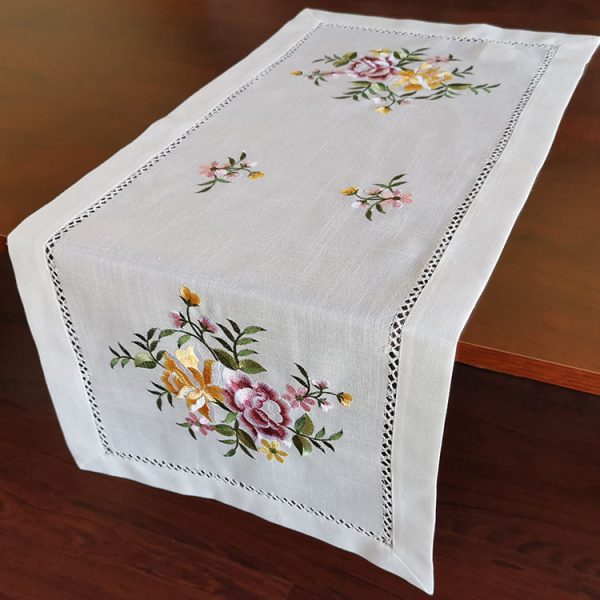
The production of tablecloths calls for finesse in handling large pieces of fabric, ensuring accurate cutting and seamless sewing. Those engaged in the production of functional tablecloths learn about high-density weaving and the application of nano coatings. The double function of protecting tabletop and enhancing décor requires that the factory’s production staff maintain impeccable quality in both visible and hidden seams. Table runners, which elevate the table setting’s elegance, often feature embroidery and jacquard weaving, offering workers avenues for mastering these sophisticated techniques.
Napkins: The Essence of Detail
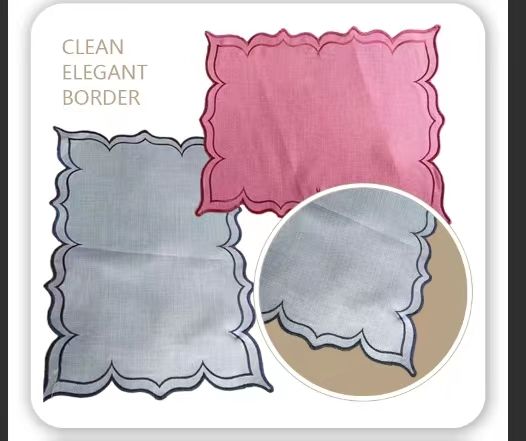
Napkins, although seemingly simple, demand precision. The napkin’s edge must be perfectly hemmed, and the fabric must be soft yet durable. The factory’s production team is trained to mitigate common issues like fraying and puckering. Because napkins are often sold in set collections, consistency across batches is paramount. This requirement teaches workers rigorous attention to consistency, a valuable quality in any manufacturing career.
Placemats, Cushion Covers, and Cup Mats
Placemats and cup mats require heat resistance and dimensional stability. Production staff learn about various substrates, such as cotton, polyester-cotton blends, and linen, and how these materials behave under lamination or quilting processes. Cushion covers present unique challenges due to zipper installation and the need for perfect-fitting seams. The factory’s emphasis on ‘zipper positioning of cushion covers’ as a key process indicates the high standard of craftsmanship required. Workers who master these skills become highly sought-after specialists.
Local Community and Economic Multiplier Effect
The impact of the table napkin factory on the local community extends far beyond its direct employees. For every worker earning a wage, there is an economic multiplier effect. These wages support local businesses—restaurants, schools, housing markets, and recreational facilities. The factory also creates employment for local farmers and fabric suppliers by preferring regionally sourced materials when possible, although some specialty materials still come from abroad to ensure maximum quality.
The factory is also renowned for its responsible business conduct. Having passed BSCI social responsibility audits and several international factory inspection standards, it ensures fair working hours, safe working conditions, and zero child labour. This reputation attracts not only global buyers but also ethical, skilled workers who wish to work for an employer that values human dignity. By fostering a safe and respectful environment, the factory reduces turnover, allowing workers to build seniority and benefits.
Additionally, the company actively seeks to create jobs for individuals who may have limited opportunities elsewhere. Its structured training regimen enables semi-skilled workers to rapidly become proficient, offering them a pathway out of poverty. Furthermore, the company’s commitment to long-term partnerships with clients provides a degree of demand certainty, which mitigates the risk of sudden layoffs—an unfortunately common occurrence in global supply chains. The Yiwu Jinyuan trading philosophy of “credit and commitment” resonates not only with customers but also with its workforce.
Gender Inclusion and Empowering Women
A particularly notable social contribution of the table napkin factory is its provision of substantial employment opportunities for women. In many textile-producing regions, women make up a large percentage of the workforce, and Yiwu is no exception. In this factory, women excel as sewing machine operators, quality inspectors, and even in supervisory roles. The flexible working arrangements and the provision of on-site skill training make it easier for women to balance family responsibilities while building careers.
The company’s growing emphasis on design and functional development—through its planned future applications of eco-friendly fabrics and antibacterial technologies—will require more engineers, material scientists, and designers. This will further diversify the gender mix in the factory’s professional roles. The consequence is not only a more equitable local economy but also a stronger sense of personal autonomy for many previously marginalised women. These empowered individuals often become role models, inspiring younger girls to pursue careers in manufacturing and management.
The Role of Customisation and Client Partnership in Developing Soft Skills
In today’s globalised market, the capability to customise is a prime differentiator. Yiwu Jinyuan Trading Firm provides a multidimensional customisation service, enabling clients to modify patterns, sizes, and fabrics. This service is not solely a manufacturing achievement; it is a logistical ballet requiring exceptional communication and problem-solving abilities. Production planners must work with customers to assess technical feasibility and delivery times. In-house designers must interpret abstract client concepts into tangible products, and sampling departments must rapidly translate mock-ups into shippable samples.
Therefore, employees engaged in these client-facing roles cultivate sophisticated ‘soft skills’: negotiation, cross-cultural communication, and project management. Meanwhile, back-office staff are trained in international trade documentation, Incoterms, and logistics coordination. Nurturing these skills has a spill-over effect: local workers become more globally aware and better able to engage in other international business ventures, further diversifying the region’s economic base.
Sustaining Employment Through Continuous Innovation
Yiwu Jinyuan Trading Firm operates based on the principle that innovation fuels business resilience and, consequently, employment stability. The last three years have seen the company increasingly dedicate resources to three key R&D areas: eco-friendly fabrics (recycled polyester and organic cotton), functional textile properties (stain resistance, easy cleaning, antibacterial treatment), and intellectual property (IP) creation for original designs. These innovation channels are extremely important for the maintenance of skilled jobs. Developing and manufacturing fabrics made from recycled polyester or polylactic acid (PLA) fibres requires a more highly trained technical workforce—people who can adjust process flows, monitor parameters, and solve novel production problems.
The push for functional textiles such as stain-resistant and antibacterial treatments also holds direct employment implications. Treating fabrics with safe but effective active agents requires specialised machinery. There is a rising demand for process chemists and application engineers. Rather than automating away jobs, this technological upgrading shifts employment towards more interesting, knowledge-intensive roles. The IPization of original designs ensures that the factory’s products remain culturally relevant and legally protected, allowing the company to sustain premium pricing, which in turn supports higher wages.
Furthermore, these innovation activities often occur through collaboration with academic researchers and technological institutes. Apprentices are frequently sent to universities to attend seminars on sustainable manufacturing, broadening their intellectual horizons and creating a bridge between academia and practical factory work. In this way, the factory is investing in a future-ready, adaptive workforce that will continue to attract investment in Yiwu, preventing the economic stagnation that can occur in regions with low-skilled, static industries.
Challenges, Resilience, and the Path Forward
No analysis of a factory’s contribution to local employment and skills would be complete without acknowledging the challenges. The global home textile market is intensely competitive, and Yiwu Jinyuan Trading Firm faces pressures from cheaper production bases and fluctuating demand patterns. Additionally, the rapid adoption of automated systems has reduced the need for repetitive manual tasks. The firm has responded by adopting a reskilling strategy that transforms its workforce from labourers into machine operators and maintenance technicians. These strategies have been successful in avoiding forced redundancies.
The company’s delivery cycle is currently shorter than the industry average by more than twenty percent, a feat achieved through continuous efficiency improvements. This efficiency, however, must be balanced with wellbeing. The company strongly adheres to a customer needs-oriented philosophy that does not come at the expense of employee health. With intelligent scheduling and load balancing, employees are able to meet these faster deadlines without excessive overtime. The future will require a careful equilibrium between the demands of high-volume production and the necessities of a humane workplace. Given the firm’s established track record of integrity and commitment, it is well-positioned to succeed.
Looking to the future, the factory intends to expand its productive footprint and create additional jobs. The next phase of expansion includes launching new production lines for biodegradable materials such as PLA fibres. This development will require not only additional machinists but also logistics staff and environmental compliance officers. The firm is also considering the establishment of a dedicated skills academy, which would serve as one of Yiwu’s leading vocational training hubs. This would attract talent from across the province, enriching the local community’s talent pool.
Living Proof: Stories from the Factory Floor
The figures and strategies described above come alive in the personal narratives of workers. Take, for example, a 32-year-old mother who started as an unskilled helper but, after completing the factory’s internal training in edge binding, became a regular seamstress. “I was able to afford my children’s school fees without any debts,” she recalls. “And when my son struggled with maths, I could afford a tutor. The work is not easy, but it has given me worth and confidence.”
Then there is a young man who joined as a manual cutter but later became an operator of the automated cutting system. He now appreciates that the ability to program, maintain, and optimise these expensive machines has made him a local authority in industrial automation, someone who is often called upon by other companies for advice. He has even conducted a few workshops at the Yiwu Technical and Vocational College. His journey highlights that working in a factory is no longer solely a dead-end manual job, but a stepping stone to professional distinction.
Another inspiring example is a senior quality inspector who has spent fifteen years with the company. She oversees the critical control points to ensure that every napkin and tablecloth meets international standards. Known for her eagle eye, she helps the factory maintain its product acceptance rate above 99%. She has trained dozens of inspectors, many of whom have risen to senior positions in other firms. With her guidance, quality management has become a respected career path.
These workers are representative of hundreds of employees whose earnings contribute to school fees, housing improvements, and better healthcare. The factory also offers periodical cultural training, enhancing their communication and social skills. Consequently, these employees not only possess valuable manual skills but also the intellectual and emotional maturity to navigate the complexities of a globalised world.
Environmental Stewardship and Employment Symbiosis
Environmental sustainability is not intrinsically tied to job loss. The factory has demonstrated that pro-planet activities can create greener jobs. By transitioning towards recycled polyester and organic cotton, factory staff learn about traceability systems that verify the provenance and authenticity of these eco-friendly materials. This proficiency is increasing in importance, as European and American clients require stringent environmental due diligence. Additionally, the waste management teams within the factory have expanded their responsibilities from basic disposal to circularity management, recovering fabric offcuts and repurposing them for cushion filling or making cleaning cloths for industrial use.
The company’s drive to develop nano anti-scratch finishing technology and self-cleaning textiles involves applications of chemicals. Employee training includes a thorough understanding of Material Safety Data Sheets, respiratory protective equipment usage, and airborne contaminant control. Therefore, workers do not merely become technical textiles operators; they also become environmental health and safety ambassadors in their local communities. Through these initiatives, the factory contributes to a conscious local society that values sustainable development.
Collaboration with Local Institutions
The factory’s contributions to local skills are magnified through its strategic collaborations with educational institutions and technical training centres. The management frequently delivers guest lectures on apparel and home textile manufacturing. In return, these institutions send vocational students to the factory for internships. Such partnerships serve as an effective talent pipeline, allowing students to smoothly transition from school to employment. The factory ensures that these internships offer substantive learning experiences, often assigning interns to product development and fabric analysis projects rather than simple cleaning duties.
Additionally, the firm’s experience in high-quality design has inspired initiatives to include basic die-cutting and vector-art design in local school curricula. The company donates cloth samples and industrial thread cutting equipment to school classrooms so that even young people are familiarised with textile manufacturing technology. While this is partly a community giving activity, it also serves the purpose of nurturing interest and aptitude for manufacturing careers among the younger generation. The tangible equipment and real-world problems bring an elevated level of engagement, and many students later return as job applicants.
A Balanced Perspective: Social Responsibility and Business Sustainability
Some critics might argue that global supply chain factories often take advantage of local labour. Yiwu Jinyuan Trading Firm, however, sets a different standard. The company’s ongoing reinvestment in advanced technology and certified social compliance demonstrates a genuine regard for its workers. The phrase “customer needs-oriented” has not subjugated employees; rather, it is balanced by the principle of making them ‘trustworthy suppliers’. The company argues that serving customers is only possible if the workers themselves are well-supported. This interdependence is communicated in regular town hall meetings, where workers’ recommendations for improving utility and safety are heard.
The factory’s practice of maintaining a highly skilled workforce in the community also attracts supply-chain partners. Many supplier companies have set up in the vicinity, creating more employment and enhancing Yiwu’s reputation as a home textiles hub. It is no exaggeration to say that this table napkin factory is a ‘lighthouse’ for human-centric manufacturing in China’s Zhejiang province.
Quantifying the Contribution
While exact employee numbers are confidential, one can estimate that the factory area exceeding 10,000 square meters, equipped with high-speed automated cutting lines and digital embroidery machines, operationally supports several hundred direct manufacturing jobs. For every such job, international economic multipliers suggest that between 1.5 to 2.2 additional jobs are created in the area through the local spending of wages and intermediate goods. This would mean that the factory supports close to a thousand jobs in the city of Yiwu. The company’s annual production capacity of several million pieces ensures that these employment levels are not a temporary phenomenon but a durable economic fixture. Its short delivery lead times (20% faster than average) ensure this production capacity is maintained, as it receives a higher volume of orders from frequent buyers.
The qualification rate of product line is over 99%. This reduces wastage, saving resources and reducing pollution. The workers’ unmatched skills, especially in ensuring intricate designs are executed with the highest fidelity, yield lower error rates and thus premium revenues. This virtuous cycle sustains the factory’s growth and its ability to upgrade machinery, thereby securing employment for the next generation.
The Road Ahead: The Next Three Years
Over the next three years, the company will continue to advance product upgrades, focusing on three key areas. First, they plan to scale up their application of eco-friendly fabrics, including recycled polyester and organic cotton. This will require procuring new types of needles, threads, and perhaps even low-impact dyes. Employees will have to adjust heat settings and sewing machine tension to accommodate the peculiarities of these sustainable fibres. Instead of being threatened by this evolution, the factory is proactively arranging training and workshops to ensure every worker gains proficiency.
Second, the factory will strengthen product functionality by introducing new fabrics with heightened stain resistance, easier cleaning, and superior antibacterial protection. These new properties will be validated by rigorous lab testing, and the quality department will need to master the use of advanced analytical instruments, such as contact angle goniometers to measure hydrophobicity. This focus on high-end materials will require hiring additional lab technicians and offering continuing education courses to existing QC staff.
Third, the company will push forward IPization of original designs. This strategy is not limited to legal professionals; it requires designers, digital print operators, and patternmakers to work in concord. In-house designers will produce unique motifs that reflect new Chinese style, Nordic minimalism, and light luxury—all important trends. Digital heat transfer printing operators must achieve high fidelity so that each design is vivid and long-lasting. The company has stated that it will add several new collections each year, meaning that these skilled creative staff will remain in permanent employment, adding to the overall intellectual capital of the region.
Conclusion: A Model for Community-Focused Manufacturing
In an era in which manufacturing is often sent to low-wage destinations or fully automated, the table napkin factory of Yiwu Jinyuan Trading Firm is proof that a business can be both internationally competitive and a strong local citizen. Its contributions to local employment are quantifiable and meaningful. Through its profound investment in skills development, it elevates a workforce that is more knowledgeable, adaptive, and confident. The factory’s focus on employee training, customer relationship management, and cutting-edge production procedures ensures the company can survive on the world stage while nourishing the growth and welfare of its local workforce.
In every stitch and seam, the table napkin factory embeds not only the traditions of Chinese textile craftsmanship but also the shared prosperity of Yiwu’s people. The factory is a genuine engine of opportunity, skill formation, and social mobility. The company’s clear direction—towards eco-friendliness, advanced functionality, and intellectual property—provides a roadmap for other manufacturing entities. It models how an organisation can be successful while ensuring no worker is left behind. As it embarks on the next three years of its journey, the people of Yiwu can look forward to a brighter future of secure, rewarding, and ever more sophisticated employment.