Yiwu Jinyuan Trading Firm, a specialized exporter in the international home textile market, successfully manages a diverse SKU portfolio containing tablecloths, table runners, placemats, napkins, cushion covers, cup mats, and related categories. The company’s approach is rooted in a structured product architecture that groups items into six core families while enabling rapid customization across patterns, sizes, fabrics, and functional finishes. A vertically integrated factory covering over 10,000 square meters, with automated cutting and intelligent hanging systems, provides the manufacturing scale and flexibility needed to handle a high-mix of standard and custom products. Through large-scale production and strict quality management supported by multiple inspections, the company maintains qualification rates above 99% and shortens delivery lead times by over 20% compared to the industry average.
Key to their success is the use of shared patterns and raw materials across product families, which keeps complexity under control by turning individual SKUs into coordinated collections. The company offers distinctive technologies such as waterproof, oil-proof, and heat-proof coatings, as well as printing and embroidery techniques that support differentiated designs. A young, creative design team and an experienced core management team work together to drive new product introductions, yearly developing hundreds of items and refreshing 30% of the catalog each quarter. Customer needs and market trends guide portfolio decisions, while rigorous quality controls ensure consistency across every SKU.
Looking forward, the firm is focusing its product upgrades on eco-friendly fabrics, functional enhancements like antibacterial treatments, and original design IPization. Sustainability and innovation go hand-in-hand with operational efficiency, ensuring that portfolio complexity remains manageable and aligned with future market requirements. By combining comprehensive manufacturing, disciplined supply chain standardization, and customer-driven development, Yiwu Jinyuan Trading Firm has established itself as a trusted supplier capable of delivering a broad but coherent range of home textiles. This integrated strategy illustrates that successful SKU management is not about merely increasing variety, but about orchestrating it with quality, flexibility, and strategic direction.
How a Table Napkin Supplier Manages Diverse SKU Portfolios
In the competitive world of home textile exports, the ability to handle a large and varied product catalog often separates successful companies from those that struggle. Yiwu Jinyuan Trading Firm, an export enterprise deeply engaged in international trade, has demonstrated remarkable proficiency in this area. The company’s extensive portfolio spans tablecloths, table runners, placemats, napkins, cushion covers, cup mats, and many other table and home soft furnishing products. This wide range of SKUs, combined with a consistent emphasis on quality and customization, has positioned the company as a reliable partner for global buyers. This article explores the systematic management approaches behind the company’s diverse SKU portfolio, revealing the integrated strategies that allow it to thrive in a niche but demanding market.
The Nature of the SKU Challenge in Home Textiles
Managing a diversified SKU portfolio in home textiles is inherently difficult. Each product category may have different dimensions, materials, patterns, functional coatings, and packaging requirements. A napkin, for instance, may come in countless fabric blends, sizes, hem styles, and printed designs. A cushion cover introduces additional complexities such as zipper positioning, fill compatibility, and shape variations. The challenge grows exponentially when the company also commits to customized orders, whether for pattern, color, size, or feature modifications. Yiwu Jinyuan Trading Firm, however, has transformed these challenges into a core strength. Their approach is built on three foundations: a well-structured product architecture, a vertically integrated production operation, and a people-centric culture of coordination and responsiveness.
undefined
From its inception, the company has focused on table aesthetics and home comfort experiences. This sharp focus allows the diverse range of SKUs to share a common design language and set of manufacturing standards. As an exporter, the company understands that international customers expect consistent quality regardless of the product type. Therefore, SKU management is not simply a logistics issue; it is a multidisciplinary process that spans product development, sourcing, production planning, quality assurance, and customer collaboration. By applying its core business philosophy of “Quality as the Foundation, Integrity for the Long-term,” the firm creates an environment where even thousands of unique product variations can be handled with precision and care.
The company’s product series are carefully positioned in the mid-to-high-end home soft furnishing market. This positioning simultaneously addresses both practical functionality and aesthetic value. The portfolio includes tablecloths, table flags, plate pads, napkins, cushion covers, and cup pads, covering domestic spaces such as dining tables, coffee tables, sofas, and bedrooms. The intended consumer experience is “ritualistic daily life,” which resonates with style-conscious buyers in Europe, the Americas, Japan, South Korea, and Southeast Asia. Such a broad target audience further increases the need for SKU management maturity.
Building a Structured Product Portfolio
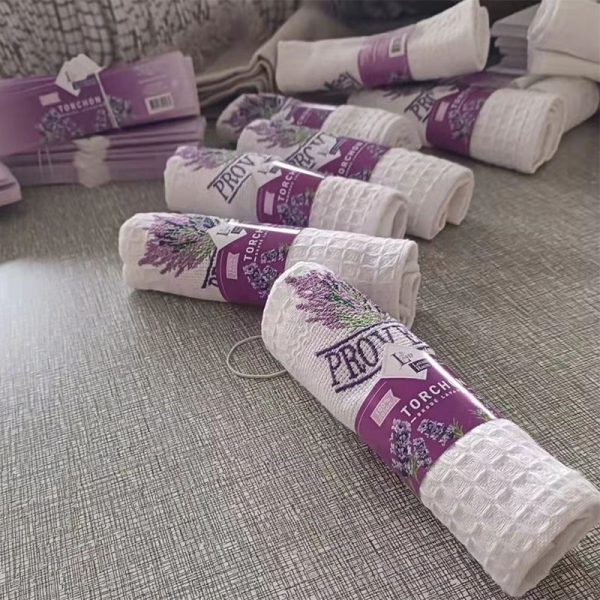
One key strategy for managing diverse SKUs is to create a clear product architecture that organizes items into logical families while still allowing room for customization. Yiwu Jinyuan Trading Firm groups its offerings into six primary categories, each with distinct functional and decorative roles. This classification enables production teams to optimize workflows around similar SKUs, reduce changeover time, and streamline inventory management.
- Tablecloths and Table Runners – designed for surface protection and spatial decoration. With various sizes to cover any table style, these items are often enhanced by special coating technologies.
- Plate Pads and Cup Mats – serving as thermal and scratch protection while adding visual layers to the dining setting.
- Napkins – offering practical cleanliness and an elegant table arrangement, with flexible fold-and-print patterns.
- Cushion Covers – providing soft comfort, lumbar support, and aesthetic warmth through textile combinations.
Within this family structure, SKU complexity is further managed through standard size charts and modular pattern libraries. For instance, the company regularly develops new seasonal patterns but does not create an entirely new infrastructure for each one. The design team creates digital collections that can be translated to many product types. A popular floral theme may be applied to napkins, table runners, placemats, and cushion covers simultaneously. This cross-application increases product variety without multiplying the number of unique raw materials or production steps. It is a smart example of SKU rationalization.
Moreover, the company employs a front-end configuration system that allows customers to choose from a menu of fabrics, patterns, sizes, and custom trims. While each order can generate a unique SKU, the underlying manufacturing parameters are drawn from well-established specifications. The result is a controlled expansion of the SKU database, where creativity is encouraged but operational discipline is maintained.
Vertical Integration and Large-Scale Delivery Capacity
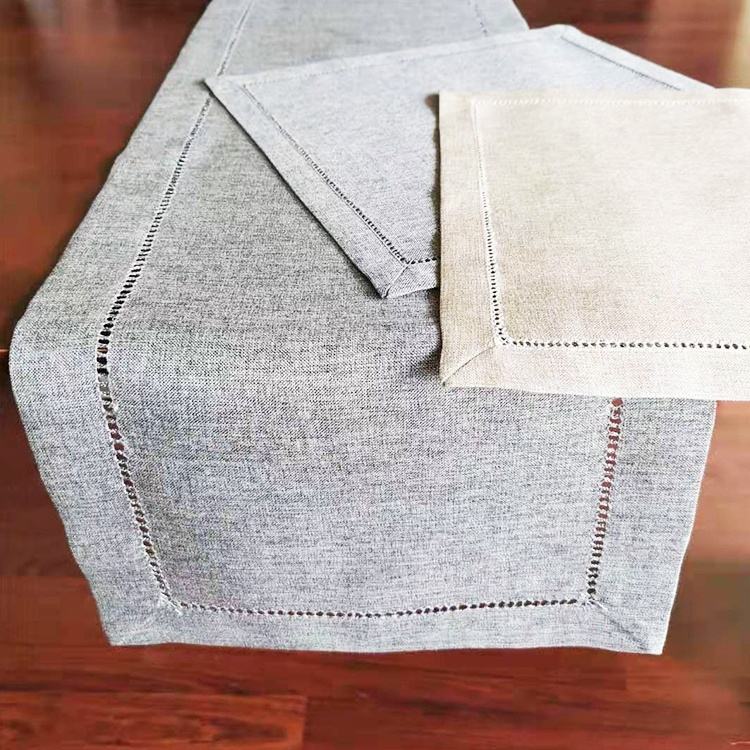
A major factor enabling the management of a diverse SKU portfolio is Yiwu Jinyuan Trading Firm’s comprehensive manufacturing chain. The company has invested significantly in an integrated production system that spans fabric weaving, dyeing processing, and finished product sewing. Its factory area exceeds 10,000 square meters and includes modern sewing equipment and digital embroidery lines. The annual production capacity for tablecloths, table flags, cushion covers, napkins, and related items reaches several million pieces. This scale creates an ideal foundation for efficiently processing many SKUs, because larger production runs for common standard items can offset the cost and complexity of smaller custom orders.
In terms of operational efficiency, the company has shortened its average delivery cycle by more than 20% compared to industry benchmarks. This achievement comes from the integration of automated cutting and intelligent hanging systems. Instead of moving materials through manual stations, the factory utilizes semi-automated lines that can be quickly reconfigured for different product dimensions. Through careful production planning, even a mixed-model production schedule can be optimized to minimize batch changeovers and idle time. The qualification rate of finished products remains stable at over 99%, which is remarkable given the diversity of SKUs handled. This high quality level reduces rework and customer complaints, further simplifying inventory control.
Vertical integration also allows the company to exercise strict control over every step of the manufacturing process, from greige fabric to dyed and finished textile. For example, edge binding for tablecloths, quilting for placemats, and zipper positioning for cushion covers are critical processes that benefit from in-house expertise. Since the workforce has been trained to manage these operations efficiently, variations from different SKUs are less likely to cause process disruptions. Additionally, the company’s quality control team applies multiple inspection procedures, from the entry of fabrics to the delivery of the finished product. This ensures that all SKUs, regardless of batch size or complexity, meet the high standards expected by international customers.
The factory’s integrated nature further supports the company’s ability to make quick-response orders. When customers request a new table runner length or a set of custom embroidered napkins, procurement and production can be synchronized without waiting for outside contractors. The company’s experienced team has spent years fine-tuning this production chain, giving it a strong capability to handle mixed SKU orders that combine standard best sellers with unique custom items.
Customization and Product Development Engine
In today’s home textile trade, differentiation is triggered by design and customization. Yiwu Jinyuan Trading Firm recognizes this and has built a young, creative design team that closely follows international home interior decoration trends. This team integrates fashionable elements with practical functions into product designs. By managing a broad SKU portfolio, the design team can quickly produce personalized customization of patterns, colors, and sizes, helping clients create differentiated dining tables and home textiles. This process is managed through pre-agreed modular components and digital proofing workflows.
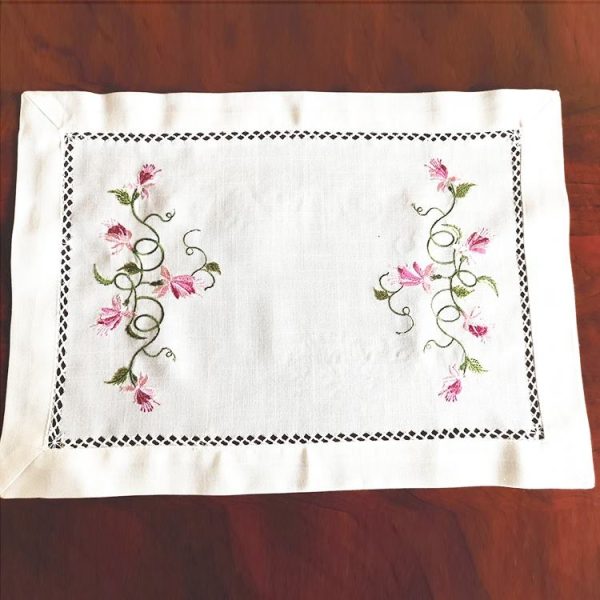
The company supports a full customization suite for patterns, sizes, and fabrics. The design and production teams are skilled at applying a wide range of techniques, including digital heat transfer printing, computer embroidery, hand-knitting, and jacquard weaving. These techniques are selected based on the SKU requirements. For napkins, for example, vivid printed designs are often preferred because they can make a strong visual statement. For cushion covers, embroidery and jacquard weaving add tactile richness. This technological versatility is itself a method of managing variety; rather than being limited to one process, the company matches the best available technique to each SKU’s intended market and use.
Another important element of customization is the company’s “three protection and one exemption” technology, which applies nano-level hydrophobic and oleophobic coatings. Tablecloths and table mats benefit from waterproof, oil-proof, and heat-proof advantages, and are exempt from frequent washing. Liquid stains can be wiped away easily. To manage this feature across many SKUs, the functional coating is applied using precisely controlled recipes that are tested for performance before being released to the production floor. While every custom printed tablecloth could technically become a separate SKU, the coating and treatment process remains standardized, preventing unnecessary expansion of process specs.
New product development is also positioned as a critical process for SKU portfolio renewal. The company develops hundreds of new products annually, with a new product update rate exceeding 30% each quarter. This dynamic approach keeps the SKU list fresh and relevant, but it is balanced by prudent lifecycle management: seasonal best sellers are identified, older slow movers are pruned or updated. The company’s three-year roadmap for eco-friendly fabrics, functional improvements, and IP-based original designs supports both differentiation and sustainability. In this way, the SKU portfolio grows not chaotically but along deliberate strategic lines.
Functional and Aesthetic Balancing
To properly manage diverse SKUs, it is necessary to segment them by their consumer value proposition. Yiwu Jinyuan Trading Firm separates its lines into functional products and aesthetic products. Functional products are focused on “ease of use” and emphasize instant cleaning with a durable coating. These items are usually developed with simple, universal designs that can be stocked in high volume. Aesthetic products are focused on “style enhancement” and feature rich patterns and refined textures. These are the decorative pieces that define a table setting.
The company’s material selection reflects this balance. In its functional line, high-density woven polyester and coated blends offer robustness. In its aesthetic line, cotton, polyester-cotton, and linen fabrics create a natural, elegant feel. By deliberately matching materials to specific product value propositions, the SKU system becomes easier to segment for raw material purchasing, quality testing, and inventory planning.
Furthermore, the company uses several methods to avoid stockouts and overstock issues across the SKU family. Best-selling products are produced in larger batches and maintained at higher safety stock levels. Personalized or newly developed items are handled in smaller production runs and are often made to order. This hybrid of make-to-stock and make-to-order enables the company to offer a wide selection while controlling inventory risk.
Quality Management as a Backbone for SKU Governance
When an exporter offers thousands of SKUs, consistent quality is a challenging governance task. Yiwu Jinyuan Trading Firm addresses this with a comprehensive quality management system that covers the entire process from fabric entry, semi-finished product processing to finished product storage. This full-cycle approach reduces variability and ensures that the final products meet both the company’s standard and the customer’s unique requirements.
The company’s quality inspection protocol involves multiple gates. First, purchased greige fabrics are inspected for weight, composition, colorfastness, and surface defects. Second, after dyeing or printing, the material is checked for shade consistency and pattern precision. Third, during the cutting and sewing stage, in-line process checks ensure that measurements, seam strength, and edge finishing meet tolerance limits. Finally, a finished product inspection is performed prior to packing and shipping. Random sampling follows internationally accepted standards or specific customer requirements.
This structured quality framework also supports new product introductions. When a design team creates a new napkin pattern or a novel table runner construction, they work with quality engineers to establish specifications and tolerances at the very beginning. These specifications become part of the SKU master data and are communicated clearly to production staff. Any future reorders of the same SKU use the same documented specifications, dramatically reducing variability between batches.
Moreover, the company passes numerous international factory inspections and has received BSCI social responsibility audits, which are essential for exporting to Europe and other demanding markets. These external validation mechanisms further enhance the company’s internal controls, making its SKU management more robust. A customer who orders a single napkin style today and a larger set of diverse home textiles next year can trust that the quality will be consistent across all items.
Operational Coordination and Team Expertise
The effective management of diverse SKUs depends heavily on the coordination and expertise of the company’s core team. Yiwu Jinyuan Trading Firm is led by professionals with deep experience in the home textile industry, covering product development, production management, and international trade. They understand manufacturing standards and consumption trends for table textiles and home fabrics. This cross-functional knowledge allows them to make informed decisions about which SKUs to promote, which to engineer, and which to phase out.
In daily operations, the team interacts closely with customers, providing professional pre-sales consultation, sample confirmation, production tracking, and after-sales service. This service philosophy—customer needs-oriented—means that the SKU portfolio is always aligned with actual market demand. If a client from Europe requests a new shade of cream linen napkins, the sales and production teams quickly evaluate feasibility, cost, and delivery time. If a client from Japan values very precise hem stitching, special instructions are flagged on the production order. By treating every SKU as a customer-tailored promise, the company ensures that the portfolio’s sheer size does not compromise responsiveness.
Production team members are highly skilled in key processes. Their familiarity with edge binding for tablecloths, quilting for placemats, and zipper positioning for cushion covers enables them to switch between product types with minimal retraining. In the factory, workers are often organized into small cells that specialize in related product families. For example, a table linen cell might handle tablecloths, table runners, and napkins; a separate cell might handle cushion covers and placemats. This grouping reduces the cognitive load on workers and increases learning curve effects. It also simplifies the scheduling of multi-SKU orders, because each cell receives only complementary product types.
Operational planning is supported by an order management system that tracks every SKU through several stages: sample approval, raw material reservation, fabric cutting, sewing, quality inspection, packing, and shipment. The company’s progress is further enhanced by a flexible workforce culture. Employees are often cross-trained so they can be moved to bottleneck workstations when necessary. This internal flexibility is crucial when managing tight delivery schedules for a diverse mix of product types.
Supply Chain and Material Standardization
Behind every finished SKU lies a chain of raw materials, trims, and packaging components. Yiwu Jinyuan Trading Firm mitigates supply chain complexity by standardizing many of the base materials used across its product line. For instance, a range of polyester-cotton and linen-blend fabrics is commonly used for both napkins and table runners. While the final print or embroidery differs, the base fabric specifications are consolidated into a manageable number of categories. This standardization improves procurement leverage and shortens lead times.
For customized SKUs that require special fabrics, the company maintains close relationships with qualified weaving and dyeing suppliers. Because of its significant purchasing volume, it can request small finishing runs even for unusual colors. This ability to source low-volume specialty materials is essential for serving a high-mix product portfolio. The purchasing department works in close coordination with production planning to forecast material requirements, reducing obsolescence and excess inventory. Slow-moving, fashion-driven patterns are often managed as make-to-order to avoid dead stock.
The company’s commitment to environmental sustainability also influences its material choices. As part of future development, it is actively developing eco-friendly fabrics, including recycled polyester and organic cotton. These materials will appear across the SKU portfolio in response to consumer demand. For functional development, stain resistance, easy cleaning, and antibacterial finishes are being extended to more products. The integration of eco-friendly fabrics can be challenging because their handle and performance may differ from conventional textiles. By thoroughly testing these fabrics before incorporation into the range, the firm ensures that they can be managed under the same strict quality framework.
Material standardization extends to packaging and labeling. Since the company supplies many international retailers, compliance with local labeling regulations demands careful attention. The company has standardized its packing formats for cartons and inner polybags, while still offering the custom labels and hangtags required by different distributors. This balance prevents an unnecessary proliferation of packaging SKUs, which would otherwise create huge warehouse waste.
Using Technology and Automation to Handle Scale
Technology is an essential enabler for managing diverse SKU portfolios efficiently. In recent years, Yiwu Jinyuan Trading Firm introduced automated cutting and intelligent hanging systems. These systems significantly improve production efficiency and accuracy. Automated cutting can process many layers of fabric with very little waste, and it can be programmed with the exact pattern pieces for multiple SKUs in one cutting plan. Intelligent hanging systems transport semi-finished goods to different workstations automatically, reducing manual handling and misrouting. This digital flow management is particularly valuable when several different SKUs are moving through the factory at the same time.
The company also uses digital pre-production processes. Pattern designs are prepared in digital formats that can be transferred directly to digital heat transfer printing or digital embroidery machines. This eliminates the need for physical screens and engraving plates, shortening the setup time for new designs. For customized napkins, for instance, a client can approve a digital proof within days, then the design can be transferred to digital printing machines without lengthy cylinder engraving. This process agility enables more new product introductions and small-batch specials.
Looking forward, the company is exploring artificial intelligence and data analytics for demand forecasting. Although not fully implemented in all areas, such tools can help identify patterns from past orders, seasonality, and customer preferences. By using these insights, the company can better plan raw material stocking levels and production runs for different SKU groups. The ultimate goal is to offer a wide array of choices to customers while minimizing waste and maximizing on-time delivery.
Interestingly, the complexity of SKU management is not limited to the production floor. Warehousing and logistics also need robust systems to handle the variety of finished goods. The firm arranges storage zones based on product category; napkins and placemats are lighter and smaller, while tablecloths and cushion covers take more space. This zone-based layout reduces picking time when orders contain multiple SKUs. It also enables efficient packing according to carton size and weight limits.
Customer-Centric Approach to Portfolio Creation
Customer feedback is the starting point for all successful SKU management. Yiwu Jinyuan Trading Firm follows a service philosophy that begins with listening to consumer needs and buying patterns. Whether the order is large or small, the team invests effort in understanding the intended end-use occasion: family daily life, banquet gatherings, commercial use, or gift giving. Based on that information, they propose a targeted solution that includes the right products from the catalog.
Take, for example, the napkin—a featured product given the company’s focus on table aesthetics. Napkins come in a dizzying variety of folds, hems, and sizes, from casual beverage napkins to formal dinner napkins. The company manages this diversity by maintaining a base set of napkin shapes and sizes, then applying infinite patterns and fabric options. When a customer requests a certain table coordinate, they can combine napkins with tablecloths and placements from the same pattern collection. This helps the customer create a complete dining experience while also accelerating order
The company’s design team remains ahead of style trends. They regularly track international home decoration movements such as new Chinese, Nordic minimalism, and light luxury. By integrating these trend themes into product development, the firm ensures that the SKU list includes up-and-coming styles, not only mature best sellers. This future-oriented approach has earned the company long-term partnerships with several international home brands who value a supplier that can manage co-development and produce a coordinated lineup of new textile items.
One key insight is that no single SKU is managed in isolation. Every product variation interacts with the rest of the portfolio. For this reason, Yiwu Jinyuan Trading Firm pushes a “collaboration and win-win” philosophy in its relationships. Sales staff are trained to help customers explore full product categories, enabling cross-selling that increases order size while using existing production capacity more efficiently.
Sustaining Innovation for Future Complexity
As the home textile market moves toward more individualized consumption and sustainable production, the complexity of SKU portfolios will likely continue to rise. Yiwu Jinyuan Trading Firm has set a clear strategic direction for the next three years: product upgrades in eco-friendly fabrics, functional development such as stain resistance and easy cleaning, antibacterial treatment, and the IPization of original designs. These efforts will bring even more SKU variations, but the firm’s management systems are prepared for this expansion.
The company is also investing in R&D partnerships with academic and research institutions, holding patents in fabrics and processes. This innovation capability creates a competitive barrier, ensuring that competitors cannot easily replicate every specialized SKU. For example, ongoing research into poly(lactic acid) fibers and other green new materials is likely to yield a family of compostable napkins and table linens. While such products may require distinct production conditions, the company can rely on its engineering team to develop compatible workflows.
Additionally, original design IPization means that exclusive patterns will become part of the company’s own asset portfolio. Instead of relying solely on customer-provided designs, the company will license or sell designs that carry their own style. This is both an opportunity and a challenge for SKU management. Fortunately, the existing modular product architecture allows new designs to be placed into well-established templates, reducing operational uncertainty.
Long-term sustainability is also supported by the team’s belief in “Small products, great care.” This principle encourages constant iteration in fabric texture, pattern design, and functional details. Although these improvements may come one SKU at a time, the cumulative result is an upgraded portfolio. By monitoring quality across all SKUs, the company remains aligned with its claim that even ordinary products can have extraordinary qualities.
Case Study: From a Simple Napkin to a Full Dining Collection
To illustrate how these SKU management strategies operate in practice, consider a hypothetical export order received by Yiwu Jinyuan Trading Firm. A mid-sized hospitality buyer from Europe first enquires about a custom napkin collection for its restaurant chain. The buyer provides basic dimensions and asks for stain-resistant fabric.
In response, the sales team works with the technical department to suggest a suitable base fabric, perhaps a polyester-cotton blend with a nano-coating. After digital mockups are made in several palettes, the customer selects three patterns: a subtle check, a striped contemporary design, and a solid neutral. These three patterns become three unique SKUs in the napkin category. Due to the same base fabric and size, production can exploit an optimized cutting and finishing process, reducing cost and lead time.
After the first order is delivered successfully, the buyer contacts the company again to add tablecloths, placemats, and table runners in matching patterns. Since the design files already exist, the same patterns can be deployed across these other categories. The company produces coordinating SKUs rather than entirely random collections, so the complexity of the purchase order escalates but within familiar families. Through careful scheduling, the production team may run the printed fabrics for different product types in the same batch, further maximizing efficiency. The customer receives a unified brand identity and the supplier can deliver a full package on time and on budget.
This example underscores a critical point: managing diverse SKUs is not merely about handling enormous numbers; it is about maintaining coherence across product systems. Yiwu Jinyuan Trading Firm, by creating cohesive collections and using shared patterns and materials, prevents the portfolio from becoming fragmented. The balance of customization and standardization is the real key to success.
Conclusion: A Model for SKU Portfolio Mastery
In summary, Yiwu Jinyuan Trading Firm demonstrates how a focused home textile manufacturer and exporter can successfully manage a diverse SKU portfolio. Its achievements rest on several pillars:
- A structured product portfolio based on six unified categories, allowing shared designs and material platforms.
- A vertically integrated production chain with large manufacturing scale, flexible automation, and a quick response capability that is above industry average.
- An active design and customization engine that generates hundreds of new products while maintaining quality specifications.
- A rigorous quality management system that safeguards consistency across thousands of SKUs and supports international certifications.
- A disciplined supply chain approach that leverages standardized raw materials and proactive material management.
- A customer-centric team culture that balances personalized service with strategic portfolio direction.
- An innovative roadmap toward sustainability and original design where SKU complexity is seen as a means to deliver value.
The story of this trading firm proves that diverse SKU management in home textiles is not achieved simply by listing more products; it requires an operational system that naturally integrates design, production, purchasing, and quality control. By doing so, the company can confidently serve global customers—from boutique shops to large hotel chains—providing a mix of table napkins, tablecloths, placemats, cushion covers, and cup mats that is broad, beautiful, and reliable.
As market demands continue to shift toward sustainable materials and ever more personalized styles, Yiwu Jinyuan Trading Firm’s existing investment in eco-friendly fabrics, functional finishes, and IP-driven design will likely set a new benchmark in the industry. It is clear that the art of managing a diverse SKU portfolio lies in the intelligent coordination of creativity, manufacturing expertise, and commercial foresight. The firm has developed exactly this art, making it a trusted partner in international home textile trade.