Yiwu Jinyuan Trading Firm, a leading Hemtitch tablecloth manufacturer, has built its reputation on delivering consistent hand feel across millions of home textile products. The article explores the company’s holistic approach, which begins with a seasoned team and a philosophy of ‘Quality as the Foundation, Integrity for the Long-term.’ It highlights the critical importance of fabric selection—using high-density cottons, organic cotton, and recycled polyester—and how advanced weaving and finishing processes preserve natural softness. The production process is governed by skilled craftsmanship in edge binding, quilting, and zipper positioning, with each batch subjected to a human hand-feel panel before approval. The company integrates rigorous quality control from fabric entry to finished goods, maintaining a 99%+ qualification rate. They also pioneer functional coatings like waterproof and oil-repellent finishes without compromising tactile comfort, using eco-friendly agents that leave the fabric breathable and soft. Customization for international markets—ranging from Europe to Japan—is supported by a full-production-chain factory of over 10,000 square meters. Innovation is central to maintaining hand feel consistency over time, with R&D into recycled materials, poly(lactic acid) fiber, and antibacterial treatments. The company’s commitment to ‘Small products, Great care’ ensures that human touch remains the ultimate safeguard of quality. This article demonstrates that achieving consistent hand feel is a systemic achievement, balancing technology, craftsmanship, and a deep understanding of both material and end-user comfort.
In the world of home textiles, few products are as intimately tied to daily ritual as the tablecloth. It protects the family table, anchors the aesthetic of a dining room, and—when crafted with true skill—offers a tactile experience that elevates a meal from mere sustenance to a moment of comfort. Yet achieving a consistent hand feel across thousands of pieces is no accident. It is the result of meticulous engineering, seasoned craftsmanship, and a corporate philosophy that treats softness, durability, and texture as non-negotiable pillars. This is the story of how a dedicated Hemtitch tablecloth manufacturer—Yiwu Jinyuan Trading Firm—has mastered that delicate balance.
The Foundation: Experience and Philosophy
Yiwu Jinyuan Trading Firm is not a newcomer to the home textile arena. As an export-oriented company, its core team consists of professionals with over a decade of immersion in textile production and international trade. They bring not just technical knowledge but an almost intuitive understanding of how a tablecloth should drape, how stitches should pull, and how a finish should feel against the skin. The company’s stated belief—’service and concern, credit and commitment, share and progress’—is not just a slogan. It permeates every stage from fabric sourcing to the final fold.
undefined
The company adheres to a business philosophy of ‘Quality as the Foundation, Integrity for the Long-term.’ This is not a passive commitment. It means that when a bolt of cotton arrives, it is tested not only for tensile strength but for its hand feel quotient. When a dye lot is prepared, the team verifies that the finish has not stiffened the fabric into a cardboard-like stiffness. Every choice, from thread tension to hemming technique, is made with the question: ‘Will this feel as good on the hundredth wash as it does on the first?’
Fabric Selection: Where Hand Feel Begins
Consistent hand feel cannot be fake. It begins with raw materials. Yiwu Jinyuan sources high-quality cottons, polyester-cotton blends, and linens, each selected for its inherent tactile properties. But the company goes a step further—it employs high-density weaving techniques that create a tight, smooth surface while retaining breathability. This is a critical starting point. A loose weave feels rough and flimsy; an over-tight weave can feel stiff. The manufacturer’s fabric engineers balance thread count and yarn twist to produce a substrate that is soft yet resilient.
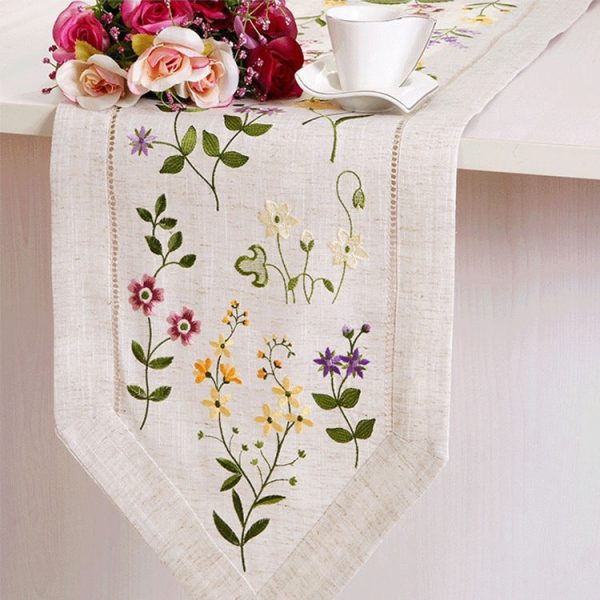
In recent years, the company has also expanded into eco-friendly fabrics such as recycled polyester and organic cotton. These materials are not only a nod to sustainability but also to a changing consumer preference for textiles that are gentle on the skin. Organic cotton, in particular, has a naturally soft hand feel because it lacks the chemical residues of conventional processing. Recycled polyester, when properly spun, can mimic the drape of virgin fiber while offering enhanced durability. By testing each lot for hand feel consistency, the company ensures that even its green lines meet the same tactile standard as traditional ones.
Prototype and Process: The Role of Skilled Hands
Hand feel is not solely a property of the fabric; it is also a product of how the fabric is cut, sewn, and finished. The key processes for a Hemtitch tablecloth include edge binding, quilting for placemats, and zipper positioning for cushion covers. Each of these steps can either enhance or ruin the tactile experience. A poorly bound edge creates a thick, uncomfortable ridge. A misaligned quilt stitch puckers the fabric. A rough zipper pull can scratch a hand. Yiwu Jinyuan’s production team is highly skilled in these exact operations. Workers who have spent years mastering the double-needle press and the hand-guided edge stitch are not easily replaced by automation. While the factory has invested in advanced sewing equipment and digital embroidery lines, the human touch still controls the subtle tension that gives a tablecloth its smooth, even hand feel.
One of the cornerstones of the company’s process is its sample confirmation approach. Before mass production begins, a sample is created and evaluated not just visually but tactilely. The quality control team runs a ‘hand feel panel’—a group of experienced evaluators who touch the sample, fold it, crumple it, and slide it across a table. They check for any roughness, stickiness, or excessive starch. Only when the sample passes this panel do the production lines start rolling. This ritual is repeated for every batch, ensuring that a customer in Europe receives a tablecloth with the same soft finish as one shipped to Japan.
Quality Control: The Unseen Hand
Consistency demands rigorous checks at every stage. Yiwu Jinyuan’s quality control team follows multiple inspection procedures from the entry of fabrics to the delivery of finished products. When a new roll of fabric enters the warehouse, it is inspected for weight, density, and finish uniformity. During production, line supervisors check for stitch density and edge alignment. After cutting, each piece is examined for any pull or distortion. Before packaging, a final inspection ensures that no residual chemicals have made the fabric stiff and that all functional coatings—such as waterproof or oil-repellent finishes—have been applied evenly without compromising softness.
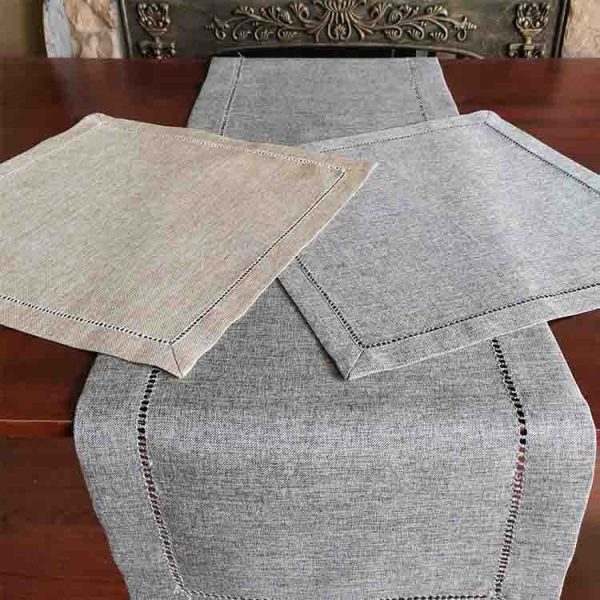
The company’s quality management system covers the entire process from fabric entry to semi-finished product processing and finally to finished product storage. Automated cutting and intelligent hanging systems have improved efficiency, but they have also introduced new quality data points. Sensors measure the tension during cutting, and digital monitoring tracks the temperature and humidity of the storage area—because hand feel can subtly change if cotton dries out or polyester static builds up. The result is a finished product qualification rate that consistently exceeds 99%. That number is not just about durability; it is about every piece meeting the same tactile standard.
Functional Finishes That Preserve Softness
Today’s consumers want tablecloths that are both beautiful and low-maintenance. This has led Yiwu Jinyuan to pioneer the application of nano-level hydrophobic and oleophobic coatings, often referred to as ‘three protection and one exemption’ technology—waterproof, oil-proof, heat-proof, and free from frequent washing. The challenge is that many water-repellent coatings can make a fabric feel plastic or waxy. The manufacturer solved this problem by using environmentally friendly finishing agents that form a breathable, invisible barrier on the fabric surface. Liquid stains bead up and can be wiped away with a single swipe, yet the cloth retains its natural, soft, textile touch. This is achieved through a high-density weave combined with a nano-coating applied under controlled conditions, followed by a gentle washing process that removes any excess chemicals.
The company has also introduced anti-scratch finishing technology—not in the sense of preventing scratches on the table, but in creating a fabric that is resistant to pilling and surface abrasion. This contributes to a hand feel that remains consistent even after repeated use. A tablecloth that becomes fuzzy after a few washes is not just unsightly; it also feels harsh. Yiwu Jinyuan’s finishing line uses double-needle pressing and laser hollow engraving to create smooth edges and three-dimensional patterns that do not fray or stiffen. The result is a product that offers both functionality and a luxurious hand feel, a combination that many competitors find difficult to replicate.
Customization and Global Standards
A manufacturer that produces only standard goods can fine-tune a single recipe. But Yiwu Jinyuan serves customers across Europe, the United States, Japan, Korea, and Southeast Asia, each with their own preferences for texture, weight, and drape. The company’s young and creative design team follows international home interior trends closely, but they also listen to client feedback about hand feel. When a client requests a stiffer linen for a minimalist Nordic look, the production team adjusts the finishing process. When another client wants a softer, brushed cotton for a coastal aesthetic, they modify the calendering pressure.
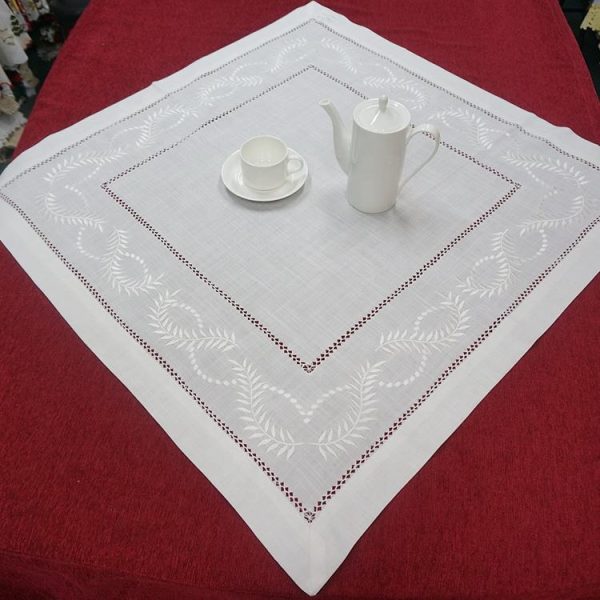
This level of customization is supported by a full-production-chain advantage. With a factory area exceeding 10,000 square meters and an annual production capacity of millions of pieces, the company can manage large-scale orders while maintaining the flexibility to alter recipes for different markets. The company’s product line covers six categories: tablecloths, table flags, plate pads, napkins, cushion covers, and cup pads. Each category presents its own hand feel challenge. A cup pad must be firm enough to protect a table from heat, yet soft enough not to scratch a ceramic mug. A napkin must be absorbent and gentle on the skin, often requiring an enzyme wash to achieve that just-right softness. The production team treats each product as a new problem, applying their experience to solve the particular tactile puzzle.
Innovation: The Future of Hand Feel
The company’s commitment to hand feel does not stop at current production. Over the next three years, Yiwu Jinyuan plans to advance product upgrades in three key areas: the application of eco-friendly fabrics, functional development such as stain resistance and antibacterial treatment, and the IPization of original designs. The eco-friendly material program includes research into poly(lactic acid) fiber, a biodegradable plastic derived from corn starch that has a naturally silky feel, as well as improved blends of recycled polyester. The functional development team is experimenting with silver-ion antibacterial finishes that do not yellow or stiffen fabric, a common issue with older antimicrobial technologies.
The design team also continues to push the boundaries of what a tablecloth can feel like. By integrating traditional jacquard weaving with new micro-denier yarns, they are creating fabrics that feel almost like silk while retaining the durability of cotton—an achievement once thought impossible. The company is conducting cooperative research with universities and research institutions, holding multiple patents for fabrics and processes. These innovations are not just for novelty; they are aimed at ensuring that the hand feel of a Hemtitch tablecloth remains consistent even as materials and finishes evolve.
The Human Element
Behind all the technology and process control, there is also a cultural commitment. The company adheres to the principle of ‘Small products, Great care.’ This is evident in how they handle even the smallest order. Every batch of tablecloths is touched by many hands—from the weaver who monitors the loom to the inspector who feels the hem. This human contact is not a liability; it is the final safeguard of hand feel. Machines can measure tensile strength, but they cannot sense the difference between a pleasing weight and a heavy stiffness. A skilled inspector can. Yiwu Jinyuan invests in continuous training, teaching its employees to use their fingertips as precision instruments. This craftsmanship is passed down through apprenticeship, ensuring that the standard of hand feel is preserved even as the workforce changes.
In an industry where many manufacturers chase the lowest cost, Yiwu Jinyuan Trading Firm takes the long view. Achieving consistent hand feel is not a single adjustment but a system of checks and balances that spans fabric selection, production techniques, and quality assurance. By combining experienced human craftsmanship with advanced coating and weaving technology, they have created a product line that feels as good as it looks—meal after meal, wash after wash. This is what sets a true Hemtitch tablecloth manufacturer apart: not just a reputation for pretty patterns, but a reputation for a touch of comfort that consumers trust. And in the home, that makes all the difference.
Whether you are a retailer looking for a reliable supplier, a designer searching for a fabric with life, or simply a consumer who appreciates the subtle pleasure of a well-made table setting, the lesson from Yiwu Jinyuan is clear: consistent hand feel is the result of respecting both the material and the person who will touch it. It is a philosophy that transforms a piece of cloth into a daily luxury, and it is one that this manufacturer embodies through every stitch, every finish, and every piece that leaves their factory floor.