This article explores how global retail chains can benefit from partnering with Yiwu Jinyuan Trading Firm, a specialized Chinese export company, when sourcing Christmas tablecloths and coordinated table linens. It highlights the company’s core strengths: an experienced cross-functional team skilled in product development, production management and international trade; a versatile design department that can quickly produce festive patterns and customize them for regional tastes; and a high-capacity factory over 10,000 square meters equipped with advanced sewing, digital embroidery, automated cutting, and intelligent hanging systems. The firm’s products cover tablecloths, table runners, placemats, napkins, cushion covers, and cup pads, all of which can incorporate the company’s “three protection and one exemption” technology for waterproof, oil-proof, and heat-proof qualities, making holiday cleaning effortless. The article also outlines their commitment to strict quality control (99%+ qualification rate), BSCI social compliance, and a growing portfolio of eco-friendly fabrics including recycled polyester and organic cotton. Yiwu Jinyuan combines full-process manufacturing advantages with rapid delivery (20% shorter lead time) and robust capacity (several million pieces annually) to serve international retailers. Through long-term collaborative agreements, transparent pricing, flexible custom options, and a win-win approach, the firm helps retail chains launch exclusive Christmas collections. The article stresses that beyond price, valuable differentiation lies in design innovation, patented finishing techniques, ethical labor practices, and effective risk management. By treating the small Christmas tablecloth as a product requiring great care and continuous iteration, Yiwu Jinyuan aims to become the most trustworthy supplier for global brands, helping retailers capture holiday sales, build consumer loyalty, and reinforce sustainability commitments. This strategic partnership ultimately transforms seasonal table linen purchasing from a transactional relationship into a long-lasting competitive advantage.
For global retail chains, the holiday season represents a sales period of unmatched significance. The window between October and December often dictates annual profitability, and among the many products that line store shelves and fill e-commerce carts, Christmas tablecloths occupy a deceptively powerful niche. A tablecloth is not merely a piece of fabric; it is the stage for family gatherings, festive dinners, and cherished memories. Consequently, retailers must source these products from manufacturers that combine design insight, production scalability, consistent quality, and reliable delivery. This is where a partnership with an experienced Chinese export company such as Yiwu Jinyuan Trading Firm becomes strategically invaluable.
Yiwu Jinyuan Trading Firm has developed a reputation as a trusted supplier to home textile markets around the world. Unlike simple trading agents, the company functions as a full-service manufacturer with an in-house team that understands every step of the production journey, from yarn selection to finished tablecloths. For global retail chains seeking Christmas-themed table linens, the firm offers a unique blend of artistic flair and industrial discipline. Their philosophy, rooted in “service and concern, credit and commitment, share and progress,” aligns closely with the expectations of Western retailers who demand high volumes without ever compromising on product safety or aesthetic appeal.
The company’s core business encompasses a wide array of tabletop textiles, with particular expertise in Christmas tablecloths, table runners, placemats, napkins, cushion covers, and cup mats. This specialized focus allows them to dedicate significant research and development efforts to holiday-specific collections. For example, a Christmas tablecloth must often incorporate intricate motifs like poinsettias, snowflakes, reindeer, and Santas, while also maintaining a fabric that can withstand spills of cranberry sauce and hot chocolate. The Yiwu Jinyuan design and production teams work in unison to create textile products that are both beautiful and practical for the winter season.
One of the distinguishing features of Yiwu Jinyuan Trading Firm is its experienced core team. This group consists of professionals who have spent years deeply involved in the home textile industry, possessing a rare combination of product development creativity, production management rigor, and international trade skills. They are thoroughly familiar with the manufacturing standards and consumption trends that define the table textile market across different regions. This knowledge is crucial when a global retail chain requires a Christmas tablecloth that complies with specific flammability standards, colorfastness tests, or labeling laws in its target markets. The team can adapt the product specification and production process accordingly, mitigating the risk of non-compliance and expensive recalls.
undefined
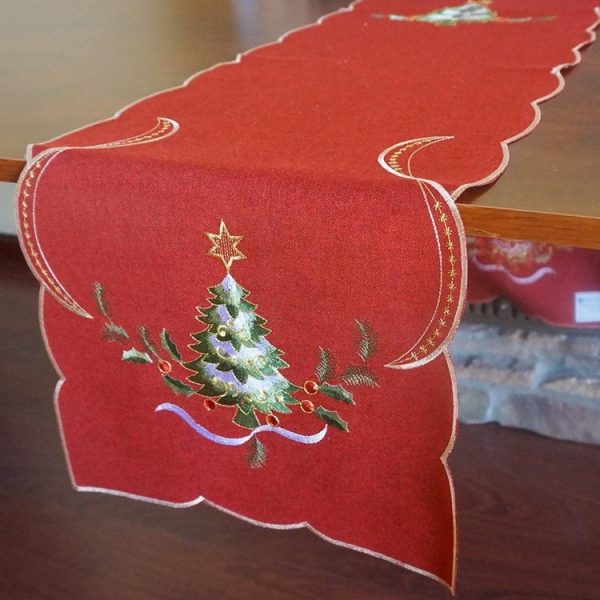
Behind every successful seasonal collection, there is a design team that can translate cultural trends into tangible fabrics. Yiwu Jinyuan’s creative team is young and forward-thinking, closely monitoring international trends in home interior decoration. They follow how Scandinavian minimalism, modern farmhouse aesthetics, or traditional Victorian Christmas styles influence consumer preferences. The designers skillfully integrate fashionable elements with practical functions, ensuring that each Christmas tablecloth is not just a festive decoration, but also an easy-care household item. Crucially, the design team can respond quickly to requests for personalized customization. If a retail chain wants a specific shade of red to match its brand palette, or a unique pattern that ties into a promotional theme, Yiwu Jinyuan can deliver those modifications along dimensions of pattern, color, and size with seamless speed.
At the manufacturing level, the production team is highly skilled, especially in the delicate processes that determine a tablecloth’s final quality. Edge binding on a Christmas tablecloth, for instance, must be smooth and durable to survive multiple washes and the occasional tug by a guest. The quilting of placemats and the precise positioning of zippers in cushion covers also demonstrate the team’s attention to detail. While these may seem like minor elements, they are the difference between a product that feels cheap and one that exudes the “ritualistic daily life” experience that consumers desire. The quality control team at Yiwu Jinyuan enforces multiple inspection checkpoints, starting from the arrival of raw fabrics and continuing through cutting, sewing, folding, and packaging. This ensures that every tablecloth leaving the facility can withstand the scrutiny of a global buyer’s quality assurance department.
Yiwu Jinyuan Trading Firm has always adhered to the business principle of “Quality as the Foundation, Integrity for the Long-term.” This principle is especially relevant in the context of Christmas tablecloth manufacturing because retailers cannot predict which specific unit a shopper will purchase. Each individual product must be flawless in construction, free of defects, and safe for use in homes with children. From fabric selection and dyeing to printing and packaging, the company exercises strict control. In dealing with customers, the company actively rejects short-term tactical deception in favor of long-term collaborative success. This approach has enabled them to develop stable and enduring partnerships with clients in Europe, North America, and Asia, including several well-known international home brands. For a global retail chain entering into a partnership, this trustworthiness reduces the friction commonly associated with overseas sourcing.
Yiwu Jinyuan is deeply focused on the home textile niche market, concentrating its efforts on table aesthetics and overall home comfort. This focus is summarized in a unique slogan: “Small products, Great care.” A Christmas tablecloth is often classified as a petite item within a retail chain’s catalog, yet its impact on a brand’s reputation and the customer’s experience is disproportionately large. The company constantly iterates on fabric texture, pattern design, and functional details, ensuring that a simple woven rectangle possesses an extraordinary quality. This attitude is what allows their products to command an elevated price point and induce consumer loyalty, which are critical advantages for retailers setting holiday holiday assortment.
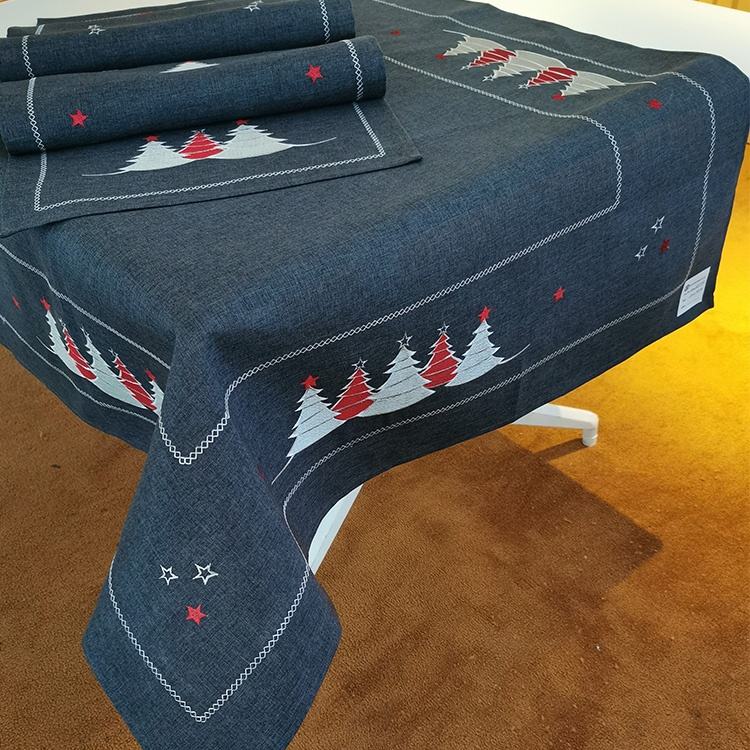
The service model of Yiwu Jinyuan Trading Firm is precisely tailored to the needs of large retailers. The company espouses a “Customer needs-oriented” service philosophy that provides professional and meticulous pre-sales consultation, rapid sample confirmation, proactive production tracking, and responsive after-sales service. Regardless of order size, whether it is a sample order of twenty pieces or a bulk order of twenty thousand Christmas tablecloths, the same level of service discipline is maintained. Furthermore, the company understands that calendar deadlines in the holiday sector are absolutely inflexible. A Christmas delivery arriving on January 2 is practically worthless. Thus, the production control system is designed to monitor progress at every stage, allowing for early identification of potential delays and immediate corrective action.
Looking forward over the next three years, Yiwu Jinyuan has announced a strategy to elevate product performance and sustainability. The company will focus on three key directions: first, the application of eco-friendly fabrics such as recycled polyester and organic cotton; second, the integration of functional finishes like stain resistance, easy cleaning, and antibacterial treatment; and third, the development of original designs with intellectual property (IP) protection. These three pillars will significantly enhance the brand value and market competitiveness of its table linen offerings. For a global retail chain, partnering with a manufacturer that proactively invests in sustainability audits and certified materials is not just a nice-to-have but an essential requirement. Many major retailers have pledged to source only from suppliers that can provide traceable and environmentally responsible textiles.
Within the company’s product line, the tablecloth and table runner categories serve twin functions of tabletop protection and spatial decoration. A Christmas tablecloth covers the dining table, preventing the wood surface from stains caused by turkey drippings and heat damage from casserole dishes. Meanwhile, a Christmas table runner is used as a decorative accent, enhancing the rhythm and layering of the holiday table. The company offers a popular option called “three protection and one exemption” technology, which provides waterproof, oil-proof, and heat-proof qualities, as well as an exemption from frequent washing. This is achieved through a high-density weave and a nano-level hydrophobic and oleophobic coating. Liquid stains, such as red wine, gravy, and melted chocolate, can be wiped clean with a single soft cloth. The product thus retains its pristine appearance throughout the entire holiday season without requiring daily machine washing. This feature is particularly attractive for retail chains whose target customers may be hosting elaborate Christmas dinners and do not want to spend their after-dinner hours attending to laundry.
Equally central to the Christmas dining experience are plate mats and cup mats. These smaller accessories provide insulation from hot dishes and protect the tabletop from scrapes and water rings. But their role is also deeply linked to color and texture. They allow homeowners to create a festive table setting by combining a basic tablecloth with themed mats in red and green shades, or by introducing faux fur textures. In many product presentations, Yiwu Jinyuan pairs its tablecloths with coordinating napkins. Napkins, beyond their functional role of wiping mouths mid-meal, are folded into elaborate shapes or placed in silver rings to add charm to each place setting. A coordinated set that includes a tablecloth, napkins, runner, and placemats is a high-margin sales item for retailers, since customers prefer a unified cohesive style rather than a piecemeal collection from various sources.
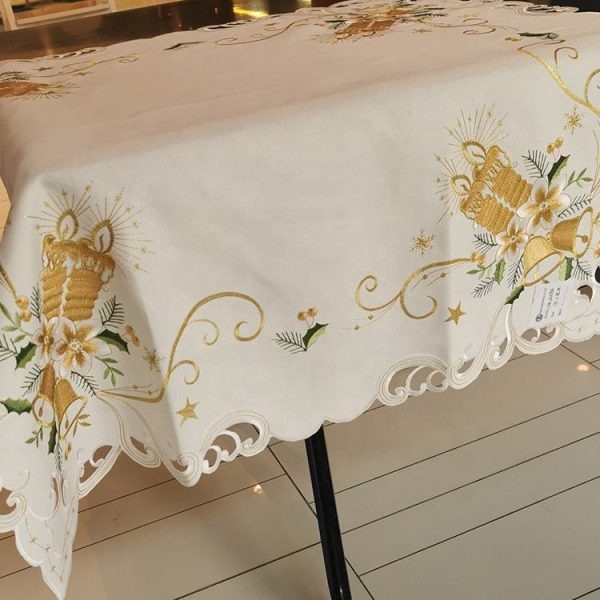
Beyond dining room use, Yiwu Jinyuan’s Christmas textile collection extends to cushion covers, which are often placed on sofas in the living room next to the Christmas tree, or on bedroom chairs. These cushion covers act as easy toggles for changing a room’s atmosphere from everyday neutrality to holiday warmth. They are manufactured with attention to zipper positioning, ensuring a clean finish that can withstand repeated opening and closing without snagging or breaking. The fabric choices include cotton, polyester-cotton blends, and linen, all selected for their softness and ability to hold vivid printed images. The company supports several printing and embroidery techniques including digital heat transfer printing, computer embroidery, hand-knitting, and jacquard weaving. As a result, Christmas patterns are crisp, deeply saturated, and resistant to fading even after multiple washes or exposure to indirect sunlight.
On the matter of user value, the company recognizes that “easy maintenance” and “quality life” are intertwined drivers for modern consumption. Many contemporary consumers live in small apartments and do not possess dedicated storage rooms for holiday linens. They want tablecloths that fold compactly, resist wrinkles, and require minimal ironing. Yiwu Jinyuan’s high-density weaving and nano-coating solutions keep the fabric from being coarse or hard while maintaining flexibility. This ensures the cloth drapes beautifully over the table edges. In parallel, the rich color palette and fine texture introduce a sense of craftmanship that supports an emotional connection to the dining space. The company also leans into the concept of “durable and environmentally friendly” since products are made with quality materials that last longer and need to be replaced less frequently, thereby reducing waste.
The company’s manufacturing facility, occupying over 10,000 square meters, is equipped with advanced sewing machines, digital embroidery lines, automated cutting systems, and intelligent hanging systems. This industrial infrastructure allows a high level of automated precision, while also maintaining the flexibility required for custom orders. Their annual comprehensive production capacity of tablecloths, table flags, cushion covers, and related home textiles reaches several million pieces. For a global retail chain, this industrial scale guarantees that seasonal demand can be met without forcing retailers to rely on three or four separate suppliers to assemble a purchase order. Language barriers and logistical complexity are minimized when a single partner can handle a very significant proportion of the required SKUs. Additionally, through large-scale production and refined cost control, Yiwu Jinyuan has been able to shorten product delivery cycles by more than 20% compared to the industry average. In an industry where Christmas inventory must arrive at a retail distribution center by August, a shortened lead time is not a competitive luxury; it is a critical operating advantage.
The company’s superior production management is further proven by a finished product qualification rate that consistently stays above 99%. This metric is supported by a quality management system that covers the entire process, from fabric entry to finished product warehousing. The production environment can be adapted to various social compliance and factory inspection standards as well. The firm has successfully passed the BSCI social responsibility audit, which is a widely recognized benchmark in Europe. Retail chains can rely on the fact that the workforce is treated ethically, and the factory is safe and compliant with working hour regulations. This diligence is all the more relevant during pressure-peak festivals such as Christmas, when manufacturers are sometimes tempted to use unauthorized subcontractors or compulsory overtime. Yiwu Jinyuan refrains from these predatory practices, ensuring that its delivery schedule is met with the permanent, in-house workforce rather than short-term external hires.
International acceptance of their products is evidenced by continuous exports to many countries and regions, including the United States, members of the European Union, Japan, South Korea, and Southeast Asia. In serving these diverse markets, Yiwu Jinyuan has acquired the ability to adapt to distinct cultural preferences in Christmas styling. For instance, the American market consistently favors plush combinations of deep red with plaid patterns. In German households, softer muted tones and nutcracker motifs are often preferred, while Japanese store shelves hold minimalist tablecloths with small scattered stars and subtle gold accents. The retailer who partners with Yiwu Jinyuan is not negotiating with one rigid manufacturer; instead, they are gaining access to an adaptable production ecosystem that shifts with regional tastes. The firm holds several patents related to fabrics and manufacturing processes which reinforce their market position and protect against design obsolescence.
The theme of circularity is also taking shape in the development pipeline. Yiwu Jinyuan has engaged in academic research with universities and industrial partners to explore biodegradable fabrics, recycled fibers, and poly(lactic acid) fiber, which is derived from renewable sources such as corn starch. These green new materials may pose challenges in printing and finishing, but the company is progressively engineering solutions to overcome them. Retail chains that openly communicate their Environmental, Social, and Governance (ESG) targets can collaborate with Yiwu Jinyuan on the introduction of compostable Christmas tablecloths in future holiday seasons. This alignment is increasingly a criterion for supplier selection in boardrooms of Western retail multinationals.
Artistic differentiation remains an equally important factor. The design team actively tracks global interior trends and integrates elements from new Chinese aesthetics, Nordic minimalism, and light luxury. The reinterpretation of Christmas patterns through these filters results in unique products that stand apart from the generic designs sourced from other low-cost countries. Retail buyers often say that the table linen aisle is a sea of indistinguishable red-and-green cloths. A collaboration with a company like Yiwu Jinyuan provides an effective way to break away from that commodity vortex. Their designers are capable of creating an exclusive Christmas collection that is only available at the particular retail chain, thus building consumer traffic and enhancing the perceived uniqueness of the brand.
In conducting day-to-day business, the company retains a flexible approach to commercial terms. They honor exclusivity agreements when requested, sign non-disclosure agreements, and maintain absolute confidentiality about a retailer’s pricing structures and future launches. For companies operating private label brands, this trustworthiness ensures that designs revealed to Yiwu Jinyuan do not appear unexpectedly in a competing discounter. Moreover, they hold formal intellectual property rights for certain original patterns, and they can produce goods according to the retailer’s proprietary artwork, which the retailer’s legal team has already registered. This legal security gives comfort to brand managers who are protective of their image.
Logistically, Yiwu Jinyuan is located in Yiwu, a major export hub in Zhejiang Province, China, known for efficient port and customs connections. Finished tablecloths can be shipped from nearby Ningbo or Shanghai ports to virtually anywhere in the world. The company coordinates freight forwarding and provides documentation such as the bill of lading, Certificates of Origin, and inspection reports. For a global retailer, this means a reduction in sourcing overhead and inventory planning complexity. They can consolidate order deliveries for tablecloths, matching table flags, placemats, cushion covers, and cup mats within one single purchase order. In doing so, they avoid wasting time on multi-supplier consolidation and lower the carbon impact of split shipments.
During the Christmas trade season, the company extends its operating hours to respond to urgent inquiries from overseas offices. They are mindful of time zone differences and regularly communicate via email and virtual meetings. Foreign buyers who are planning their November launches will share their ideas in February, and samples begin wending their way through air freight by March. With the shortened lead time, final production is often completed by May, leaving ample allowance for photorealistic packaging photography and distribution to regional warehouses. Most importantly, the team is capable of successfully managing unforeseen events, such as a rise in raw cotton prices, a sudden change in the exchange rate between the Chinese yuan and the US dollar, or a port closure due to force majeure. Their risk management measures include establishing inventories of essential greige fabric, maintaining backup suppliers, and contractual force majeure clauses that are fair to both parties.
The niche of Christmas tablecloths might appear too narrow to support the creation of a long-term manufacturing partnership, but in reality, the holiday season represents an outsized annual opportunity. The value offered by Yiwu Jinyuan Trading Firm is not limited to the actual manufacturing of fabrics. The company acts as a seamless extension of the retailer’s own product development and procurement department. When buyers have a concept, their designers create drafts; when product managers need to tweak sizes to fit European versus American tables, the factory responds rapidly. At the design level, embroidery and printing techniques are adapted for the particular weave of the cloth. By maintaining a close working relationship with Yiwu Jinyuan personnel, the retailer’s internal workload is reduced, and risks of delays are minimized due to clear communication channels.
Another angle to consider is private label packaging and trims. The Yiwu Jinyuan facility can attach hang tags, sew brand labels in a customized location, and fold each tablecloth neatly in tissue paper before packing it into polybags. For a gift-ready Christmas product, retailers often use clear packaging with a printed cardboard header. The company can supervise all these quality details in-house, reducing the chance of package defects. If a special promotion requires a gift box with a magnetic flap, their suppliers can source it locally. This surrounding support is central when a provider says it specializes in home textile niche markets. Tablecloths are known as “small products” with “great care.” Such a phrase is not simply marketing fluff. It instills a corporate culture that radiates into every department, from cutting floor operators to finance accountants.
When discussing long-term partnership in this market, one must not overlook price trends. Global textile consumers have become more sensitive to increased costs in freight and materials. Yiwu Jinyuan approaches annual pricing negotiations with transparency, usually providing a breakdown of fabric costs, labor costs, operating overhead, and profit margin. This open book approach is welcomed by retail chains who need to forecast their cost of goods sold with reliability. By sharing information, both parties work together to find value engineering opportunities that do not degrade the fabric feel or print durability. No one wins if a Christmas tablecloth disintegrates after two washes, so both sides are aligned toward creating everyday low cost but preserved quality. The company also respects the annual retail calendar, allowing buyers to set provisional production slots for future holiday seasons, protecting capacity in a rational manner.
To further elaborate on the technical capabilities, the “three protection and one exemption” technology is undeniably a flagship of the company’s functional product line. Consumers might mistakenly assume that waterproofing treatment on a tablecloth with a woven cotton texture would make the textile stiff or plastic-like. In fact, Yiwu Jinyuan’s functional finish preserves a delicate fabric touch. This is realized through a careful combination of high-density yarns and nano-level surface treatments, using eco-friendly finishing agents. The finish is also breathable, which reduces buildup of moisture beneath the tablecloth. The anti-scald component ensures that hot pans or soup pots do not generate burn marks on the table surface. In a family with small kids or pets, quick wipe-clean capability is often more important than having to launder fabric at a high temperature. This product trait becomes a powerful purchase motivator in the aisle, especially when covered by bold labels in tear-off packing.
In addition to this, the company’s “double-needle pressing and laser hollow engraving” technology is mastered to achieve smooth edges and intricate cutout patterns. For a high-end Christmas product, laser engraving can be used to create subtle festive silhouettes in the corners of a table runner. The pattern does not lose definition over time and adds a premium aesthetic that is hard to replicate with common die-cut processes. The factory can also support computer embroidery that produces raised three-dimensional holiday figures, such as a snowman’s face or an angel’s wings. Mixed media products combining a print base and embroidered accents invite a premium price at retail. This diversity of technique is why buyers say that working with Yiwu Jinyuan is like having a creative workshop at their disposal.
It is also appropriate to mention the factory’s commitment to continuous improvement. The company regularly measures production efficiency, yield, and audit scores. It continuously upgrades its staff capabilities through training programs in new machinery, modern management methods, and overseas compliance standards. This pursuit of operational excellence translates into better responsiveness to evolving product trends. For example, recent requests from European retailers for tablecloths made from recycled polyester are met with a distinct product line that recycles plastic bottles into fibers without compromising strength. Those items are often certified to global recycled standards which prove the content. In this way, the partnership helps retailers meet their own sustainability commitments year over year.
In a modern commercial environment, the relationship between a manufacturer and a global retail chain is never one-directional. Successful partnerships are based on joint planning, mutual commitment to quality, and shared risk. Yiwu Jinyuan Trading Firm is very comfortable in adopting such a cooperative mindset. Their executives frequently travel to international trade fairs, host buyers at their experience rooms in Yiwu, and organize effective factory tours that demonstrate the various production phases in a safe and smooth manner. After the initial audit, many buying teams continue to place visitations on an annual basis to monitor performance. The company never hesitates to expose real working conditions to existing or prospective clients, as this transparency is a foundational element of trust in their business culture.
For retail chain executives in search of their next Christmas tablecloth supplier, the decision is not limited to comparing FOB prices. Long-term success is driven by factors such as innovation capacity, consistency in quality, adherence to ethical practices, and flexibility in production. In this context, Yiwu Jinyuan Trading Firm offers an outstanding total value proposition. The company already supplies several well-known international home brands, and their ability to maintain those relationships while onboarding new customers is a testament to their robust capacity expansion. Their team is composed of experienced professionals who speak the same commercial language as the buyer community—whether it be FOB terms or IncoTerms 2020.
Smaller details are also carefully considered. A Christmas tablecloth must be stored properly before it appears in the store, and the company is aware that creases or improper folding could reduce the product’s display appeal. They use tissue paper interleaving in folding and select polybags that protect the cloth from dust while allowing some degrees of air circulation. In addition, for orders containing intricate embroidered tablecloths, they maintain special stacking instructions that avoid heavy weights being placed on top of embroidered areas. This dedicated care is just a small example of the “small products, great care” principle. It is a welcome change from the blunt treatment that exporters sometimes apply to low-priced textiles.
Let’s examine custom possibilities in more depth. A global retail chain may want to feature a Christmas tablecloth in three standard sizes: 52 by 70 inches for a rectangular table, 70-inch round for a round table, and 60 by 84 inches for a large family table. Yiwu Jinyuan can handle those size variants in the same production run, applying the same design proportionally where necessary. The patterning team can adjust the scale of the motif so that the central snowflake appears correctly centered on a circular cloth, without the need for cutting through the middle of a critical design. These technical styling services add value that is not apparent in an initial product specification. They reduce the number of prototypes a buyer must manage, shorten product development time, and promote an elegant finished look that catches the customer’s eye.
In some cases, retailers also order tablecloth sets that include a tablecloth and four to six matching napkins. The napkins are often folded in a distinctive way at the factory, allowing a viewer to see the pattern clearly through transparent packaging. However, the manufacturer can assist in recommending the most efficient napkin sizing to suit international table dimensions. They can also produce beverage napkins of a smaller format, which are used for informal cocktail evenings during the holiday. All these are produced with edge stitching that does not create unsightly puckering—a sign of a top-tier factory. Because the same factory serves the cushion cover and placemat categories, quality coordination between these component groups is unusually high.
Technological integration is yet another factor. Yiwu Jinyuan’s commitment to automation means lower marginal cost for complex patterns and fewer human errors. Digital printing technology allows for photographic realism on fabrics, making a Christmas tablecloth with an eighteenth century snowy village scene look like a vintage artwork. For limited edition collections, digital printing is naturally more cost-efficient because it does not require engraving screens. The company’s order management system can track batch numbers and raw material lots, enabling traceability. In case of a defect in a specific batch of yarn or dye, the manufacturer can quickly identify which finished orders are affected and send replacements before the customer complains. This issue-resolution ability is critical for maintaining strong performance during flash seasons.
Across the table industry, shipping delays are the most frequent source of conflict between buyers and suppliers. Yiwu Jinyuan mitigates this risk through sophisticated planning. Their production lines are grouped by technology, so orders that share the same fabric and similar dye color are scheduled consecutively to reduce cleaning time and minimize color variation. The delivery date promised to the retail chain is based on realistic capacities and confirmed only after evaluating material stocks. If a delay seems inevitable, they proactively inform the buyer at an early stage, offering executable solutions such as air freight or splitting the order into partial shipments. No manufacturer can guarantee a zero-error record, but Yiwu Jinyuan shows proactive attitude in crisis management, which is more valuable than a luxury leaflet of glossy brochures.
The target of global retail chains often extends beyond the single Christmas holiday season. Yiwu Jinyuan’s versatile product line also includes textiles for other seasons—such as spring floral themes, autumn leaves, and winter snowflake designs. Retail partners can therefore maintain an annual business calendar with one supplier for multiple seasonal collections, leveraging the learning curve that has been accumulated over years. The benefits of stable partnership across several seasons include reduced on-boarding cost, better buyer familiarity with factory performance, and a growing trust in the manufacturer’s creative instincts.
For a retail chain considering an entirely new supplier, sample evaluation is the first litmus test. Yiwu Jinyuan’s sample department can create a physical mock-up of a proposed design in a matter of days, using the closest fabric in stock. This allows the buyer to assess drape, texture, and print fidelity. If necessary, they can produce water-proofing demonstration kits where the buyer pours soy sauce, oil, and hot water over a swatch and wipes it clean. This transparent demonstration builds confidence before the first large order is placed. The company is generally open to sending samples via international courier, albeit with a reasonable shipping cost or a credit note against future purchase orders. Standard practice includes customer consent on quoted sample fees, and if the order is subsequently placed, the sample fee is deducted from the transaction invoice. This shows their genuine interest in building long-lasting professional relationships.
From an economic standpoint, merchandise from the Christmas table linens category carries a higher gross margin compared to regular dish towels or bedding. Retailers may afford to spend a bit more per unit to include upgraded finishes, thick fabric weight, or unique packaging. They can price these products at an premium to consumers because holiday decorations are often bought on emotional impulse rather than rational utility comparisons. Therefore, the cost of a quality partnership with a Chinese manufacturer like Yiwu Jinyuan is quickly recovered through stronger sell-through rates and fewer markdowns. Conversely, a rocky production quality that leads to returns from unhappy customers could erode the chain’s profitability and brand loyalty. Hence, the decision to source from a proven, full-service company is a rational defensive strategy in an unpredictable market.
Yiwu Jinyuan Trading Firm is headquartered in the city of Yiwu, in the province of Zhejiang. Yiwu’s enormous international trade market attracts buyers from almost every nation. The company’s core staff possesses multi-language communication ability and is accustomed to working with buyers of diverse cultural backgrounds. Buyers from North America and Europe often appreciate authentic Chinese business hospitality during factory visits. While the digital world enables virtual meetings, an in-person visit to observe the entire production process still holds unmatched power to build rapport. The company arranges professional factory guides, provides clear explanations during each stage, and answers inquiries without evasion. This kind of local presence is a benefit because retail chain suppliers are often expected to satisfy third-party quality assurance auditors, and having experts who are familiar with the scheme is a considerable advantage.
We also must mention customer service. Pre-sales support includes assistance with design rights clearance, technical feasibility checks, and presentation of alternative original patterns whenever a buyer does not have complete artwork. During production, the company sends photo updates of bulk production, from beginning of cutting to carton sealing, so that the importer’s quality assurance team can perform remote inspections. Final inspection is often performed by the buyer’s designee or a third-party agency; but even before that, Yiwu Jinyuan has already completed several internal inspections. If a product is rejected by the third-party, the company is willing to go through a re-inspection process after corrective actions. After shipping, they keep samples in storage for reference in case a dispute emerges over quality claims.
Have there been any notable challenges in the Christmas tablecloth category? One issue is that Chinese cultural associations with color and symbolism can be misinterpreted when designing ornaments for Western celebrations. Consumers in the US may react negatively to certain motifs that have different connotations in Europe. Yiwu Jinyuan’s design team therefore participates in webinars and follow trend studies published by international fashion institutes. They also rely on market suggestions from their partner retail chains, who are directly connected to local buyer feedback. It is common for buyers to share a set of Pinterest boards or Instagram photo clippings of decorative styles they admire. The in-house design team then transforms these visual references into commercial textile designs. The partners share a “win-win” approach, knowing that final market acceptance is the only true judge.
The word “Christmas” encompasses not just a religious holiday but also a period of exchanging gifts, hosting family and friends, and relaxing in a cozy home. Tablecloths and table runners are among the artifacts that make these occasions special. Retail chain buyers can enhance their assortment by selecting a supplier that offers breathless innovation in this field. Yiwu Jinyuan’s understanding of fabric selection, printing, quilting, and edging allow them to produce a premium-quality house brand collection with minimal friction. Moreover, the one-stop-shop convenience of obtaining tablecloths, placemats, napkins, cushion covers and cup mats from a single factory coordinates the delivery cadence and harmonizes packaging consistency. Whether the intent is to launch a complete holiday table settings collection, or to stock the shelf with a single beautiful tablecloth, this manufacturer’s capabilities are well-positioned for the challenge.
In this era of ecommerce and very fast delivery, global retail chains cannot afford to wait long for production. Their end customers expect to purchase Christmas supplies as early as September or even later in October. With Chinese factories working around the clock, the production cycle from confirmation of artwork to final shipment typically ranges from 35 to 60 days, depending on order volume and complexity. Yiwu Jinyuan consistently keeps its production plan efficient enough to meet those expectations. Their year-round laboratory of fabric durability also helps when buyers want to import test reports from independent laboratories. The company can provide these reports as part of their documentation package, establishing an additional layer of safety. With product liability laws being strict in major markets, such documents are not optional but required. In such requirements, Yiwu Jinyuan’s process orientation is highly supportive.
The role played by proactive brand managers in global retail chain headquarters is to mitigate volatility and to offer customers creative novelty. A partnership with a manufacturer that can design in-house reduces the risk of copying the same designs of the competitor across the street. Yiwu Jinyuan’s IP-ization of original designs is an ongoing area of effort—they have begun copyright registration for several of their seasonal motifs. By purchasing these copyright-protected patterns, the retailer can market the collection as exclusively designed in collaboration with the manufacturer. That aura of exclusivity boosts media coverage and consumer demand. The winter holiday assortment is one of the most shopped categories in the entire year; offering a unique design that is only available at one chain can turn a moderate placement into a destination purchase.
Another important concern for worldwide supply is social responsibility, especially around the peak season period. Yiwu Jinyuan attaches great importance to worker welfare and adheres to Chinese labor laws and customer codes of conduct. The fast fashion industry has frequently been scrutinized for low wages, excessive overtime, and unsafe working conditions. By partnering with a BSCI-audited company, a retail chain can demonstrate to its own stakeholders that it follows human rights due diligence throughout its supply ecosystem. This is extremely important because business publications and NGOs often research the factories that produce decorative holiday goods. Positive reports about fair factory practices can enhance the public image of the retailer, whereas negative exposure may cause financial losses and reputation damage. Thus, the retailer’s collaboration with Yiwu Jinyuan is in more ways than one a risk management exercise.
Another benefit of this partnership is the concept of constantly expanding product updates. The company states that it develops hundreds of new products each year, and that its new product update rate exceeds 30% each quarter. Instead of waiting for the next fall market to bring in the same old styles, buyers can choose to access the company’s new proposals before they appear broadly in the market. These proposals cover various seasons and uses, but every year they introduce a special Christmas collection that often becomes a bestseller. Their distinctive “Scandinavian hygge” series is an excellent example: items in this theme use cotton in natural beige and gray, decorated with simple star icons, creating a calm and modern holiday table. Another collection in “traditional glitz” uses metallic gold foil printing on crimson backgrounds, appealing to consumers who like glamorous decor. The possibilities are almost endless, and that is what makes the annual review of samples with Yiwu Jinyuan so meaningful.
With an eye toward operational performance, the company has made investments in ERP software that helps manage order details, inventory movements, and production schedules. In a large manufacturing facility, mistakes usually happen if there are confused communications between sales and production. The ERP system eliminates many such errors by updating information instantly and issuing clear instructions to workshop floor staff. Through track and trace processes, important checkpoints are marked with task codes, and quality inspectors carry out checks at each step. When an anomaly is observed, the system triggers an alert so that the affected substandard units are quarantined and reworked before they are packed. Therefore, the overall defect rate to retailers is extraordinarily low. Global retailers value this reliability because they know any defects they find at the receiving dock will lead to finance deduction, reverse logistics or even shortage of stock to their stores.
Transport and freight considerations also include carton strength and packing optimization. Cartons containing textile products should be neat, easy to handle, and not take up too much space in ocean containers. Yiwu Jinyuan calculates the ply count and dimensions of each carton to ensure maximum utilization of container space, thereby reducing freight costs per unit. This might seem minor, but for tens of thousands of tablecloths, an additional five percent in container utilization can produce significant savings. This savings can be passed on to the retailer as a more competitive landed cost. Since Christmas inventory is shipped before the peak of the shipping season, it can often be placed in 40-foot high-cube containers. The company maintains its own packing standards for the tablecloth category that avoid damage during long sea voyages to ports in Long Beach, Hamburg, or Tokyo.
When a global retailer chooses a partner, one concern is whether that supplier will stick with the buyer through lean periods. Yiwu Jinyuan’s management believes in a “cooperation and win-win” approach. They do not jump to an alternative buyer with higher-priced orders when the market is strong, then abandon the partner during low demand. Rather, they see each retail chain relationship as a multi-year investment and are happy to plan production capacity accordingly. In many cases, they allocate reserved production slots for key retail chains and ensure that these slots are not accessible to competing clients. This ensures continuity, especially for retail chains that have separate contracts for autumn and Christmas table linens. Retail buyers can request special price holds when raw cotton costs fluctuate, and the company will react flexibly with alternative solution options such as adjusting blend ratios, reducing dyeing complexity, or offering bundled bundles.
Finally, when examining the Christmas tablecloth market, Yiwu Jinyuan is aware that consumers also care about product authenticity. Artificial “Made in China” labels are not a negative in most markets; instead, the value lies in the consumer’s emotional appreciation. Good manufacturing practices are easily verifiable by the fabric strength, seam alignment, and print clarity. For the premium tablecloth segment, the firm is often asked to create an elegant hem finishing with a small hidden ribbon that can be used to hang the cloth when not in use. Such details are novel touches that can be integrated into the product development at an early stage. They also contribute to product longevity and user delight, which leads to positive online reviews and repeat purchases. A high percentage of sales is generated by consumers who bought a holiday tablecloth the previous year and wish to add more patterns to their set. Hence, expanding the collection every year is an effective strategy to retain those repeat buyers.
In summary, global retailers seeking to build a robust holiday table linen category should look closely at the production capacity and design philosophy of Yiwu Jinyuan Trading Firm. From their years of skill, their sophisticated “three-proof” finishes, their custom printed options, and their dedication to workforce wellbeing, they bring a total solution to the table. The company can successfully satisfy orders of different scale, whether the retail chain operates through hypermarkets, online pure players, or a specialty store format. This flexibility of channel serving is another proof of the robustness of the supplier’s sales and staff organization.
Even as the world moves towards greater digitalization, physical tablecloths remain an essential vehicle for human ornamentation in the physical world. A Christmas tablecloth manufacturer partner is more than a vendor; they are the architect of ambience for millions of families during the festive season. Yiwu Jinyuan Trading Firm takes pride in becoming exactly that. For buyers in retail chains who plan to visit Asia for sourcing, a guided factory tour plus a sample review at Yiwu Jinyuan can be a decisive moment that replaces abstract spreadsheets with tangible fabric and weaving artistry. Before engaging in another mediocre holiday season, they should invest the time to establish a partnership with one of the Chinese home textile industry’s leading suppliers. This will secure a supply of beautiful, durable, and timely Christmas tablecloths for years to come. By taking that step, retail chains can make their table linen offering an unambiguously successful story of partnership and prosperity in the upcoming Christmas windows.