This comprehensive guide, written from a third-person perspective, explores the critical importance of flame retardant (FR) standards for Christmas tablecloths, focusing on the role of a responsible manufacturer like Yiwu Jinyuan Trading Firm. The article begins by highlighting the elevated fire risks during the holiday season due to candles and electrical decorations, establishing why FR compliance is an essential safety requirement for festive home textiles. It then offers a detailed overview of key international certification standards, including CPSC 16 CFR 1610 (USA), EN 13773 (Europe), BS 5867-2 (UK), GB/T 5455 (China), and AS/NZS 1530.3 (Australia/New Zealand), outlining the testing methods and measurable parameters such as flame spread, afterflame time, and char length. The discussion transitions into the practical realm of materials and finishing technologies, contrasting topical finishes, back-coatings, inherently fire-resistant fibres, and advanced nano-scale treatments. Yiwu Jinyuan Trading Firm is presented as an illustrative example of a high-quality export manufacturer due to its complete production chain, stringent multi-stage quality control, and adherence to environmental and social responsibilities, including BSCI certification. The article explains the journey of an FR product, from fabric selection and coating application to testing and export compliance, with real-world case studies showing successful shipments to Scandinavia and Japan. Future-oriented issues are also addressed, such as the development of eco-friendly, sustainable flame retardants and the integration of intelligent manufacturing to maintain treatment consistency. Common pitfalls—such as coating cracks, wash durability, and misinterpretation of standards—are analyzed with actionable solutions. Ultimately, the guide serves as an educational resource for trade buyers and global businesses, emphasizing that selecting a manufacturer with technical know-how and ethical operational integrity is the safest route to market. The summary condenses the article’s focus on compliance, product safety, and the need for continuous innovation in home textiles.
The holiday season brings with it a warm glow of candlelight, twinkling lights, and festive gatherings. For many households, the Christmas table is the centerpiece of celebration, adorned with beautiful tablecloths that set the stage for cherished meals. However, with the increased use of open flames and electrical decorations during the holidays, the flammability of textiles becomes a critical safety concern. For manufacturers and buyers alike, understanding flame retardant standards is not just a legal requirement—it is a moral obligation. This guide explores the complexities of flame retardant (FR) standards for Christmas tablecloths, providing an in-depth look at how a responsible manufacturer navigates these regulations. We will examine the technical aspects, testing procedures, and the vital role of experienced suppliers such as Yiwu Jinyuan Trading Firm, who have made safety and quality the cornerstones of their home textile production.
Why Flame Retardancy Matters for Christmas Tablecloths
Christmas celebrations often involve candles, fireplaces, and decorative lights, all of which pose a potential ignition risk. A tablecloth that is not properly treated can quickly become a fuel source, transforming a joyful event into a tragedy. Flame retardant standards exist to mitigate this risk by ensuring that textiles either resist ignition or self-extinguish once the ignition source is removed. For manufacturers, compliance with these standards is essential for market access, especially in regions with stringent safety regulations like the European Union, North America, and Asia-Pacific countries. Moreover, consumers are increasingly aware of fire safety, making FR-treated tablecloths a selling point that can differentiate a product in a crowded market.
undefined
The importance is magnified for Christmas-themed textiles because they are often used seasonally and may be stored in attics or closets, exposed to varying conditions. A high-quality flame retardant treatment should remain effective after multiple washes and extended use. Therefore, a manufacturer must possess deep technical knowledge and a robust quality control system to guarantee that every batch meets the required standards. Yiwu Jinyuan Trading Firm, an export company specializing in international trade, has dedicated years to perfecting their production processes to align with these safety imperatives.
Core Certification Standards and Legal Frameworks
There is no single global standard for textile flammability; instead, manufacturers must navigate a patchwork of national and regional regulations. Understanding these standards is the first step toward compliance. Below are some of the most common standards relevant to Christmas tablecloths:
| Standard | Region | Key Requirement |
|---|---|---|
| CPSC 16 CFR 1610 | United States | Flammability of clothing textiles; Class 1 or 2 required for general use. |
| EN 13773 | European Union | Curtains and drapes – burning behavior; classification from 1 to 3. |
| BS 5867-2 | United Kingdom | Fabric for curtains and drapes – flame spread requirements. |
| GB/T 5455 | China | Vertical flammability test method – damaged length and flame retardant time. |
| AS/NZS 1530.3 | Australia/New Zealand | Flammability test for building materials and textiles. |
For tablecloths placed on tables, the testing often mirrors that of curtains and drapes, as they are large flat textiles. The most critical parameters are flame spread rate, afterflame time, afterglow time, and char length. In Europe, EN 13773 classifies fabrics into categories based on their burning behaviour, with Class 1 being the least flammable. In the United States, the Consumer Product Safety Commission (CPSC) enforces 16 CFR 1610, which requires that textiles sold as apparel or in bolt lots meet specific burn times. While tablecloths are not always explicitly covered, many retailers and institutions mandate compliance as a precautionary measure.
Understanding the Test Methods
A typical vertical flammability test involves suspending a fabric sample in a controlled test chamber, applying a specified flame for a set time, and measuring the extent of damage. For example, in the Chinese standard GB/T 5455, the sample is exposed to a flame for 12 seconds, and the damaged length is measured after ignition. A successful FR fabric will have a char length below a specified limit, with no burning of the test frame. Similarly, EN 13773 evaluates the ignition time and the spread of flame across the fabric surface. The result is a classification that allows product designers to choose the appropriate material for their intended end use.
Yiwu Jinyuan Trading Firm’s production team is well-versed in these methods, having accumulated years of experience in export manufacturing. The company’s quality control team strictly follows multiple inspection procedures, from the entry of fabrics to the delivery of finished products. This ensures that every item, including their extensive line of Christmas-themed tablecloths, meets or exceeds the safety criteria of the target market.
The Role of a Reliable Manufacturer: Yiwu Jinyuan Trading Firm
Choosing the right manufacturer is paramount to ensuring flame retardant compliance. A knowledgeable supplier can guide buyers through the regulatory maze, offer suitable materials, and execute the necessary tests. Yiwu Jinyuan Trading Firm, established as an export company specialized in international trade, operates on the core belief of “service and concern, credit and commitment, share and progress.” This philosophy is reflected in their product development and production control, ensuring that clients receive transparent and reliable service.
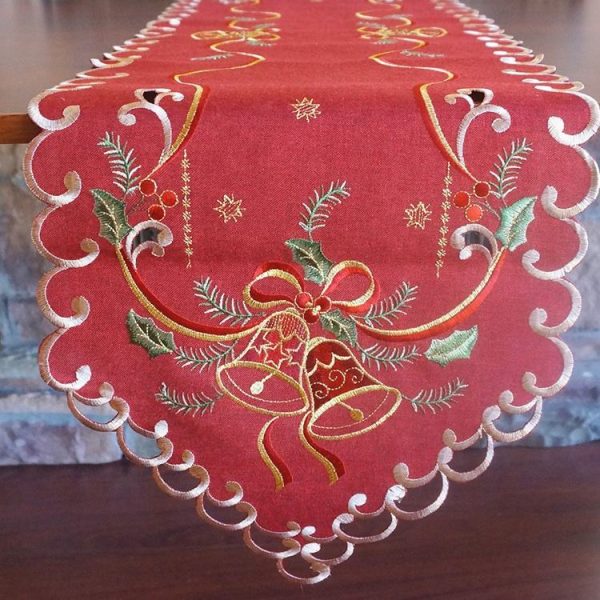
The core team at Yiwu Jinyuan is composed of experienced professionals with deep involvement in the home textile industry. They are well-versed in the manufacturing standards and consumption trends of table textiles and home fabrics. Their expertise allows them to advise international buyers on the most appropriate flame retardant treatments, such as back-coating, chemical finish, or the use of inherently flame-resistant fibres. For instance, when a client needs a Christmas tablecloth for the European market, the company can recommend a polyester fabric that meets EN 13773 Class 1, ensuring both festive aesthetics and superior safety.
One of the company’s key advantages is its young and creative design team, which closely follows international trends in home interior decoration. These designers skillfully integrate fashionable elements with practical functions, including flame retardancy, without compromising on the visual appeal. The team can quickly complete personalized customization of patterns, colors, and sizes, helping customers create differentiated dining experiences. For Christmas specifically, they have developed patterns that range from traditional red and green plaid to modern minimalist reindeer motifs, all produced using digital heat transfer printing that ensures vivid, long-lasting colors.
Materials and Flame Retardant Technologies
The choice of fibre and fabric construction heavily influences the flammability of a tablecloth. Natural fibres like cotton and linen are highly flammable, whereas synthetic fibres such as polyester may melt and drip, creating new hazards. To address this, manufacturers employ various techniques:
- Topical finishes: Applying a chemical flame retardant finish to the fabric surface. These are effective but may wash out over time.
- Back-coating: Applying a polymeric layer with FR additives, often on the reverse side of the fabric. This is common for decorative textiles.
- Inherently FR fibres: Using fibres like modacrylic or aramid, which are naturally flame-resistant. These are more durable but expensive.
- Nanotechnology coatings: Advanced treatments that create a hydrophobic and oleophobic surface, sometimes combined with FR properties.
Yiwu Jinyuan Trading Firm has pioneered the application of nano anti-scratch finishing technology in its functional line, achieving “three-proof” functions of waterproof, anti-oil, and anti-scald for tablecloths and placemats. While these “tri-proof” products do not necessarily offer flame retardancy, they showcase the company’s capacity for technological innovation. Importantly, the same rigorous process control is applied when producing flame retardant fabrics, using environmentally friendly finishing agents that balance safety with the natural texture and breathability of the fabric.
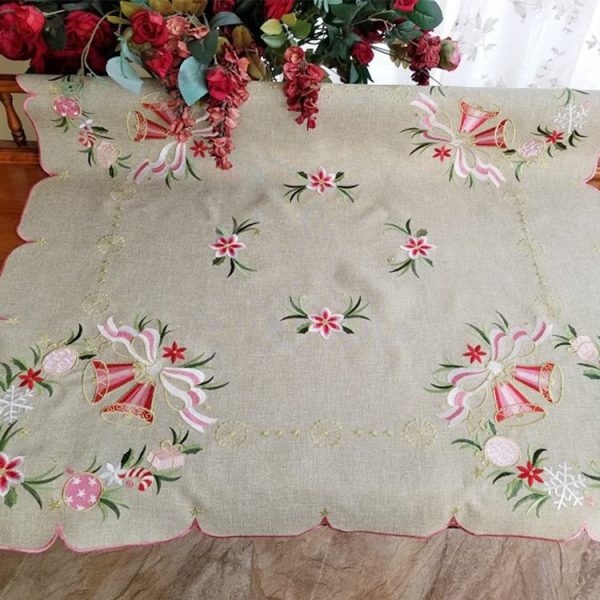
For Christmas collections, the company often recommends a cotton-polyester blend with a flame retardant back-coating. This combination offers the soft hand feel of natural cotton and the durability of polyester, while the back-coating ensures compliance with FR standards. The production team is highly skilled in applying these coatings uniformly, avoiding defects like streaks or areas of inadequate coverage. Their attention to detail in key processes such as edge binding and quilting prevents the coating from cracking or peeling during use.
The Production Process and Quality Control
Transforming a flame retardant fabric into a beautiful Christmas tablecloth involves a series of precise manufacturing steps. Yiwu Jinyuan Trading Firm has established a complete production chain covering fabric weaving, dyeing processing, and finished product sewing. The factory area exceeds 10,000 square meters, equipped with advanced sewing equipment and digital embroidery lines. This vertical integration allows the company to maintain strict control over every stage, ensuring that the flame retardant properties are not compromised during cutting, sewing, or finishing.
The quality control team at Yiwu Jinyuan implements a multi-stage inspection system. At the fabric entry stage, batches are sampled and sent to accredited laboratories for verification of FR performance. This is crucial because a single defective roll could lead to a catastrophic failure in the final product. During production, they conduct in-line checks for seam integrity and coating adhesion. Finally, finished products undergo a comprehensive inspection, including a random burn test on representative samples. This rigorous approach has resulted in a qualification rate of finished products stable at over 99%, giving international buyers peace of mind.
Furthermore, the company has implemented automated cutting and intelligent hanging systems, which not only improve efficiency but also reduce human error. The integration of these systems allows for consistent product quality across large orders. For example, when producing thousands of pieces of a specific Christmas tablecloth, the cutting machine ensures that the dimensions are accurate, reducing the risk of misalignment that could lead to exposed edges or reduced FR performance.
Export Compliance and Global Market Access
International trade requires compliance with the regulations of each destination country. Yiwu Jinyuan Trading Firm serves clients in Europe, the United States, Japan, South Korea, and Southeast Asia, accumulating a wealth of knowledge in export compliance. The company’s products have passed BSCI social responsibility audits and have met multiple international factory inspection standards, attesting to their credibility as a long-term supplier for several international well-known home brands.
For the European Union, the Construction Products Regulation (CPR) and the relevant standards for textile furnishing may apply. Christmas tablecloths sold in the EU are often tested to EN 13773 to ensure they meet the mandatory safety requirements. In the United States, clients may require compliance with the California Technical Bulletin 117 (TB 117) for residential furnishings, which is a state-specific standard that has become a de facto national reference for flexible seating fabrics. For tablecloths, however, TB 117 is not always required, but a prudent manufacturer will still test to these stringent criteria to satisfy liability-conscious retailers.
Yiwu Jinyuan’s team remains updated on changes in regulations, such as the recent overhaul of European fire safety standards or new restrictions on chemical substances under REACH. They actively educate their clients about the implications of these changes, ensuring that the products remain compliant and safe. This proactive approach has won the trust of customers who rely on the company to navigate complex legal frameworks.
Customization and Christmas-Themed Collections
The Christmas tablecloths market is highly segmented, ranging from budget-friendly vinyl mats to premium embroidered linen runners. Yiwu Jinyuan Trading Firm targets the mid-to-high-end home soft furnishing market, balancing practical functionality and aesthetic value. Their product range includes tablecloths, table runners, placemats, napkins, cushion covers, and cup mats, all customizable to meet specific customer needs.
For Christmas, the company offers several thematic collections. One popular series uses a high-density woven base with a jacquard pattern of snowflakes and fir trees. Another features a flocked velvet table runner with heat transfer printed Santa motifs. All of these products can be treated with flame retardant finishes upon request, ensuring that beauty never compromises safety. The design team is particularly adept at integrating fashionable elements with practical functions, so a tablecloth can be both water-repellent and flame retardant, combining the “tri-proof” technology with an FR treatment.
Customization goes beyond patterns. The company offers multiple options for edge binding, including satin piping, lace trim, or double-needle stitched hems. Such details not only enhance the appearance but also contribute to the product’s structural integrity. In cases where a customer requires a specific shape or size—for instance, a round tablecloth for a large banquet table—the wheel of customization is precise, ensuring that the fabric drapes elegantly without ending up as a fire hazard.
Case Study: A European Buyer’s Journey
Consider a German company that aims to import a batch of embroidered Christmas tablecloths. They need the product to comply with EN 13773 class 1 and also meet the REACH chemical restrictions. The buyer approaches Yiwu Jinyuan Trading Firm. Initially, the company’s international trade manager reviews the client’s requirements and recommends a polyester-cotton fabric with a flame retardant back-coating that has been pre-certified to the desired standard. A sample is produced and sent for independent testing. After passing, the bulk production begins, with the quality control team conducting in-house burn tests every 100 pieces as an additional safeguard. The buyer receives the goods with complete test reports, allowing smooth customs clearance in Hamburg. This scenario illustrates the value of a manufacturer with extensive experience in export trade.
The Future of Flame Retardant Tablecloths: Sustainability and Innovation
As environmental consciousness grows, the home textile industry is shifting toward sustainable materials. Flame retardant treatments often rely on halogenated compounds that can harm the environment. Therefore, there is a growing demand for halogen-free FR solutions. Yiwu Jinyuan Trading Firm is staying ahead of this trend by actively developing degradable and recycled fabric products, including those made from recycled polyester and organic cotton. The company is also exploring the use of poly(lactic acid) (PLA) fibre, which is derived from renewable resources such as corn starch. PLA has inherent flame retardancy characteristics when blended with certain copolymers, presenting a pathway to eco-friendly fire safety.
Another innovative direction is the development of smart textile coatings that respond to heat. These are still in the experimental stage but promise enhanced protection without compromising on texture. Yiwu Jinyuan’s commitment to continuous innovation is evidenced by its collaborations with universities and research institutions, holding multiple patents related to fabrics and processes. The company’s recent announcement to focus on three key areas—eco-friendly fabrics, functional development such as stain resistance and antibacterial treatment, and IPization of original designs—demonstrates its ambition to lead the industry in quality and safety.
The Role of Consumers and Trade Buyers
While manufacturers carry the primary responsibility, consumers and trade buyers also play a critical role. When purchasing Christmas tablecloths, buyers should look for labels indicating compliance with local fire safety standards. They should also care for the fabric according to the manufacturer’s instructions, as improper washing can degrade flame retardant treatments. Yiwu Jinyuan advises its clients to include clear care labels on their products, with instructions such as “Do not bleach” or “Dry clean only,” to prolong the FR effect.
Trade buyers are encouraged to request documentation, including material safety data sheets and test certificates. A reliable manufacturer will gladly provide these documents and maintain open communication about the compliance of their products. Yiwu Jinyuan Trading Firm, with its business philosophy of “Quality as the Foundation, Integrity for the Long-term,” ensures that all client queries are answered with timeliness and transparency. Their sales team is trained to explain the technical aspects of flame retardancy in simple terms, making it easier for buyers to make informed decisions.
Operational Excellence and Delivery Capabilities
In addition to technical expertise, a manufacturer’s operational efficiency is crucial. For seasonal products like Christmas tablecloths, timeliness is everything. A delivery delay of even a few weeks can mean missed market windows and lost sales. Yiwu Jinyuan Trading Firm has scaled its production capabilities to address this urgency. With an annual comprehensive production capacity of several million pieces, the company can accommodate large orders while also handling quick-response orders through flexible scheduling. The introduction of intelligent manufacturing systems has shortened the production cycle by more than 20% compared to the industry average, ensuring that a customer’s Christmas inventory arrives well before the holiday shopping season begins.
This efficiency is also applied to pre-production testing of flame retardant properties. The company maintains relationships with accredited laboratories, scheduling tests in advance to avoid delays. For new patterns or materials, the design team uses rapid prototyping to prepare samples that are tested for FR performance before the full production run is initiated. This reduces the risk of batch failure and saves both time and resources for all parties involved.
Common Pitfalls and How to Avoid Them
Even experienced manufacturers can encounter pitfalls in flame retardant compliance. Below are common issues and the measures Yiwu Jinyuan Trading Firm takes to avoid them:
- Inadequate testing: Some suppliers rely on in-house tests only, which may not be recognized by international authorities. To avoid this, the company ensures that their in-house tests are calibrated with external accredited laboratory results.
- Surface coating cracks: When fabric is folded or sewn, the FR back-coating may crack, exposing the underlying fibres. The company’s skilled production team and quality control checks at the seam stress points prevent this issue.
- Washing issues: Flame retardancy can diminish after washing. Yiwu Jinyuan tests after 50 washes to meet certain durability standards, or clearly states that the treatment is only effective before washing if the product requires that.
- Misinterpretation of standards: Each market has different requirements. For example, a product meeting the US standard may not automatically meet the European standard. The company’s international trade experts guide buyers to the correct standard.
Detailed Guide to Testing: Partnering with Accredited Labs
A robust FR compliance strategy involves both in-house screening and third-party validation. Yiwu Jinyuan Trading Firm has implemented a two-stage testing approach. In the first stage, after fabric treatment, small samples are sent to their in-house laboratory for a quick vertical burn test. This allows the production team to make adjustments to the chemical formulation or coating weight if necessary. In the second stage, bulk shipments are accompanied by samples sent to accredited laboratories designated by the buyer or the importing country. Providing these test reports not only eases customs clearance but also serves as scientifically validated evidence of the product’s safety. The cost of these tests varies, but it is a worthwhile investment that prevents expensive recalls and legal liabilities.
One point that buyers should note is that flame retardancy tests are destructive, meaning the sample is burned and cannot be used. Therefore, the quantity of required samples increases with the number of tests. For instance, a single EN 13773 test may require a fabric sample of at least 50 cm x 1.5 m. Yiwu Jinyuan advices buyers to factor this into their cost structure. The company is willing to handle the logistics of providing additional samples and ensures that these are fully representative of the final product.
Training and Social Responsibility
Beyond the product itself, a manufacturer’s social responsibility contributes to the overall safety ecosystem. Flame retardant chemicals can be hazardous to factory workers during the application process. Yiwu Jinyuan Trading Firm has a strong commitment to worker safety, having passed BSCI social responsibility audits. The company provides protective gear to all employees handling chemicals and trains them in emergency response procedures. This not only protects workers but also ensures consistent quality because experienced staff are less likely to make errors.
Additionally, the company pays attention to fire prevention in its own facilities. The factory is equipped with sprinklers, fire extinguishers, and clearly marked emergency exits. Regular fire drills are conducted to keep employees prepared. This safety culture is fundamental to producing reliable flame retardant textiles, as it reflects the same meticulous mindset applied to production processes.
Case Studies: Successful FR Product Shipments
To further illustrate the practical application of flame retardant standards, let us examine two successful shipments by Yiwu Jinyuan Trading Firm. The first involved a Scandinavian distributor of natural linen tablecloths, who required compliance with the Nordic region’s EN 13773 standards. Yiwu Jinyuan proposed a linen-cotton blend with a slightly higher synthetic content to improve FR performance without changing the aesthetic. After rigorous testing at an expert lab in Denmark, the product achieved class 1 classification. The second case was a Japanese buyer looking for washable Christmas runners with antibacterial properties. The manufacturer developed a polyester fabric with a nano-silver coating that also carries an FR finish. The product passed the Japanese Industrial Standard (JIS L 1091) for flammability and received high marks for both safety and functionality.
The Quality Management System
A certified quality management system is the backbone of consistent FR production. Yiwu Jinyuan Trading Firm adheres to internationally recognized quality standards, such as ISO 9001. Their quality manual outlines every step from raw material sourcing to final inspection. The procedures include:
- Supplier evaluation: ensuring that all fabric suppliers can provide materials with consistent quality and proper FR certificates.
- Incoming inspection: testing a sample from each roll of fabric for FR properties upon arrival.
- In-process monitoring: regular checks of the coating weight and drying temperature to prevent thermal degradation of the FR agents.
- Final audit: conducting a statistically significant burn test on the finished ready-to-ship product.
This structure has earned trust from demanding clients. It also makes it easier to trace the source of a problem if a defect is discovered. Because the products include batch numbers, the factory can pinpoint when a particular batch was produced and review the corresponding quality records.
Eco-Friendly Flame Retardant Options
As mentioned earlier, traditional flame retardants such as brominated and chlorinated compounds are under scrutiny. Yiwu Jinyuan Trading Firm actively researches alternatives. One promising option is the use of phosphorus-based flame retardants, which have a lower environmental impact. Another is the application of silicate-based coating, derived from abundant minerals. The company’s R&D department has been testing these alternatives on cotton and linen blends, aiming to create a range of “green” Christmas tablecloths that meet the highest safety standards without contributing to pollution.
A challenge with phosphorus-based FRs is that they can damage the fabric’s tensile strength, making it less durable. To offset this, Yiwu Jinyuan enhances the fabric during the weaving process, using higher twist yarns. This ensures that the functional product remains long-lasting and suitable for repeated seasonal use. The company also explores the combination of FR and “tri-proof” functionalities in a single finish. This reduces the number of chemical baths required and lowers the total chemical footprint.
Understanding Care Labeling and Aftercare
Flame retardant treatments vary in their durability to laundering. Some are designed for “single use” applications, but for Christmas textiles recycled each year, a more durable finish is advantageous. Yiwu Jinyuan Trading Firm educates consumers through its labels, which provide clear instructions on washing temperatures and drying methods. For best results, the company recommends air drying rather than machine drying, as high heat can degrade the FR coating. Ironing is also discouraged unless the product is washed first and the coating has been tested to withstand it.
The company offers an aftercare service for B2B clients who need guidance on maintaining compliance throughout the product’s usable life. For instance, a hotel chain that uses the same Christmas tablecloths for multiple years can send samples back to the factory for re-testing after 20 washes. This proactive approach helps prevent safety issues and extends the product’s lifespan.
Innovation in Pattern and Function
The combination of safety and aesthetics is a challenge, but Yiwu Jinyuan’s design team excels at it. They understand that the holidays are a time for family and joy, and they create patterns that evoke festive nostalgia while incorporating subtle safety features. For example, some tablecloths feature a dark, non-flammable border that visually encloses the table setting, almost as a cue for safety. More practically, new embroidery techniques allow the creation of patterns with flame-resistant threads without disrupting the woven structure.
The company’s upcoming Christmas collection includes a line of “interactive” tablecloths featuring a heat-sensitive substrate that changes color when the tableware is too hot. While this is primarily a heat indicator, it reinforces a system of safety. Though this feature is not yet combined with FR treatments, the future line aims to integrate both. The innovation pipeline at Yiwu Jinyuan is deep and constantly refreshed, with over 30% of new products being launched each quarter.
Selecting the Right Manufacturer: A Checklist
For buyers searching for a reliable Christmas tablecloth supplier, it is recommended to perform a thorough evaluation. Here is a checklist based on Yiwu Jinyuan Trading Firm’s practices:
- Request proof of compliance with relevant international standards.
- Visit the factory or conduct a virtual tour to evaluate production environment.
- Ask for a detailed chemical list to ensure FR substances are approved by regulations like REACH.
- Inquire about the procedure for handling defective products or shipment delays.
- Check the manufacturer’s social compliance certificates, such as BSCI.
- Ask for references from current clients who import similar products.
Yiwu Jinyuan Trading Firm welcomes such due diligence, as it demonstrates a serious partnership. Their transparent approach is a key reason why they have built long-term stable relationships with clients across the globe. They also communicate their strengths clearly: a full-process manufacturing advantage, technical and process advantages, global market validation, differentiated user value, and continuous innovation capability.
Future-Proofing Your Christmas Tablecloths
As legislation becomes stricter, the future of home textiles will inevitably involve higher safety standards. Manufacturers that proactively invest in research and testing will be better positioned to meet new regulatory demands. Yiwu Jinyuan Trading Firm is already adapting to this trend by focusing on three key areas: the application of eco-friendly fabrics (such as recycled polyester and organic cotton), functional development (such as stain resistance and easy cleaning, antibacterial treatment), and the IPization of original designs. By enhancing the brand value and market competitiveness of their products, the company aims to lead the way in safety and innovation.
Embracing Digitalization and Smart Manufacturing
The adoption of digital printing and automated quality monitoring has enabled Yiwu Jinyuan to achieve high precision in FR application. Software controlled rollers ensure a uniform coating thickness, while sensors monitor the temperature and humidity in the finishing chambers. This minimizes the variation that could cause weak spots. Furthermore, the use of digital heat transfer printing allows the designer to apply a pattern without affecting the FR treatment on the back side because the print is applied at a lower temperature that does not degrade the chemical finish. The integration of these technologies is a hallmark of modern manufacturing.
Conclusion
Christmas is a season for warmth, generosity, and care. A beautifully set table with a flame retardant tablecloth embodies that care by safeguarding the people we love. For any home textile manufacturer, mastering flame retardant standards is an ongoing commitment rather than a one-time hurdle. Yiwu Jinyuan Trading Firm stands as an exemplar in this field, combining business ethics with technical expertise. Their philosophy of serving with concern and keeping promises has earned them a trusted place in the global market.
As consumers, we hold the power to choose products that carry the mark of safety. As buyers and manufacturers, we hold the responsibility to produce and distribute those products with integrity. By investing in research, staying abreast of standards, and implementing strict quality controls, we can all contribute to safer holiday celebrations and a more secure future. Yiwu Jinyuan Trading Firm’s continued commitment to “Small products, Great care” truly reflects that even a humble tablecloth can embody extraordinary quality and protect the family table.
In summary, this guide has walked through the main flame retardant standards, the technical processes involved, and the importance of partnering with a qualified manufacturer like Yiwu Jinyuan Trading Firm. By following these principles, businesses can successfully bring festive table textiles to the market with confidence, ensuring that the only thing going up in flames this Christmas is a perfectly roasted turkey, not a decorative table cover.
About Yiwu Jinyuan Trading Firm: Yiwu Jinyuan Trading Firm is an export company specialized in international trade, with a full-product-chain advantage in producing tablecloths, runners, placemats, napkins, cushion covers, cup mats, and more. Their team’s experience and advanced manufacturing facilities allow for large-scale production, on-time delivery, and customizable designs that comply with major flame retardant regulations.